Brazil's Senado Federal, the country's upper house, approved PL 278/2026 on 1 September without changes of merit, sending it to President Luiz Inacio Lula da Silva for signature rather than back to the Chamber of Deputies1. The bill creates Redata, what Brazil's legislation calls a special taxation regime for data-centre services. It suspends Import Tax, PIS/Cofins and PIS/Cofins-Importation, the federal contributions charged on gross revenue and on imports, along with IPI, the federal tax on industrialised products.
Five conditions ride on the benefit. The one that bites is written as water use efficiency, or WUE, the litres a facility consumes for each kilowatt-hour of computing energy, capped at 0.05 litres per kWh and verified annually. An operator must also draw its power from renewable or low-emission sources, direct at least 10% of actual processing and storage supply to the domestic market, invest in Brazil the equivalent of 2% of the value of products bought under the benefit, and publish an annual sustainability report on the installations2.
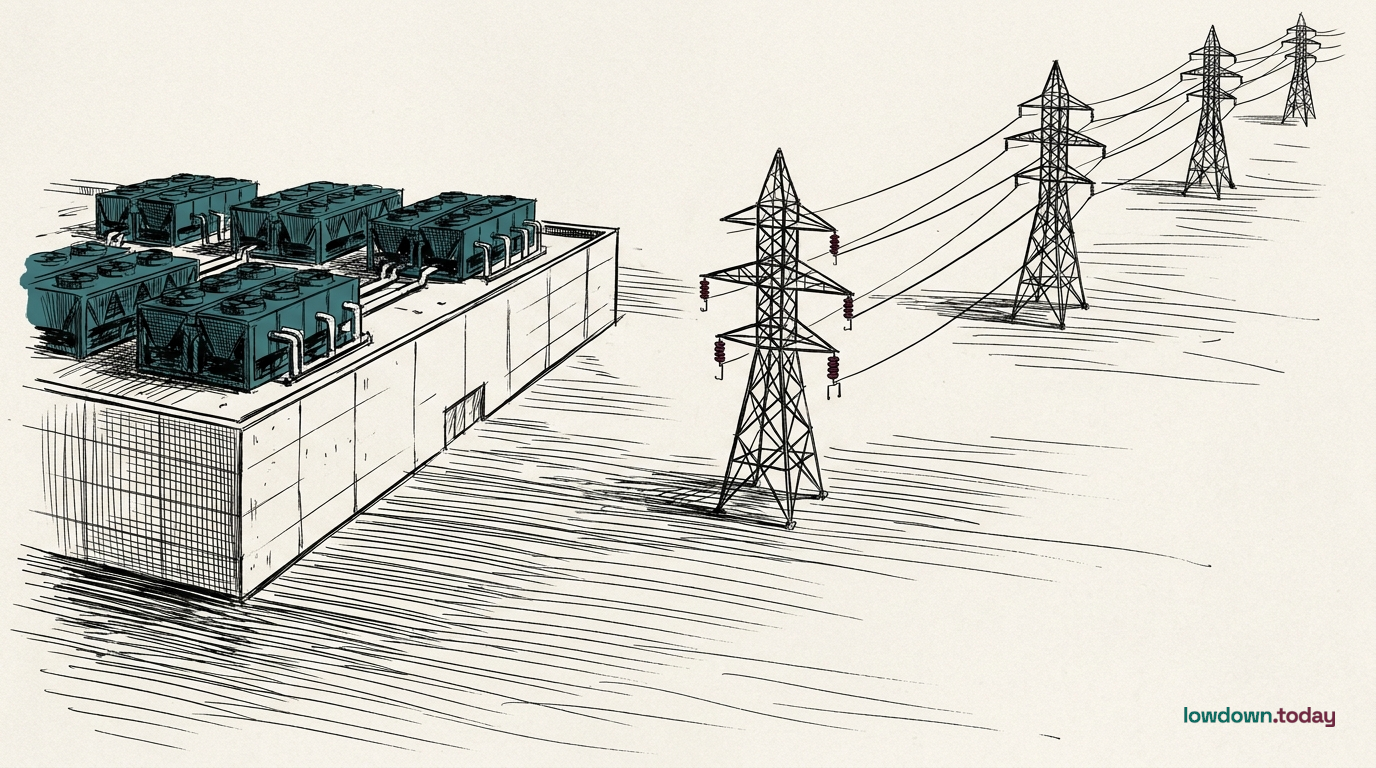
A ceiling that low rules out evaporative cooling, the method that sheds heat by letting water evaporate and which accounts for most data-centre water draw. What survives the test is closed-loop cooling, where the same coolant circulates and rejects its heat to air, or air cooling outright. Brasilia has written a design mandate and attached a tax break to it.
Two other jurisdictions attached conditions to data-centre support in the same month. Gujarat tied its subsidies to a green-power test, and Taiwan put a supply condition on its own large users. Redata goes further on one point: the test repeats every year and the benefit can be withdrawn, so a cooling design is not signed off once at approval but re-examined by the tax authority for the working life of the building. Government estimates and the Brazilian energy press give different totals for the tax forgone, on what appear to be different bases, so no headline value belongs in print. PL 278/2026 is passed, not law, and Lula has not yet signed it.





