Skip to content
You can now search across every topic, entity and event.What's new
Data Centres: Boom and Backlash
8SEP

Denmark halts its clean wind-grid queue

3 min read
13:06UTC

Energinet extended its pause on new large-load grid connections on Wednesday 27 May, showing that even one of Europe's cleanest, wind-rich grids cannot wire data centres fast enough.

IndustryDeveloping
Key takeaway

Even Denmark's wind-rich grid cannot connect data centres fast enough, because transmission pace is the real limit.

Energinet, Denmark's transmission system operator, extended its pause on new large-load connection agreements on Wednesday 27 May, prolonging a hold first imposed in March. The decision keeps fresh data-centre hook-ups frozen in one of Europe's cleanest and most wind-rich grids. 1

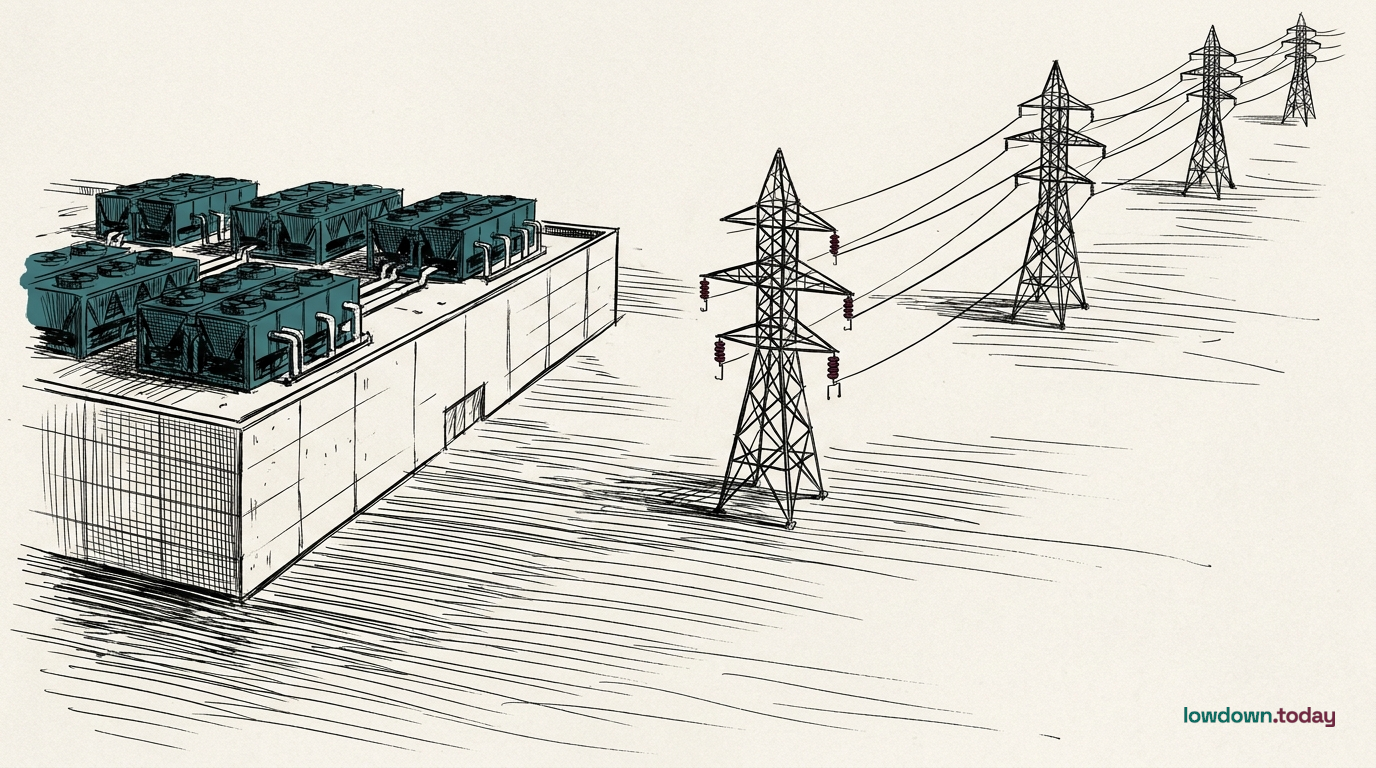
The extension matters because it disproves a comfortable assumption. One theory held that US moratoriums and British queues would simply push demand toward countries with renewable surpluses to spare. Denmark has exactly that surplus and still cannot connect the load. The constraint is not generation mix but the pace at which any transmission network can physically be built out to carry new demand. Surplus wind does not help if the wires cannot move it to where the compute sits.

The scale of the backlog explains the freeze. Energinet is sitting on a connection queue of roughly 60 GW against national peak demand of about 7 GW, with data centres making up around 14 GW of that pipeline. At that volume the queue itself becomes the bottleneck: the operator cannot assess applications fast enough regardless of any intent to approve them.

The same dynamic has now surfaced across very different jurisdictions. Johor in Malaysia halted approvals after the country's first water-rights protest , a grid-and-resource ceiling reached despite no shortage of political will to build. Clean or not, the grid grows at the speed it grows, and the compute boom is arriving faster.

Deep Analysis

In plain English

Denmark's national electricity grid operator, Energinet, extended a freeze on new large-load connections in May 2026, preventing any new big technology sites from plugging into the grid. Denmark's grid is mostly powered by wind energy and is widely considered one of the cleanest in Europe. The problem is not a lack of clean energy: Denmark actually produces more electricity than it uses on many days. The problem is the physical wires and transformers that carry electricity from where it is generated to where a new data centre wants to use it. Building new transmission lines takes years. The queue of projects wanting to connect to Denmark's grid stands at 60 gigawatts, against a national peak demand of just 7 gigawatts: nearly nine times as much demand as the grid can handle. Even having renewable energy nearby does not help if the transmission lines cannot carry it.

What could happen next?
  • Consequence

    Data-centre operators targeting Nordic renewable-energy credentials face a hard transmission bottleneck across Denmark regardless of power-purchase agreement structures, redirecting greenfield investment toward markets with available high-voltage capacity.

  • Risk

    Energinet's moratorium without a defined review endpoint or queue-reform commitment risks extending the freeze beyond the original March 2026 imposition indefinitely, given that transmission build programmes take three to seven years.

First Reported In

Update #6 · Oregon bills data centres, not homes

Energinet· 10 Jun 2026
Read original
Causes and effects
This Event
Denmark halts its clean wind-grid queue
It refutes the relief-valve theory that surplus renewable power can absorb the compute boom: the binding constraint is transmission pace, not how clean the generation is.
Different Perspectives
NVIDIA
NVIDIA
NVIDIA told the Securities and Exchange Commission on 26 August it had signed memorandums aiming to mobilise over $500bn for buyers' equipment purchases, then said in the same filing the arrangements may not become definitive. It may also carry limited residual-value risk on the equipment itself.
IREN Limited
IREN Limited
IREN signed $2.4bn of financing on 25 August that only releases cash once its Mackenzie GPU servers are accepted, and only through 31 December 2026. A shipping delay from here now creates a funding problem as well as a revenue one.
Energy Commission (Malaysia)
Malaysia's Energy Commission recorded data centres at 9.3% of national power in one hot week in August, against a 7% year-to-date average, and is projecting 31% of peninsular demand by 2035. It wants roughly 9 GW of new gas-fired capacity by 2032 to cover the gap.
Economic Development Board and Infocomm Media Development Authority
Singapore's EDB and IMDA rationed 200 MW across four operators on 21 August and followed with a tropical liquid-cooling standard six days later, fixing the terms before construction starts. The agencies will decide within 18 to 24 months whether to run a third call.
Legal Resources Centre
The Legal Resources Centre put the water and power draw of two approved Cape Town Equinix sites in public, at roughly 4.4 billion litres and 1.4 to 1.5 billion kWh a year, because the city and the operator would not. It wants a cumulative assessment before any more of the five approvals proceed.
Ministerio de Minas e Energia
Brazil's energy ministry published Redata's five conditions after the Senate passed PL 278/2026 on 1 September, betting a repeatable annual water test enforces cooling design better than a one-off approval. Redata now needs President Lula's signature before any of it takes effect.

