Skip to content
You can now search across every topic, entity and event.What's new
Data Centres: Boom and Backlash
4AUG

Kenya's AI campus turned on a guarantee

4 min read
10:53UTC

The suspended Microsoft-G42 geothermal campus at Olkaria missed its May 2026 construction start. Reporting now says the binding obstacle was a sovereign payment guarantee Kenya Power declined, rather than grid capacity alone.

IndustryDeveloping
Key takeaway

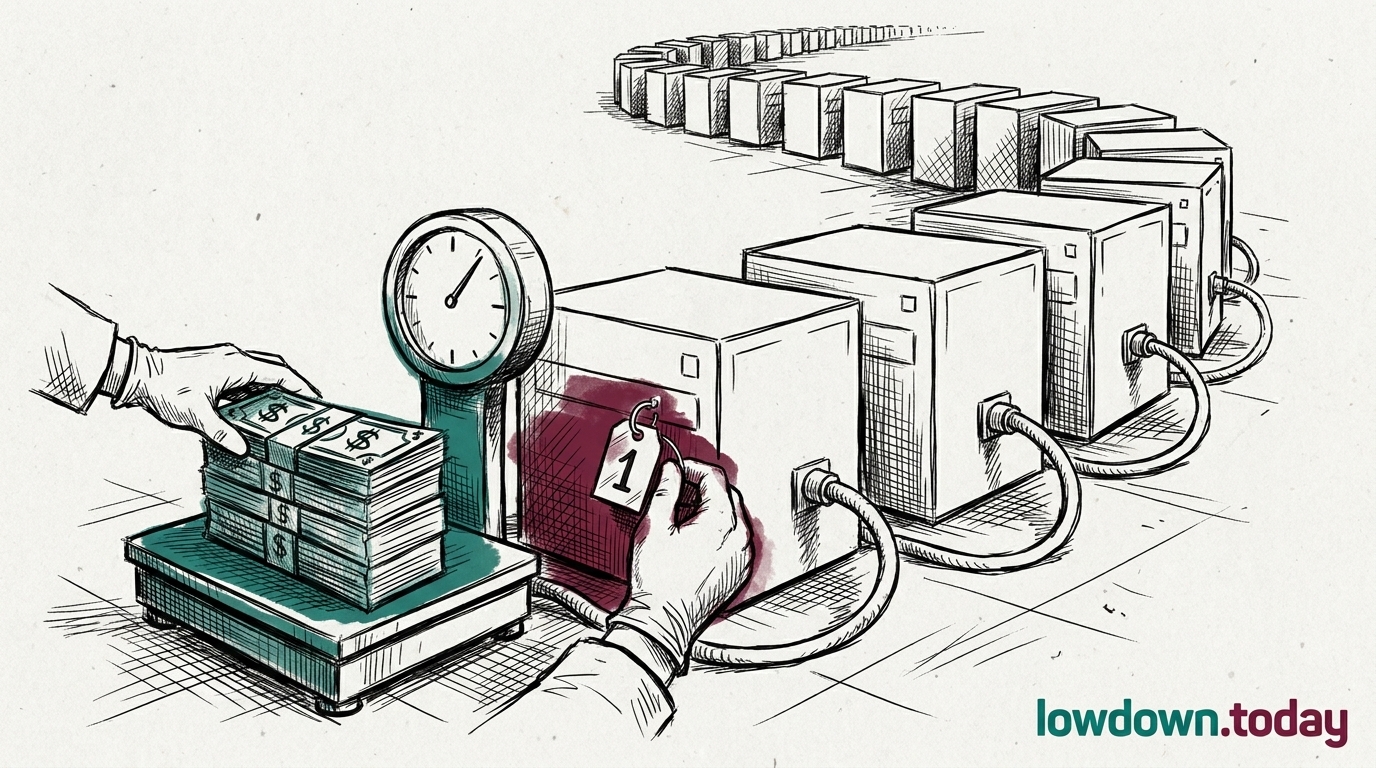
Kenya's $1bn AI campus stalled on a sovereign payment guarantee the government declined, not on grid size alone.

The suspended Microsoft-G42 geothermal campus at Olkaria has still not broken ground, and its first-phase May 2026 target has lapsed 1. President William Ruto halted the 1 GW project in May on capacity grounds, since 1 GW equals roughly a third of Kenya's 3 GW installed base . That suspension read at the time as a grid too small for the campus. ThinkGeoEnergy and Techish Kenya now add a second reason: the consortium asked the Kenya Power and Lighting Company for a guaranteed sovereign capacity payment, a backstop the government declined 2.

A capacity-payment guarantee obliges the host utility to pay for contracted power whether or not the campus draws it, which transfers demand risk from the operator to the sovereign. For a grid where 1 GW is a third of installed capacity, that guarantee is a contingent liability the size of the project itself. Kenya Power declining it reads less as an anti-investment posture than as the refusal of an unbankable backstop. The sourcing here is tier-2 and tier-3, so the payment-guarantee claim is attributed, not asserted as settled fact.

The reframing matters beyond Olkaria. Across Africa the announced shape of these deals is a partnership, while the term that actually decides the build is a bankable commitment to pay for capacity, used or not. Other host states watching Kenya now know which clause to read first. Financing remains unresolved and no new construction date has been set, leaving $1bn and a gigawatt of announced geothermal capacity stalled on a contract term rather than a permit.

Deep Analysis

In plain English

Microsoft and a company called G42 from Abu Dhabi planned to build a massive data centre in Kenya at a place called Olkaria, powered by geothermal energy from underground heat in the Rift Valley. The plan was to build a 1 GW facility, meaning it would need as much power as a third of all the electricity Kenya currently generates. The Kenyan government paused the project in May 2026. At first the stated reason was simply that the project was too big for Kenya's electricity grid. Now reports from ThinkGeoEnergy and Techish Kenya, which cover East African energy, say there is a second reason: Microsoft and G42 asked Kenya Power and Lighting Company, Kenya's national electricity distributor, to guarantee that it would always pay for the power the data centre produced, even if the data centre was not using all of it. This kind of arrangement is called a sovereign capacity payment or offtake guarantee. Kenya Power refused. Without that guarantee, banks and investors are unlikely to lend money for the project at affordable rates, because there is no assurance the electricity will be bought. So the project remains frozen, and no new date for construction has been announced.

Deep Analysis
Root Causes

Kenya's national electricity infrastructure has a structural mismatch between installed generation capacity (approximately 3 GW) and the load that a hyperscale campus demands at commissioning. Sub-Saharan African grid operators cannot absorb a 1 GW anchor load customer without creating single-customer dependency that would dominate dispatch scheduling, pricing, and reserve requirements.

Kenya Power's legal position under the Electricity Act 2019 prevents it from extending the sovereign guarantee unilaterally. The Act requires Treasury approval for any contingent government liability above a defined threshold; Kenya Power cannot take on capacity payment obligations at this scale on its own authority, and the Treasury has not offered co-signature. Kenya Power's accumulated KES 140 billion in debt further constrains any balance-sheet commitment.

Third, the Olkaria site was selected for its geothermal resource, not for proximity to existing load. The campus would require dedicated transmission infrastructure to deliver power from a Rift Valley site to a data-centre facility, adding capital cost and grid-complexity that is not present in a site adjacent to existing transmission corridors.

Escalation

The payment-guarantee refusal is a commercial dealbreaker, not a political reversal. Microsoft and G42 remain in Kenya and have not publicly withdrawn. The direction of travel depends entirely on whether a phased structure or an alternative guarantee mechanism is proposed. No escalation in the traditional sense; the risk is indefinite stall rather than active deterioration.

What could happen next?
  • Consequence

    The Olkaria stall establishes that sovereign capacity guarantees are the critical variable for hyperscale data-centre projects in sub-Saharan Africa, not grid capacity alone, shifting the feasibility analysis for future African data-centre proposals toward balance-sheet assessment of national utilities.

  • Risk

    G42's broader Africa infrastructure ambitions, positioned as a Gulf sovereign-AI expansion strategy, face the same financing structure problem at every sub-Saharan site: no African grid operator outside South Africa has a sufficiently clean balance sheet to backstop a 500 MW-plus capacity guarantee without Treasury co-signature.

First Reported In

Update #7 · Virginia taxes the backup, not the draw

ThinkGeoEnergy· 17 Jun 2026
Read original
Causes and effects
This Event
Kenya's AI campus turned on a guarantee
The term that decided the build was a commitment to pay for capacity, not a permit or a megawatt count.
Different Perspectives
Government of Odisha
Odisha signed a $1.5bn agreement with HCLTech and Sarvam AI on 24 July for a sovereign AI data centre in Bhubaneswar, targeting 2028 operations. While regulators elsewhere price developers out of the queue, Odisha is bidding state financial assistance to bring capacity in, betting the AI infrastructure boom is worth courting rather than rationing.
Switch Datacenters and Uithoorn
The developer, the municipality, Liander and dozens of greenhouse growers signed a waste-heat agreement letting a 60 MVA facility proceed under a provincial rule that bans sites above 5 MVA. The public-interest exception argues the site relieves rather than adds to grid congestion, working around a standing ban from inside rather than waiting for it to change.
Iskandar Puteri residents
Residents protested in February over falling water pressure they attribute to ZDATA's 300 MW construction; ZDATA disputes causation and has not yet resolved the dispute with its wastewater-only pivot. The complaint sits unadjudicated while the operator advertises compliance to state authorities the residents cannot address directly.
Microsoft
Microsoft
DC Byte reports Microsoft looking to the Nordics for new capacity while Dublin's regional share falls to 15 per cent, though this is a market-intelligence inference rather than a company statement. Microsoft keeps its existing Dublin cloud region, which is costly to relocate, while directing new investment where power is cheaper and the queue is shorter.
ISO New England
ISO New England
ISO-NE proposed excluding new large loads from its Installed Capacity Requirement entirely, forcing data centres to bring their own generation or accept curtailment, even though New England's demand has been flat or falling for a decade. The reform is pre-emptive, written before the region has felt the strain PJM and MISO already report.
Ofgem
Ofgem
Ofgem opened its Data Centre Commitment Fee consultation on 29 July, arguing that free options on grid capacity let developers bank places on ten sites and abandon nine, crowding out projects that would build. It expects the deposit to filter the queue before the rule even takes final form.

