Skip to content
Briefings are running a touch slower this week while we rebuild the foundations.See roadmap
Data Centres: Boom and Backlash
10JUN

Kenya halts $1bn Olkaria over power

3 min read
10:06UTC

Kenya suspended the $1bn Microsoft-G42 geothermal data centre at Olkaria, after President Ruto warned the full build would mean switching off half the country.

IndustryDeveloping
Key takeaway

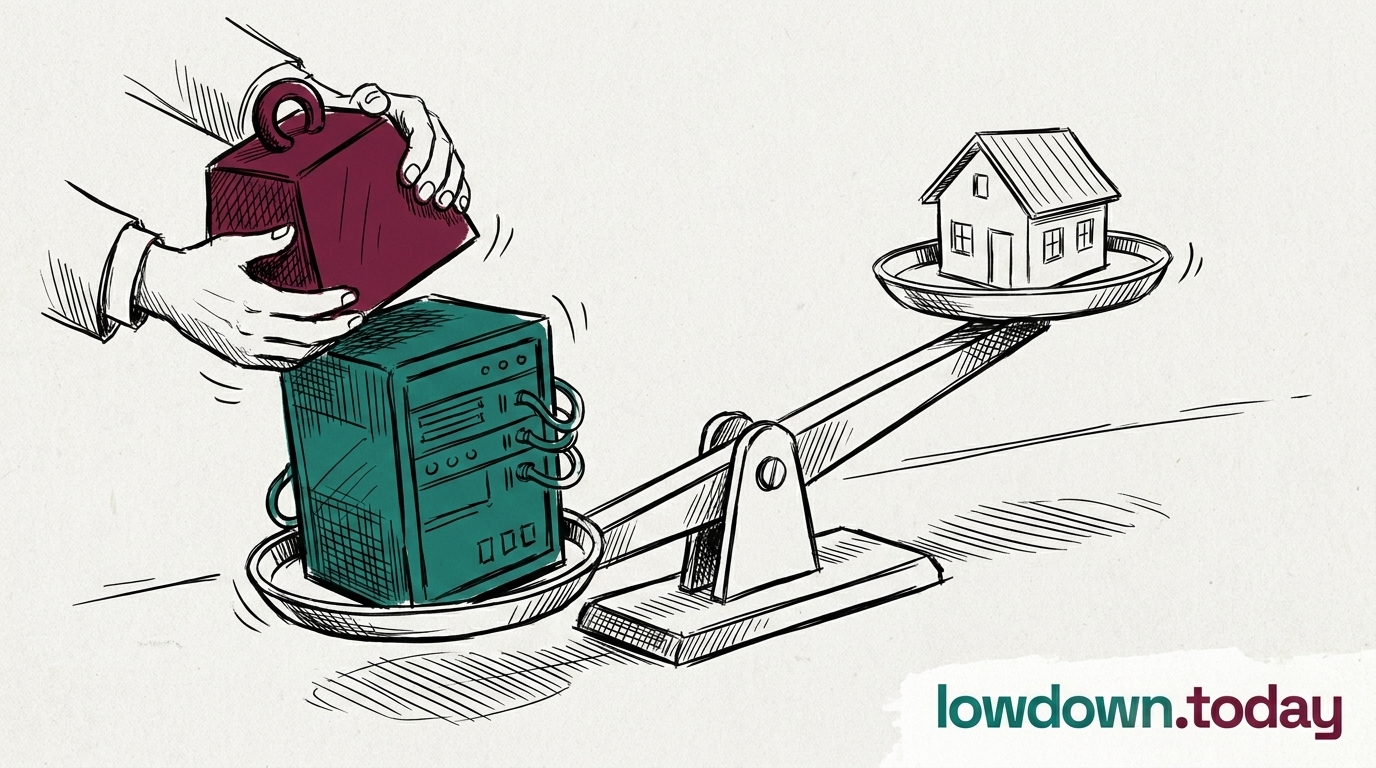
Kenya suspended a $1bn data centre because one campus would consume a third of its national power.

Kenya's government suspended the $1 billion Microsoft-G42 geothermal project at Olkaria in the Rift Valley, a hold that surfaced in early May. President William Ruto put the reason plainly: at full scale the campus would draw so much power that, in his words, "building it would mean switching off half the country". 1

Olkaria's full 1 GW target would draw roughly a third of Kenya's entire installed capacity of about 3 GW. Microsoft, the project's hyperscaler partner, and G42, the UAE artificial-intelligence firm co-developing it, were not blocked by planning objections or activist pressure but by the raw size of the load against a small national grid.

Geothermal is about as clean and dispatchable as electricity gets, running steadily day and night without the weather dependence of wind or solar. Kenya still could not host the campus, which is the point worth holding: the thing freezing data-centre expansion is rarely how dirty the power is, and almost always how much of it a single campus demands against the capacity already in place.

The pattern crosses hemispheres. When Johor in Malaysia paused approvals after a water-rights protest, the binding limit was resource and grid capacity rather than generation type . Kenya reached the same ceiling from the opposite direction, with clean power in the ground and simply not enough of it to spare.

Deep Analysis

In plain English

Kenya's government stopped a $1 billion joint project between Microsoft and the UAE technology company G42 to build a large data centre powered by geothermal energy in Kenya's Rift Valley in May 2026. The site, called Olkaria, sits above one of the world's most powerful natural heat sources, where underground steam can generate electricity cheaply and cleanly. At full build the project would need 1 gigawatt of power, which is about one-third of everything Kenya currently generates across the entire country. President William Ruto said building it at full size would mean switching off half the country to divert power to the campus. The project is not cancelled but suspended: Kenya and the developers need to either shrink the project or wait for Kenya's national grid to grow large enough to support it.

Deep Analysis
Root Causes

Olkaria's geothermal resource rank among the ten most productive geothermal zones on earth, which is precisely why Microsoft and G42 chose it. The resource quality attracted a project scale, 1 GW, that reflects the resource rather than the grid it connects to.

Second, Kenya Power's transmission infrastructure was built for a national peak demand of approximately 2.2 GW, with the 3 GW installed capacity figure reflecting nameplate generation rather than deliverable capacity to all load points.

A 1 GW data-centre campus in the Rift Valley would require transmission reinforcement along corridors built in the 1980s and 1990s for a fraction of that load. The $1 billion project cost did not include the grid reinforcement bill, which Kenya Power and the government would absorb.

What could happen next?
  • Risk

    Hyperscale operators targeting African geothermal and solar resources face a structural grid-capacity ceiling in every Sub-Saharan market: national installed capacity averages 3-8 GW, making 1 GW projects nationally significant rather than locally significant.

  • Opportunity

    A staged 150-200 MW build at Olkaria would stay within Kenya Power's incremental capacity addition programme and could generate around $150 million in annual electricity revenue for the national utility, a viable model for sub-1 GW African data-centre investment.

First Reported In

Update #6 · Oregon bills data centres, not homes

Data Center Dynamics· 10 Jun 2026
Read original
Causes and effects
This Event
Kenya halts $1bn Olkaria over power
A clean, steady geothermal source still could not host the project, because a single 1 GW campus would swallow a third of Kenya's entire generating capacity.
Different Perspectives
Data-centre developers and hyperscale operators
Hill County's rescission on 4 June, seven days after RCM Hill filed a $100 million taking suit, shows the Fifth Amendment threat is faster than any appellate route: the damages clock runs from the day the moratorium passed. Rural counties with no large-load permitting framework face a litigation bill that can exceed their entire annual budget.
Kenya and President Ruto
Kenya's suspension of the $1 billion Microsoft-G42 Olkaria project in early May applies raw-capacity logic at national scale: President Ruto stated the full 1 GW build would mean switching off half the country against a 3 GW installed base. A single hyperscale campus can consume a third of a Sub-Saharan grid with no equivalent constraint in Europe.
Denmark and Energinet
Energinet's 27 May extension of its large-load connection pause, with a 60 GW queue against 7 GW peak demand, demolishes the assumption that surplus renewable generation is a relief valve for compute demand. Denmark has more wind than it can use and still cannot connect data centres, because transmission pace is the binding constraint.
France and EDF
France and EDF
EDF's repurposing of the Bouchain former power-station site for SoftBank's Phase 1 campus gives France a replicable siting instrument, a brownfield nuclear connection bypass, that no other G7 grid operator can match. France's Choose France summit on 30 May secured the boom's largest European bet without a connection-queue fight or community moratorium.
SoftBank Group
SoftBank Group
SoftBank's EUR 75 billion France commitment on 30 May anchors at EDF's Bouchain nuclear baseload, bypassing the UK's four-times-US electricity cost premium (cited by OpenAI as reason to pause Cobalt Park) and Germany's grid-queue delays. EDF's supply relationship is bilateral; SoftBank never enters the French connection queue.
US residential ratepayers and state regulators
Portland General Electric's 4 June tariff is the first evidence that PJM's cost-transfer warning to governors on 19 May can run in reverse: Oregon households get a 1.3% bill reduction as data centres absorb their grid costs. The 12 other states carrying active cost-attribution bills now have a filed tariff with actual numbers to cite.

