Skip to content
You can now search across every topic, entity and event.What's new
Data Centres: Boom and Backlash
4AUG

A Dutch village trades heat for a ban

2 min read
10:53UTC

Switch Datacenters, the municipality of Uithoorn, a growers' collective and grid operator Liander signed a heat-network deal that lets a 60 MVA site proceed under a provincial ban that still stands.

IndustryDeveloping
Key takeaway

Uithoorn allowed a 60 MVA data centre under a 5 MVA ban by selling its waste heat to growers.

Switch Datacenters, the municipality of Uithoorn, a collective of dozens of greenhouse growers and grid operator Liander signed a heat-network agreement in the week of 29 July for a planned facility at De Kwakel-Kudelstaart 1. Uithoorn sits under provincial rule NH2020, which bars data centres above 2,000 square metres or 5 MVA in this area. MVA, or megavolt-amperes, is the apparent-power rating of a grid connection.

The planned site has a 60 MVA connection, roughly 42 to 50 MW of IT capacity, and reuses an existing logistics building. Twelve times the permitted threshold, in other words, on a rule nobody has moved to amend.

The exception rests on public-interest grounds. Waste heat from the servers displaces gas the growers currently burn to warm their glasshouses, and Switch Datacenters argues the scheme relieves rather than adds to local grid congestion 2. First-phase delivery is projected 12 to 18 months after permitting. Dutch greenhouse horticulture is among the most gas-intensive activities in the country, which is what gives the argument its force: the heat has a buyer waiting, at scale, next door.

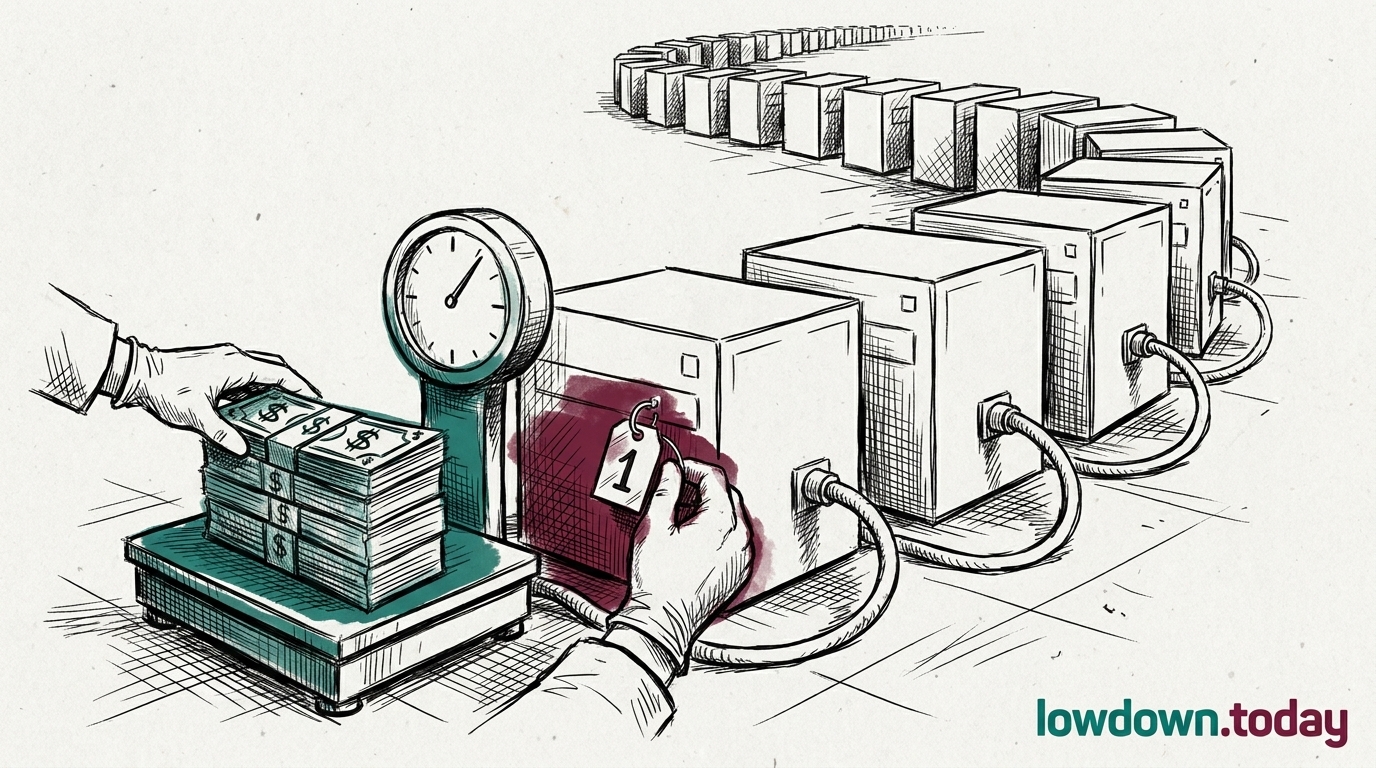
A ban in force since 2020 is being worked around from inside, by agreement, without a court or a provincial vote. Pure DC did something structurally similar in Dublin, building a microgrid that let it comply and stay where others gave up and left . Where Ofgem attaches a deposit and PJM attaches a premium, Uithoorn extracts payment in kind. The developer buys its way past the rule by handing the surrounding economy something it wants, which is a cheaper currency than cash and a good deal harder for the next council to replicate on demand.


Deep Analysis

In plain English

A Dutch province has a rule banning large data centres in this area to stop them straining the local grid. A developer called Switch Datacenters found a way around it: it agreed to pipe the waste heat from its planned data centre to nearby greenhouse growers, who currently heat their greenhouses with gas. Because that helps the growers cut their gas use, the municipality of Uithoorn and the grid operator agreed to let the data centre go ahead despite the ban.

Deep Analysis
Root Causes

The structural cause is that NH2020's blanket size threshold, 2,000 square metres or 5 MVA, was written before data centres of this scale existed in the area, leaving no route to approval for a legitimate large facility except a negotiated public-interest exception.

A second structural driver is that the growers' collective needs an alternative to gas heating, and waste heat from a data centre is a physically compatible byproduct, meaning the exemption exists because two otherwise separate infrastructure problems, data-centre siting and greenhouse decarbonisation, can be solved by the same pipe.

What could happen next?
  • Precedent

    A public-interest carve-out tied to waste-heat reuse gives other Dutch municipalities facing the same NH2020 constraint a working template for permitting large data centres.

First Reported In

Update #12 · Ofgem prices the grid queue by the megawatt

Nieuwe Meerbode· 4 Aug 2026
Read original
Different Perspectives
Government of Odisha
Odisha signed a $1.5bn agreement with HCLTech and Sarvam AI on 24 July for a sovereign AI data centre in Bhubaneswar, targeting 2028 operations. While regulators elsewhere price developers out of the queue, Odisha is bidding state financial assistance to bring capacity in, betting the AI infrastructure boom is worth courting rather than rationing.
Switch Datacenters and Uithoorn
The developer, the municipality, Liander and dozens of greenhouse growers signed a waste-heat agreement letting a 60 MVA facility proceed under a provincial rule that bans sites above 5 MVA. The public-interest exception argues the site relieves rather than adds to grid congestion, working around a standing ban from inside rather than waiting for it to change.
Iskandar Puteri residents
Residents protested in February over falling water pressure they attribute to ZDATA's 300 MW construction; ZDATA disputes causation and has not yet resolved the dispute with its wastewater-only pivot. The complaint sits unadjudicated while the operator advertises compliance to state authorities the residents cannot address directly.
Microsoft
Microsoft
DC Byte reports Microsoft looking to the Nordics for new capacity while Dublin's regional share falls to 15 per cent, though this is a market-intelligence inference rather than a company statement. Microsoft keeps its existing Dublin cloud region, which is costly to relocate, while directing new investment where power is cheaper and the queue is shorter.
ISO New England
ISO New England
ISO-NE proposed excluding new large loads from its Installed Capacity Requirement entirely, forcing data centres to bring their own generation or accept curtailment, even though New England's demand has been flat or falling for a decade. The reform is pre-emptive, written before the region has felt the strain PJM and MISO already report.
Ofgem
Ofgem
Ofgem opened its Data Centre Commitment Fee consultation on 29 July, arguing that free options on grid capacity let developers bank places on ten sites and abandon nine, crowding out projects that would build. It expects the deposit to filter the queue before the rule even takes final form.