Skip to content
Briefings are running a touch slower this week while we rebuild the foundations.See roadmap
Data Centres: Boom and Backlash
26APR

Pure DC's 110 MW Dublin microgrid skips queue

3 min read
09:44UTC

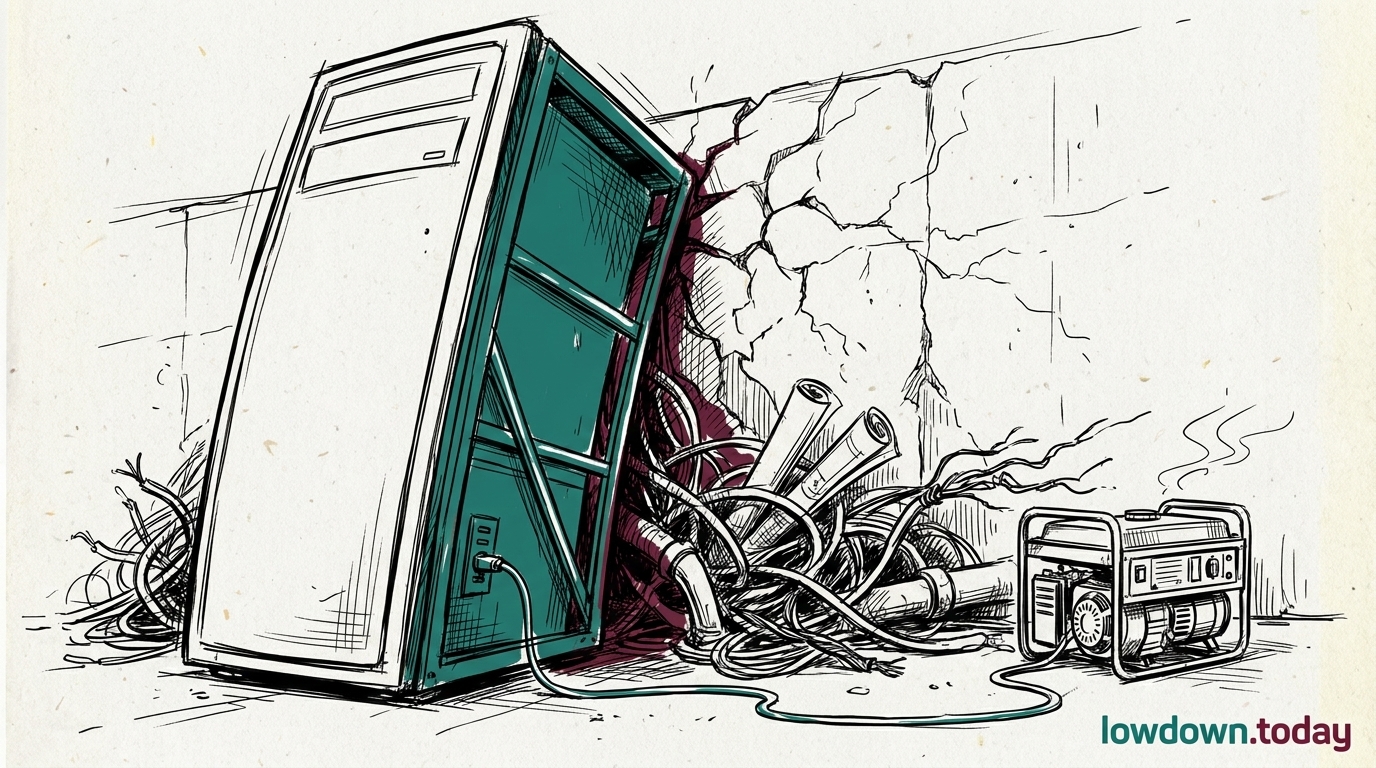
Pure DC's 110 MW Dublin microgrid became operational in April 2026, explicitly designed to bypass the Irish grid-connection queue and the CRU's 80%-renewables-within-six-years rule.

IndustryDeveloping
Key takeaway

Pure DC's 110 MW Dublin microgrid exits the CRU framework entirely; the regulator's own deadline lapsed 26 days ago.

Pure DC's 110 MW microgrid in Dublin became operational in April 2026, described by the developer as Europe's first at that scale. 1 The microgrid is explicitly designed to bypass the Irish grid-connection queue and the Commission for Regulation of Utilities (CRU) December 2025 rule requiring new data centres to source 80% of annual demand from additional Irish-sited renewables within six years of energisation.

Pure DC is a Dublin-based developer specialising in mid-scale colocation campuses for cloud and AI workloads. The CRU is Ireland's national energy regulator, the equivalent of Ofgem in the UK or FERC in the United States. Its December 2025 decision was the most restrictive data centre connection framework adopted by any European regulator, requiring new sites to procure additional Irish renewables (rather than buying existing capacity) plus matching dispatchable generation, all within a six-year window from going live.

Pure DC's bypass works on a regulatory technicality. A site that generates its own power through an on-site microgrid is not a "new connection" in the sense the CRU rule contemplates; it is a self-generator, falling outside the framework written for grid-connected loads. The 110 MW capacity is large enough to support a meaningful AI workload but small enough to keep the project below the threshold that triggers separate planning consents.

The CRU also required EirGrid and ESB Networks, the Irish transmission and distribution operators, to publish a data centre engagement and connection process by 31 March 2026. 2 No such publication was visible 26 days past that deadline as of this briefing's compilation date. The combination of Pure DC's microgrid bypass and the regulator-mandated documentation slipping past its 31 March deadline is the Irish microcosm of the broader pattern: constraint designed in policy, routed around in steel.

Deep Analysis

In plain English

In Ireland, data centres must typically apply to EirGrid, the national grid operator, to get connected to the electricity network. Dublin's grid area has been officially 'full' for new large data connections since 2021. Pure DC, an Irish data centre developer, built a different solution: a 110 MW microgrid. Instead of connecting to the public grid, it built its own power supply system, separate from the national network. Pure DC says no European data centre microgrid has previously reached 110 MW. The Irish regulator, the CRU (Commission for Regulation of Utilities), set a rule in late 2025 requiring new data centres to source 80% of their electricity from new Irish renewables. Pure DC's microgrid bypasses that rule because it never connects to the regulated grid. The CRU also told EirGrid to publish a new data centre connection process by 31 March 2026. As of late April 2026, that had not appeared.

Deep Analysis
Root Causes

The Irish grid's data centre moratorium in the Dublin area, maintained by EirGrid since 2021, was intended to cap concentrated industrial demand growth in a single grid district. It succeeded in restricting grid connections but created an incentive for operators to bypass the grid entirely via microgrids, which the CRU's December 2025 rules did not anticipate.

The 31 March deadline lapse is a secondary cause: the connection process publication was a concrete deliverable that EirGrid had four months to prepare. Its absence suggests either internal disagreement about how to handle BTM operators within the process, or a resource constraint at the regulatory level.

Escalation

Flat at the infrastructure level. The microgrid is operational and no legal challenge has been filed. The regulatory escalation risk is that CRU moves to extend the 80%-renewables obligation to BTM generation; this would require a new consultation, probable industry challenge, and a timeline of at least 12-18 months before any rule change takes effect.

What could happen next?
  • Precedent

    Europe's first 110 MW data centre microgrid in operation provides a replicable template for bypassing grid connection queues and renewables obligations across other EU member states with similar congestion conditions.

  • Risk

    If CRU extends the 80%-renewables obligation to BTM generation, Pure DC and similar operators face a retrofitting challenge: sourcing that volume of additional Irish renewables without grid connection is structurally difficult.

First Reported In

Update #1 · Boom hits wall: grid says no, states freeze

Commission for Regulation of Utilities (Ireland)· 26 Apr 2026
Read original
Different Perspectives
Johor state authority and Malaysian community
Johor halted Tier 1 and Tier 2 approvals after Malaysia's first water-rights protest; applicants face a mid-2027 floor on connections. The Diplomat's framing under UN Guiding Principles on Business and Human Rights imports a disclosure regime that ASEAN regulators had not previously applied to data-centre water consumption.
G42 and UAE sovereign programme
G42 confirmed all long-lead equipment procured for the 200 MW Stargate UAE first phase targeting Q3 2026; sovereign demand pull from the UAE government as anchor tenant provides cost patience commercial capital cannot replicate despite year-round mechanical cooling raising PUE to 1.35-1.50.
OpenAI and UK government
OpenAI cited UK industrial electricity at 'more than four times' US and Nordic rates as a co-equal Cobalt Park barrier alongside NESO's 50 GW grid queue. The named multiplier drops the UK off the global top-10 for new greenfield builds independent of any queue reform NESO can deliver in the near term.
Ecologistas en Acción and community challengers
Ecologistas en Acción's TSJ Aragón challenge to Amazon's 30-building expansion produced no ruling in the window, leaving Aragón's third-place global ranking under judicial cloud. The Virginia Court of Appeals precedent on inadequate public notice gives European community groups a template to apply to Spanish regional planning law.
FERC and US state regulators (NESO, EirGrid)
FERC pledged on 16 April to act by end of June on RM26-4-000, the first federal rulebook for loads above 20 MW. Ireland's CRU on-site-generation rule, now templated by Pure DC's 110 MW Dublin microgrid, shows that a freeze paired with a defined compliance route can reopen a closed market.
Hyperscaler operators (Microsoft, Alphabet, Amazon, Meta)
All four reported Q1 2026 earnings with no downward revision to combined 2026 capex of $725 billion, treating the moratorium wave as a routing problem rather than a demand signal. Microsoft's $37 billion AI annual run rate confirms that capital allocation runs on quarterly board cycles that five-to-eight-year consent timelines cannot disrupt.

