Skip to content
You can now search across every topic, entity and event.What's new
Data Centres: Boom and Backlash
25JUL

New Mexico vetoes Jupiter gas pipeline

2 min read
11:23UTC

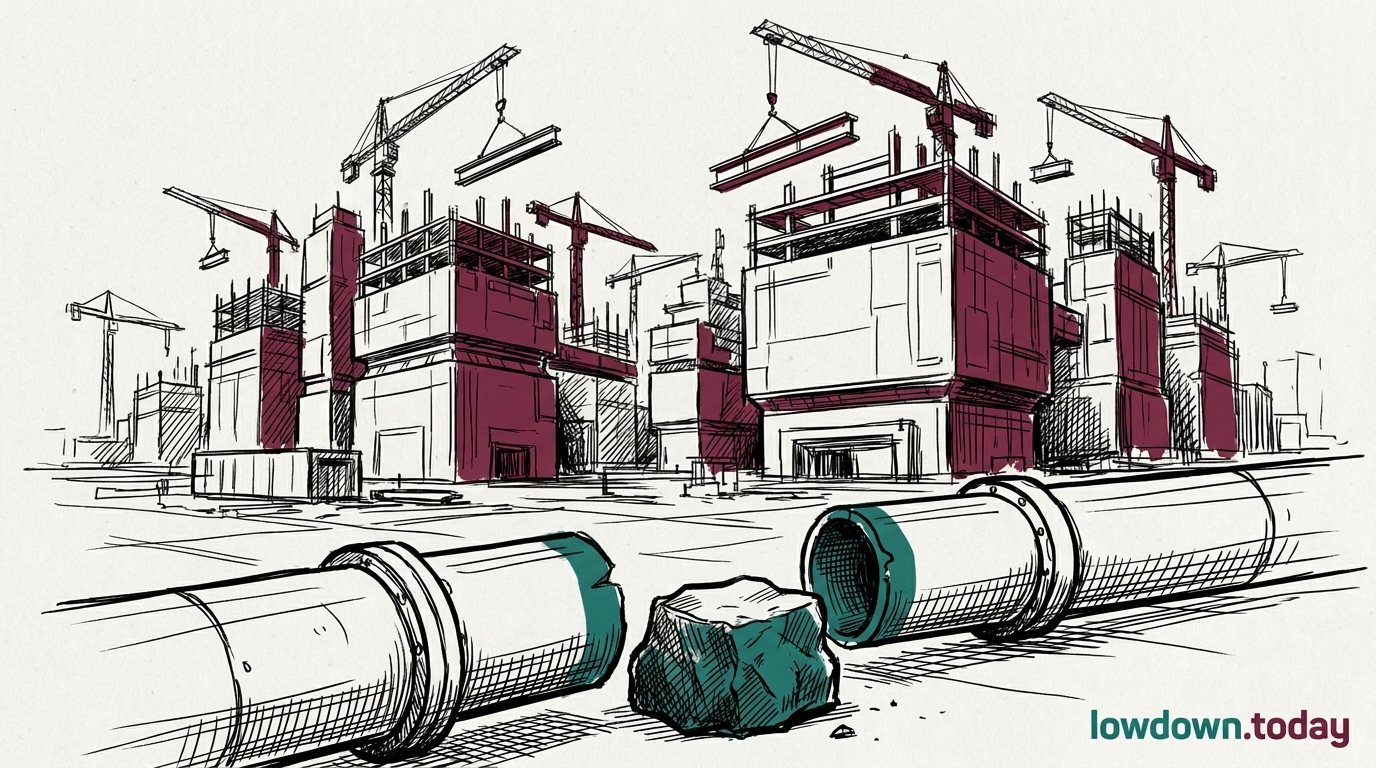
Stephanie Garcia Richard refused Energy Transfer's gas lateral to Project Jupiter for a second time on 15 July, blocking the power source rather than the campus over 10.1 million tons a year of emissions.

IndustryDeveloping
Key takeaway

Opponents cut the fuel line to a data centre they cannot stop building, leaving the campus with nothing to power.

Stephanie Garcia Richard, New Mexico's State Land Commissioner, rejected Energy Transfer's 17-mile Green Chili gas lateral for a second time on 15 July, refusing the branch line meant to feed Project Jupiter. That campus, the Oracle and OpenAI hyperscale build at Santa Teresa, keeps pouring concrete; the behind-the-meter power plant meant to run it, an onsite generator wired straight to the servers rather than through the public grid, now has no fuel. Garcia Richard weighed roughly $249,000 in state trust revenue, money the public land she manages must earn for New Mexico's schools, against 10.1 million tons a year of greenhouse-gas (GHG) emissions. 1

A developer refused by one board usually finds a friendlier jurisdiction. New York froze new permits by decree and Oregon priced the load through tariffs ; each reached for the campus or its electricity bill. Garcia Richard reached for the pipeline instead. She holds title to the state trust land, public land a commissioner manages for named beneficiaries, that the lateral must cross, so her refusal follows the corridor wherever Jupiter sits.

The consent to build stands; the fuel to switch the servers on does not. A county moratorium can be litigated as a regulatory taking, the claim Texas developer RCM Hill brought against Hill County in May. A fiduciary refusing to lease trust land she is statutorily bound to manage sits on far firmer ground, which is what makes this veto harder to unwind than a zoning pause.

Deep Analysis

In plain English

New Mexico's State Land Commissioner is an elected official who manages land the state holds in trust, mostly to fund public schools. Energy Transfer wanted to build a 17-mile gas pipeline across some of that trust land to power Project Jupiter, a huge new data centre near Santa Teresa being built for Oracle and OpenAI. Commissioner Stephanie Garcia Richard said no, for the second time. She calculated the state would only earn $249,000 from letting the pipeline cross its land, against 10.1 million tons a year of greenhouse gas (GHG) emissions, the pollution that traps heat and drives climate change. The data centre itself keeps being built either way; only this one power route is blocked.

Deep Analysis
Root Causes

Energy Transfer routed the Green Chili lateral across New Mexico state trust land rather than private or federal land, triggering a fiduciary-duty test that a private right-of-way would not: trust parcels exist primarily to fund public schools, and the commissioner is statutorily bound to weigh forgone revenue against forgone alternative uses.

Project Jupiter's 17-mile lateral needed to cross trust land specifically because it was designed as a behind-the-meter route bypassing the grid interconnection queue, and the shortest such route ran through parcels the state, not a private landowner, controls.

What could happen next?
  • Consequence

    Project Jupiter's developers must now find an alternative power source or route for the lateral, likely adding months to timelines already tied to a behind-the-meter design meant to skip grid queues.

  • Precedent

    A second consecutive rejection on the same trust-land fiduciary grounds gives other state land offices a tested template for vetoing ancillary gas infrastructure without touching a campus's own building permit.

First Reported In

Update #11 · Pipeline vetoed, campus keeps building

Albuquerque Journal· 25 Jul 2026
Read original
Different Perspectives
Indian data-centre investors
Amazon, CPPIB and Google committed billions to Indian data-centre capacity within a single week in June, a market absorbing hyperscale investment while New Mexico and Maryland tighten permitting this fortnight. Every US moratorium makes that alternative more attractive, not less.
Gulf sovereign capital and hyperscale infrastructure investors
GE Vernova's turbine backlog grew to 116 GW and Synergy counted a 45 GW US pipeline the same week New Mexico killed a pipeline outright. Capital keeps moving toward campuses that can secure power fastest, in the Gulf as much as Texas or Virginia.
New Mexico and Virginia regulators, and the counties opposing the build-out
Garcia Richard killed Energy Transfer's Green Chili lateral for a second time on 15 July, and Sierra, Santa Fe and Socorro counties layered moratoria on top; Virginia's DEQ, lacking a PFAS rule, issued Amazon's Lake Anna permit regardless. Consent belongs in statute, and New Mexico's 2027 bill is the next test of whether that principle spreads.
Global hyperscale operators
Operators are still filing gigawatt-scale campuses and Meta is proceeding with its $10bn Lebanon, Indiana site despite the county-level bans nearby, betting Q2 capex outruns the patchwork of restrictions. Industry framing casts New York's freeze, Oregon's surcharge and Indiana's bans as taxes and levies that push build-out toward faster-permitting jurisdictions such as India and the Gulf.
EirGrid
EirGrid
EirGrid set a 900 MW instantaneous demand-loss ceiling because a single voltage dip can trip many data centres onto backup power at once, risking imbalance above 1,150 MW. It wrote the limit into a standing procedure rather than waiting for an emergency to force one.
US host communities and ratepayers
Prince William residents backed the 8-0 denial of Dulles South over the Occoquan watershed, drinking water for eight million people, while Oregon's approved tariff cuts residential bills 1.3% by charging large loads 29% more. Their position: consent and cost-attribution belong in law, not left to a developer's or a utility's discretion.

