Skip to content
Briefings are running a touch slower this week while we rebuild the foundations.See roadmap
Cybersecurity: Threats and Defences
8MAY

Trump proposes $707m CISA cut, 860 jobs

3 min read
10:57UTC

The FY27 budget would leave CISA on roughly $2bn with 860 fewer staff. The counter-ransomware initiative is already gone.

TechnologyDeveloping
Key takeaway

CISA is being asked to enforce a rising tempo of federal deadlines with one-third fewer people.

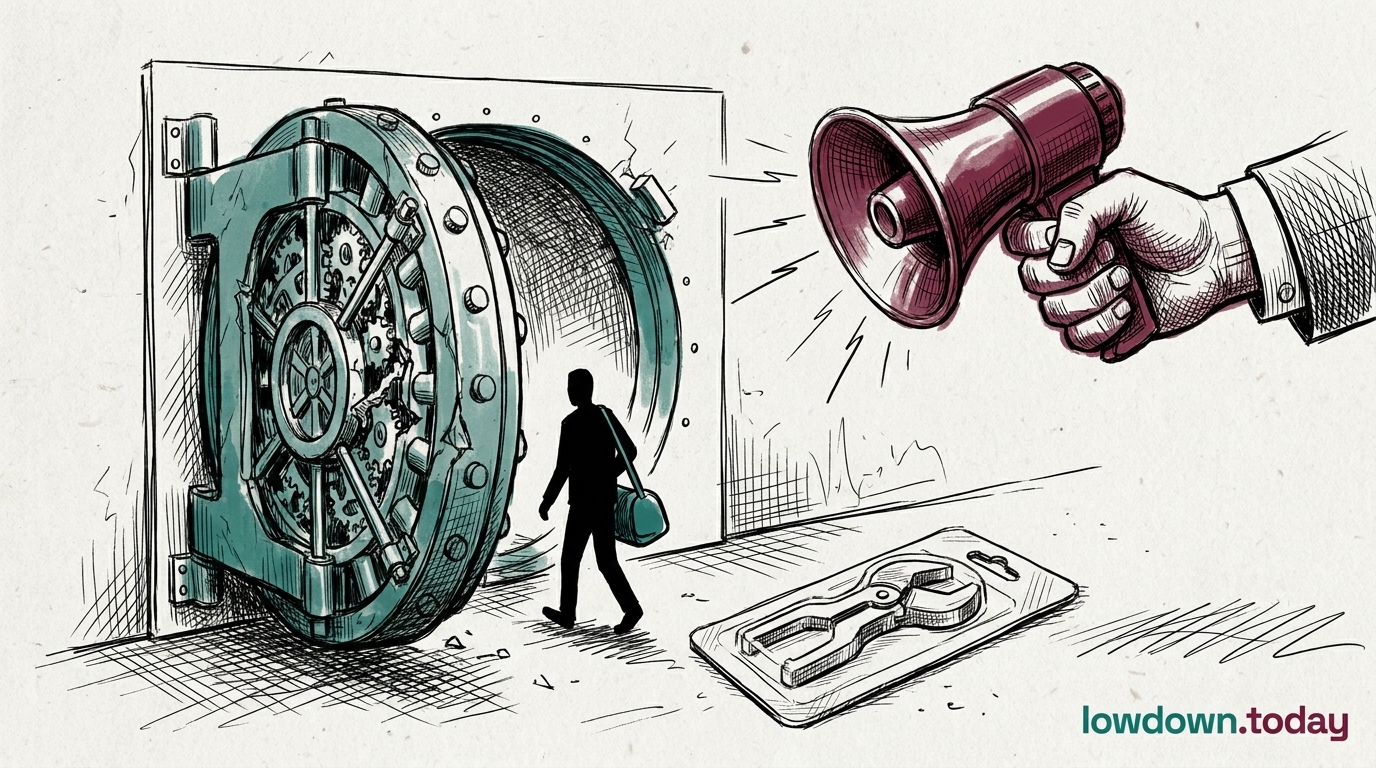
The Trump administration's FY27 budget proposal, published on 7 April 2026, proposes cutting the Cybersecurity and Infrastructure Security Agency (CISA) by $707 million, eliminating 860 positions and bringing the agency's operating budget to roughly $2 billion 1. The counter-ransomware initiative, which coordinated federal response to incidents including the 2021 Colonial Pipeline attack, had already been cancelled under earlier reductions. CISA lost roughly one-third of its staff through 2025-2026 cuts before the FY27 number landed. The FBI's cybercrime obligations would fall a further $560 million, with around 1,900 FBI staff affected across cyber and adjacent portfolios.

The National Institute of Standards and Technology (NIST), the US federal standards body for measurement and technology, is also inside the cuts envelope. NIST maintains the vulnerability-scoring baselines, Common Vulnerabilities and Exposures (CVE) enrichment and Software Bill of Materials work the private sector relies on to run any modern patch-management programme. Stripping budget from NIST at the same time as CISA removes both the agency that publishes the Known Exploited Vulnerabilities (KEV) deadlines and the agency that scores the CVEs those deadlines attach to.

The budget proposal is not law; Congressional appropriations can modify or reject it through markup and committee amendments. But the direction of travel is already set by prior reductions that cleared the appropriations process. For US private-sector Chief Information Security Officers, the federal KEV deadlines issued in April, CitrixBleed 3, the F5 reclassification, the 17-year-old Office bug, are now scheduled to be enforced by an agency with one-third fewer staff. The UK and EU, moving the opposite way on cyber regulation, are widening the transatlantic policy gap at exactly the point the threat cadence is tightest.

Deep Analysis

In plain English

CISA (the Cybersecurity and Infrastructure Security Agency) is the US government body that helps protect the country's critical infrastructure, businesses, and government systems from cyber attacks. It manages the Known Exploited Vulnerabilities list, which tells government and private organisations which security flaws need patching urgently. It also ran the programme that coordinated responses to major ransomware attacks. The Trump administration's FY27 budget, published in April 2026, proposes cutting CISA's budget by $707 million and eliminating 860 jobs. The counter-ransomware coordination programme has already been cancelled. The FBI's cybercrime budget would also be cut by $560 million, affecting around 1,900 staff. This is happening at the same time as the briefing is documenting multiple ongoing nation-state cyber campaigns against US infrastructure and a record level of ransomware attacks.

Deep Analysis
Root Causes

The FY27 budget proposal reflects the Trump administration's 'departments can handle their own cyber' position, which distributes cybersecurity responsibility to sector-specific agencies (Department of Energy, Department of Transportation, Department of Health and Human Services) rather than centralising it at CISA. This logic is coherent in theory but requires the sector agencies to have cyber capacity they currently lack.

NIST's inclusion in the cuts envelope is particularly consequential. NIST maintains the CVE enrichment and CVSS scoring standards that underpin the KEV catalogue's technical credibility. Reduced NIST capacity for vulnerability characterisation degrades the speed and quality of KEV additions, the exact mechanism that gives enterprises their patching priority signals.

What could happen next?
  • Risk

    The counter-ransomware initiative's cancellation removes the federal coordination function that organised responses to Colonial Pipeline and similar CNI ransomware incidents; the next equivalent attack will encounter a thinner federal response structure.

    Immediate · 0.8
  • Risk

    NIST cuts will slow CVE enrichment and CVSS scoring, degrading the quality and timeliness of KEV additions and the private-sector patch-prioritisation signals that depend on them.

    Short term · 0.75
  • Opportunity

    UK and EU-based cybersecurity vendors and service providers will find an expanded market among US enterprises seeking to replace federal threat-intelligence and compliance infrastructure with commercial equivalents.

    Medium term · 0.6
First Reported In

Update #1 · Stryker MDM wipe exposes identity perimeter

UK Parliament· 17 Apr 2026
Read original
Different Perspectives
Norwegian Security and Service Organisation
NSSO was a prior victim of Ivanti EPMM zero-days and now faces CVE-2026-6973 in the same product line. Ivanti's position that on-premises EPMM is the only affected tier provides limited reassurance to a government body that has already been compromised twice via the same vendor's MDM infrastructure.
ENISA and EU CNA Ecosystem
ENISA onboarded four new CVE Numbering Authorities under ENISA Root on 6 May, expanding EU-sovereign vulnerability disclosure infrastructure in the same week three critical CVEs entered the CISA KEV catalogue. Greater CNA coverage inside the EU reduces dependence on US-anchored MITRE for European-sourced vulnerability identifiers.
German Federal Office for Information Security (BSI)
BSI rated CVE-2026-41940 in cPanel 'very high', reflecting Germany's exposure across shared-hosting infrastructure for Mittelstand businesses. The 65-day zero-day window and the amplification effect of cPanel's multi-tenancy model mean the BSI rating applies to thousands of German SME websites hosted on affected servers.
Republic of Korea National Intelligence Service
South Korea's NIS tracks UNC1069's tooling evolution; the CSIS paper argues the ROK's intelligence on DPRK cyber operations should feed joint US-ROK situational awareness rather than bilateral channels that move too slowly for real-time supply-chain response.
Democratic People's Republic of Korea
UNC1069's Axios operation scales North Korea's supply-chain access from niche Python packages to the most downloaded HTTP client in the JavaScript ecosystem. WAVESHAPER.V2 provides persistent access to development environments where cryptocurrency wallets and API keys are stored, serving the sanctions-evasion funding logic behind earlier DPRK toolchain operations.
WatchTowr Labs
WatchTowr Labs
WatchTowr Labs disclosed CVE-2026-41940 after the 28 April patch shipped, providing the 65-day exploitation timeline from KnownHost telemetry. The disclosure is textbook; the open question is why WebPros did not catch the cpsrvd CRLF class flaw before external researchers found it under active exploitation.
