Skip to content
You can now search across every topic, entity and event.What's new
Cuba Dispatch
4AUG

Private banks built on sanctioned ground

4 min read
10:34UTC

The reform authorises private corporate banks, dollar accounts without forced peso conversion, a crypto framework and private remittance agents, ending GAESA's monopoly on diaspora flows. The catch: GAESA is itself a US-blacklisted entity, so the new channel inherits its sanctions exposure.

PoliticsDeveloping
Key takeaway

The reform legalises private banking on top of GAESA infrastructure the US has already blacklisted.

Cuba's reform authorises private corporate banks under Banco Central de Cuba supervision on the same regulatory terms as state banks, plus private non-bank lenders for microcredit 1. The Banco Central de Cuba is Cuba's central bank, the regulator the reform makes supervisor of the new sector. Private actors may now hold and withdraw dollars from accounts without forced conversion to pesos 2, a tacit admission that the peso no longer functions as a store of value. The package establishes a cryptocurrency framework for domestic and cross-border transfers, licenses the state mobile-payments platform Transfermovil as a non-bank financial institution, and creates private exchange houses and last-mile payment agents, the final handlers delivering diaspora remittances to recipients 3.

That last measure ends the monopoly on diaspora flows held by GAESA, the military business conglomerate that controls roughly 60% of Cuba's hard-currency revenue and has channelled remittances since the Visa and Mastercard card rails went dark in early June . The reform also commits to "successive devaluations", step-by-step official weakenings of the peso, of the rate now 555 pesos to the dollar, toward the informal 670 4. That 115-peso gap is a 21% premium, which in practice means a household paid in pesos loses a fifth of its purchasing power the moment it needs dollars for imported food or medicine.

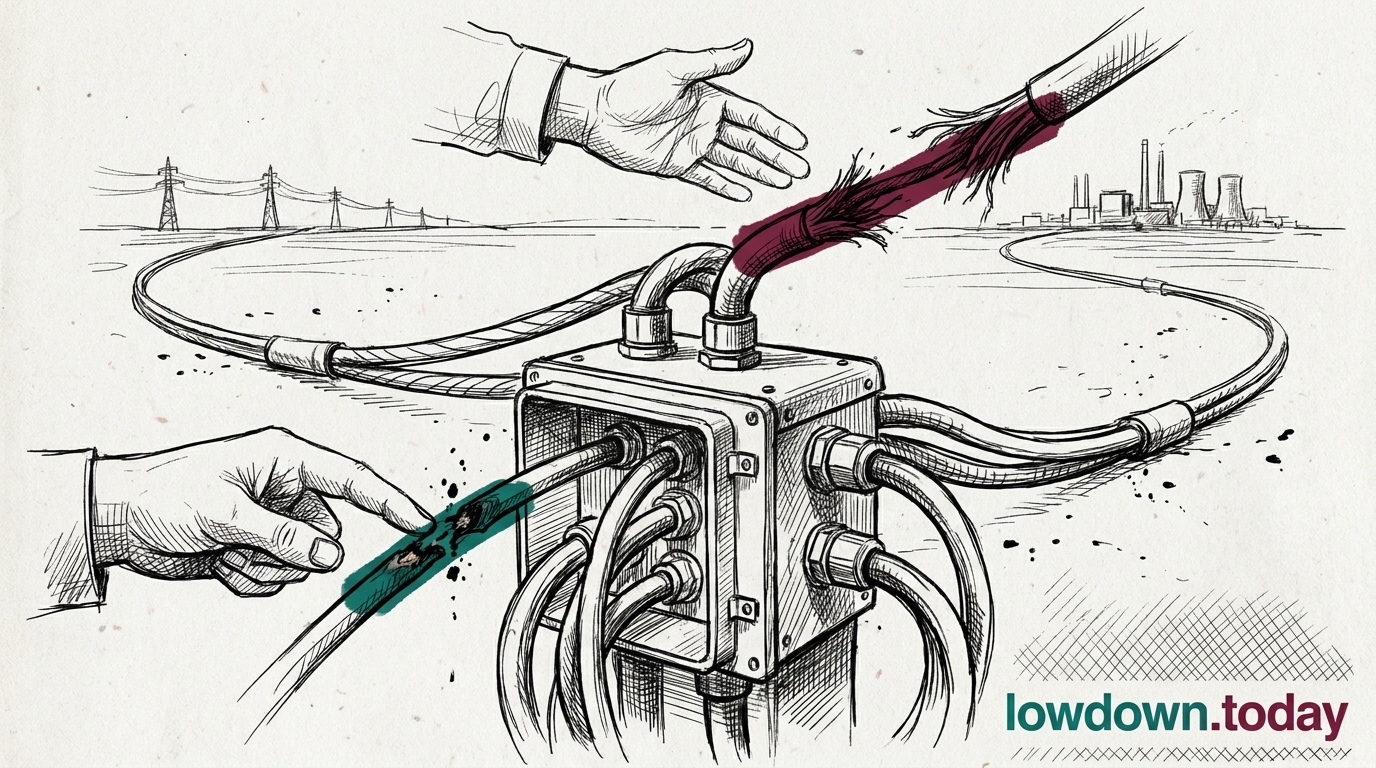
The workaround has a structural flaw. GAESA is itself a designated entity on the US Specially Designated Nationals list, a blacklist barring any dollar-clearing firm from dealing with it, and the same designations that named GAESA's security ministries drove the card and hotel exits this fortnight. Any new private channel that touches GAESA infrastructure inherits the same legal exposure to US secondary sanctions. The devaluation commitment carries its own precedent risk: the January 2021 Tarea Ordenamiento currency unification saw its single official rate collapse within months as the informal market reasserted a faster parallel rate, fuelling inflation. A managed step-down chasing an informal rate that moves faster than the official one can follow is the same trap, now larger.


Deep Analysis

In plain English

Cuba is legalising private banks for the first time since the 1960 nationalisations. Until June 2026, only the state ran banks on the island. Now Cubans will be able to open accounts at private banks, keep dollars without converting them to pesos, and send or receive money through new private payment agents. Cuba's main military conglomerate, GAESA, previously ran the diaspora money transfer system but sits on the US sanctions blacklist. Any new private bank that touches GAESA faces the same US sanctions exposure that drove Visa and Mastercard out of Cuba in June 2026. The new system needs to work entirely outside GAESA's infrastructure, which is harder than it sounds because GAESA owns so much of Cuba's commercial network.

Deep Analysis
Root Causes

Cuba's dual-currency dysfunction has a specific origin: the MLC (Moneda Libremente Convertible) digital payment system, introduced after 2019, created a two-tier economy where state shops accepting hard currency excluded peso-only households. The Tarea Ordenamiento of 2021 attempted to unify the currencies but triggered 500%+ inflation by removing the fixed exchange-rate anchor before supply-side conditions existed to absorb the price signal.

The reform's commitment to 'successive devaluations' acknowledges this failure explicitly. The official rate of 555 versus informal 670 is a 21% premium that banquero networks earn simply by clearing transactions that formal channels cannot. Private exchange houses, now authorised, compete directly for this spread.

A second root cause is the Visa and Mastercard suspension. Cuba had no domestic card-clearing infrastructure capable of substituting for the international card rails; the suspension rendered all card payments impossible. Transfermovil's promotion to non-bank financial institution status is the structural response, but its ability to handle cross-border transactions without a US-connected correspondent bank is untested.

What could happen next?
  • Consequence

    Private dollar accounts attract diaspora remittances only if the formal channel demonstrates GAESA separation; without correspondent bank sign-on, the informal banquero network retains the hard-currency flow.

  • Risk

    Cuba's cryptocurrency framework may attract OFAC scrutiny if used for state-to-state settlements, adding a new sanctions exposure layer to an already constrained financial sector.

First Reported In

Update #8 · Cuba opens its economy as the door slams

CiberCuba· 19 Jun 2026
Read original
Different Perspectives
OCDH (Observatorio Cubano de Derechos Humanos), Madrid
OCDH itemised its previously reported first-half tally of 1,949 repressive actions into named categories, including 91 cases against independent journalists and 50 retaliations against prisoners' relatives. The monitor documents state conduct without endorsing sanctions as the remedy, a distinct position from Washington's designation campaign.
US State Department and OFAC
Four Federal Register notices on 31 July confirmed GAESA's own SDN designation dates to 7 May, closing a gap left by coverage that described only GAESA-controlled assets as sanctioned; Rubio separately called US sympathy for Cuba anti-Americanism. Whether the lagged gazetting reflects deliberate sequencing or administrative backlog is not established.
Unión Eléctrica (UNE), Cuba's state grid operator
UNE's load-dispatch director blamed the 2 August total collapse on a 110kV Havana substation fault and a Felton trip, not the storm damage CNN and AP cited, and a day later Decreto 160 took force, de-listing 46 private-sector activities. Havana's own record was more specific, and more severe, than the wire account.
Spain (Foreign Ministry and hotel investors)
Madrid has worked to shield Spanish hotel operators exposed to Cuba, and OFAC's General Licences 2 and 3 winding down the Guernsey-listed CEIBA Investments fund give those investors a defined exit rather than an abrupt block. Spain's stake in managing an orderly wind-down, not confronting the designation itself, keeps it distinct from Havana's collective-punishment framing.
Cuban Ministry of Foreign Affairs (MINREX)
Foreign Minister Bruno Rodriguez Parrilla called the 23 July designations "castigo colectivo" and defended the medical missions as protecting healthcare access for patients in the countries where Cuban doctors serve, without addressing the evasion allegation against Coral Maritima directly.
US Treasury (OFAC) and State Department
OFAC designated Cuba's medical-missions operators and named the Mariel-Coral Maritima transfer as GAESA sanctions evasion on 23 July, characterisations Washington has not independently substantiated in public documents reviewed. The administration frames the wave as closing hard-currency channels sector by sector, following the same pattern applied to tourism and financial clearing in June and July.