Skip to content
You can now search across every topic, entity and event.What's new
Autonomous Systems: Land & Sea
18JUL

Common Combat Vessel buries the Type 83 destroyer

2 min read
13:42UTC

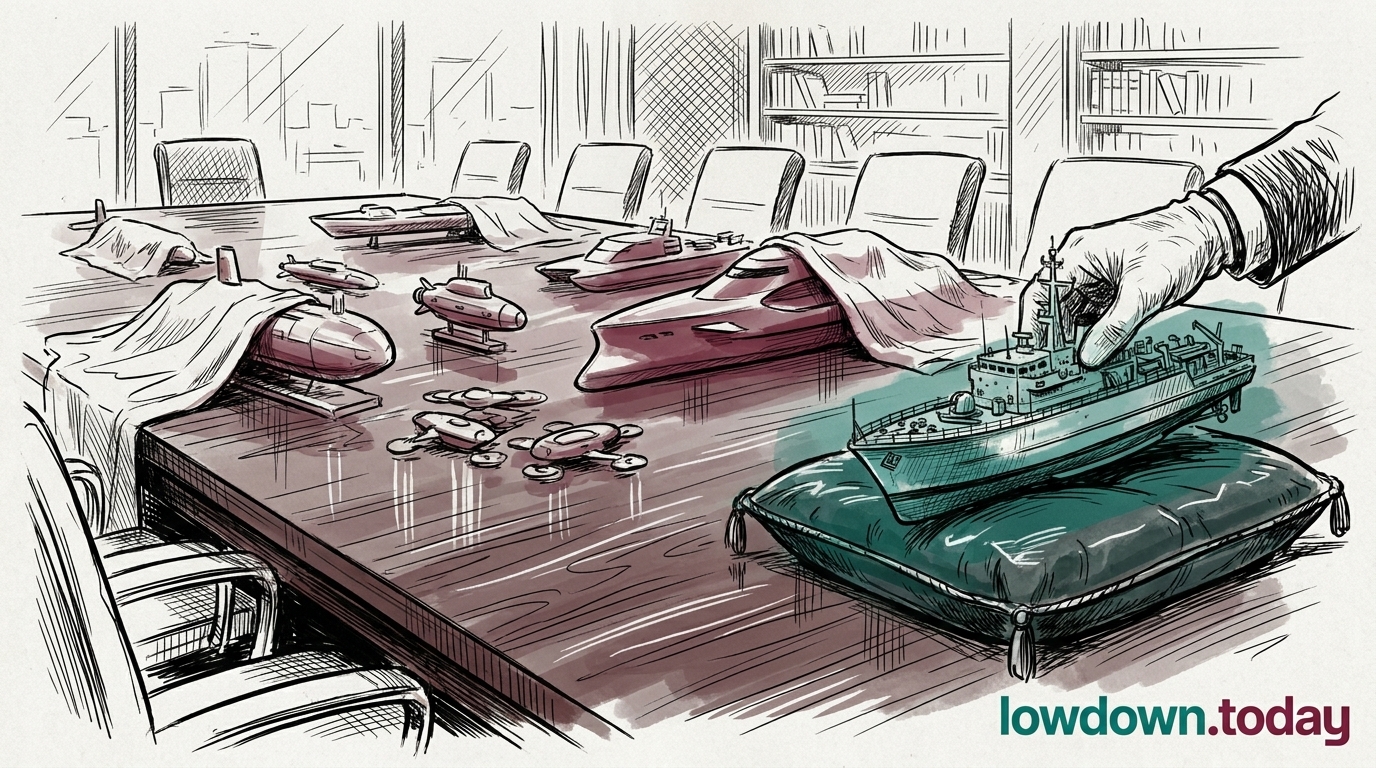
The same plan confirmed at least six Common Combat Vessels, recast as drone-control hubs, in place of the Type 83 destroyer the Royal Navy had been expected to buy.

TechnologyDeveloping
Key takeaway

The Royal Navy cancelled a destroyer for a drone-carrier concept, a bigger shift for shipbuilders than the class-naming.

The Common Combat Vessel replaced the planned Type 83 destroyer in the 30 June plan, with at least six hulls now framed as control nodes for fleets of aerial, surface and underwater drones. For the shipbuilding base the reframing is the whole story: the requirement shifts from a high-end air-defence combatant to a vessel whose value is the drones it commands.

The move gives the four newly named uncrewed classes a crewed hub to operate from, and it slots alongside the autonomous mine-countermeasures package the Royal Navy pushed into the Gulf a week earlier . A destroyer competition and a drone-mothership competition reward different suppliers, different combat systems and different integration skills, so the cancellation resets who is favoured to win.

The 30 June plan attached no unit price, in-service date or shipyard to the Common Combat Vessel, the same silence that surrounds the four named classes.


Deep Analysis

In plain English

The navy has dropped a planned new class of large destroyer and will instead build at least six cheaper ships designed mainly to control fleets of drones in the air, on the sea and underwater. For the towns and yards that build warships this is a big change: the work shifts from building a top-end warship to building a mothership for robots, which needs different skills and different contractors.

Deep Analysis
Root Causes

Cost is the proximate cause: a full Type 83 air-defence destroyer programme sits above what the settlement funds, so the requirement is being reshaped around a cheaper hull whose value is the drones it directs.

Doctrine is the deeper cause: the same 'uncrewed wherever possible' posture that produced the Type 91-94 classes needs a crewed node to command them, and the Common Combat Vessel is that node.

What could happen next?
  • Consequence

    Shipbuilders and combat-system suppliers positioned for a Type 83 destroyer competition must re-pitch for a drone-hub requirement.

  • Risk

    Substituting a control hub for a high-end destroyer could leave an air-defence capability gap if the uncrewed platforms slip.

First Reported In

Update #5 · Britain names four robot warship classes

GOV.UK· 3 Jul 2026
Read original
Causes and effects
This Event
Common Combat Vessel buries the Type 83 destroyer
A crewed flagship programme has been cancelled and rewritten as an autonomy-command platform, changing what the primes who expected a destroyer competition are now bidding to build.
Different Perspectives
RUSI naval-procurement analysts
RUSI reads Thales-Exail as backward integration into a supply chain Thales already depended on, and the mothership order as the true bottleneck behind Britain's autonomy transition, not the drones themselves. Firm specifications for Type 91-94 without a named contractor mark a requirement stage, not a procurement commitment.
US Defense Innovation Unit
DIU used its Other Transaction Authority to select Norway's Kongsberg over a US-only team to design the CAMP extra-large underwater vehicle, due for concept design in the third quarter of 2026. DIU values proven HUGIN-class vehicle hours over the domestic-sourcing preference a standard procurement track would apply.
UK Ministry of Defence
Defence Minister Luke Pollard confirmed on 17 July that Britain will spend GBP 90 million on three Norwegian-built mine-hunting motherships, retiring HMS Chiddingfold the same fortnight after 42 years' service. The motherships, not more drones, are the bottleneck the Royal Navy is actually funding to hold its autonomy timetable.
Kongsberg
Kongsberg
Kongsberg's HUGIN line won a US Navy XLUUV design lead from the Defense Innovation Unit on 15 July while the same product family closed Main Supplier and HUGIN-order deals with Fugro and DOF. One Norwegian programme now serves a US design study, a European AUKUS bid and two commercial survey contracts at once.
Thales
Thales
Thales agreed on 6 July to pay EUR 3.9 billion for Exail Technologies, folding sonar, vehicle and navigation production under one French roof rather than continuing to buy in the vehicle layer. The deal turns Thales into a single vertically-integrated bidder against Kongsberg's DRASS-partnered European AUKUS counter-bid.
China (military commentary)
Chinese military commentary has called uncrewed maritime equipment 'an excellent force multiplier' that cannot overturn the fundamental logic of naval warfare, the lone voice against the Western consensus that autonomy is the central axis of naval modernisation. Beijing reads the airdrop trial as an incremental logistics fix, not London's claimed doctrinal breakthrough.

