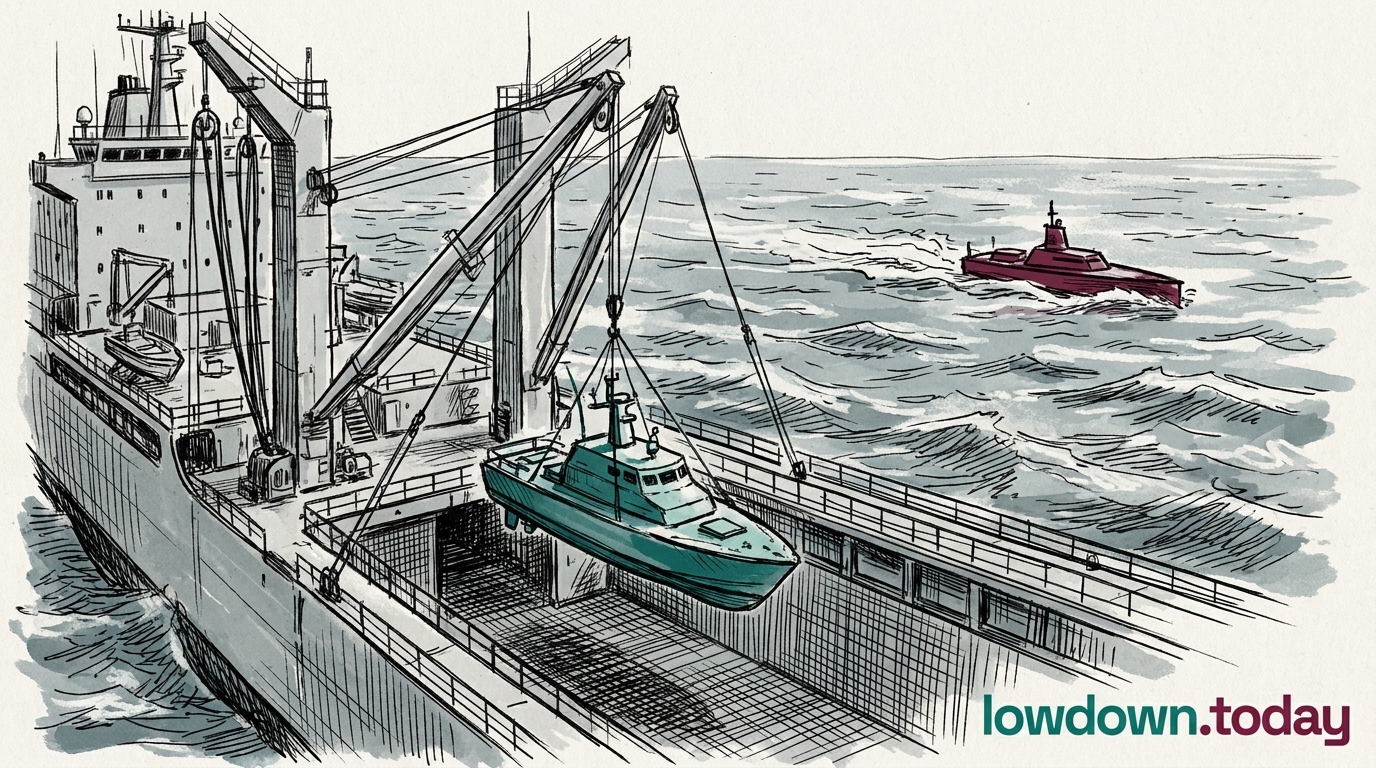
The Ministry of Defence attached a £1.5 billion, four-year funding line and a 2030 delivery target to the Royal Navy's four newly designated uncrewed hulls on 16 July 2026, publishing their first size figures.1 The classes were first named in the 30 June Defence Investment Plan; the detail now firms up what each hull is for.
Type 91 is an uncrewed missile platform of roughly 70 to 75 metres; Type 92 an autonomous anti-submarine warfare platform near 90 metres; Type 93 an extra-large uncrewed submarine (XLUUV) grown from the existing Excalibur trials programme for long-endurance surveillance; Type 94 an uncrewed sensor platform of up to 3,000 tonnes for fleet and homeland air defence. The Ministry targets the first large autonomous vessels, including a prototype missile platform and XLUUVs, in service by 2030.
That architecture sits alongside the at least six Common Combat Vessels recast as drone-control hubs, sketching a surface fleet where crewed motherships direct uncrewed shooters and sensors rather than fighting alone. No contractor is named and no in-service date beyond the 2030 aspiration is set, which leaves the delivery risk on a programme now sized in metres and billions but not yet in signed steel.




