Skip to content
Welcome, thoughtbot's Giant Robots listeners!Start here
Autonomous Systems: Land & Sea
7OCT

Common Combat Vessel buries the Type 83 destroyer

2 min read
12:59UTC

The same plan confirmed at least six Common Combat Vessels, recast as drone-control hubs, in place of the Type 83 destroyer the Royal Navy had been expected to buy.

TechnologyDeveloping
Key takeaway

The Royal Navy cancelled a destroyer for a drone-carrier concept, a bigger shift for shipbuilders than the class-naming.

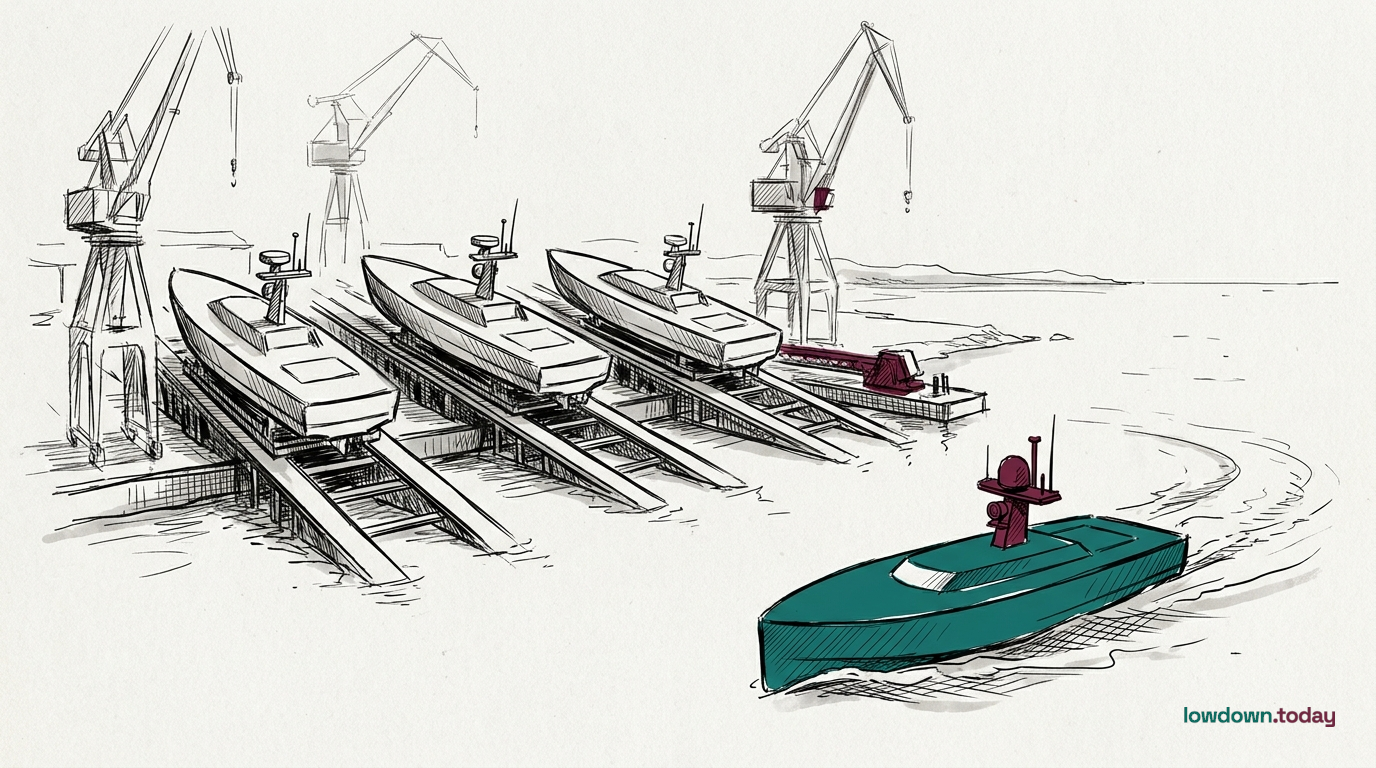
The Common Combat Vessel replaced the planned Type 83 destroyer in the 30 June plan, with at least six hulls now framed as control nodes for fleets of aerial, surface and underwater drones. For the shipbuilding base the reframing is the whole story: the requirement shifts from a high-end air-defence combatant to a vessel whose value is the drones it commands.

The move gives the four newly named uncrewed classes a crewed hub to operate from, and it slots alongside the autonomous mine-countermeasures package the Royal Navy pushed into the Gulf a week earlier. A destroyer competition and a drone-mothership competition reward different suppliers, different combat systems and different integration skills, so the cancellation resets who is favoured to win.

The 30 June plan attached no unit price, in-service date or shipyard to the Common Combat Vessel, the same silence that surrounds the four named classes.

Deep Analysis

In plain English

The navy has dropped a planned new class of large destroyer and will instead build at least six cheaper ships designed mainly to control fleets of drones in the air, on the sea and underwater. For the towns and yards that build warships this is a big change: the work shifts from building a top-end warship to building a mothership for robots, which needs different skills and different contractors.

Deep Analysis
Root Causes

Cost is the proximate cause: a full Type 83 air-defence destroyer programme sits above what the settlement funds, so the requirement is being reshaped around a cheaper hull whose value is the drones it directs.

Doctrine is the deeper cause: the same 'uncrewed wherever possible' posture that produced the Type 91-94 classes needs a crewed node to command them, and the Common Combat Vessel is that node.

What could happen next?
  • Consequence

    Shipbuilders and combat-system suppliers positioned for a Type 83 destroyer competition must re-pitch for a drone-hub requirement.

  • Risk

    Substituting a control hub for a high-end destroyer could leave an air-defence capability gap if the uncrewed platforms slip.

First Reported In

Update #5 · Britain names four robot warship classes

GOV.UK· 3 Jul 2026
Read original →
Causes and effects
This Event
Common Combat Vessel buries the Type 83 destroyer
A crewed flagship programme has been cancelled and rewritten as an autonomy-command platform, changing what the primes who expected a destroyer competition are now bidding to build.
Different Perspectives
DNV and Fassmer
DNV and Fassmer
Signed a memorandum at SMM in Hamburg, announced on 10 September, to seek an approval in principle for autonomous naval vessels. DNV's Rasmus Stute said autonomy is "becoming one of the key pillars in defence".
Belgian Ministry of Defence
Awarded Exail Robotics Belgium €9.87m on 14 September, without competition, for three TRIDENT systems carrying the K-STER C mine-disposal vehicle for Ukraine. It had tendered separately in July for twelve tethered ROVs, not yet bought.
IRGC Navy (Iran)
IRGC Navy (Iran)
IRGC spokesman Hossein Mohebbi said the IRGC Navy seized a US Kingfish mine-hunting vehicle in the Strait of Hormuz on 27 September, valuing it at several million dollars. US Central Command calls the claim "clearly desperate"; no verified imagery exists.
UK Defence Intelligence and Kraken
Defence Intelligence said the 12 September clash "almost certainly marks the first time" Russian and Ukrainian USVs engaged directly. Kraken meanwhile trialled an unarmed Saab radar picket boat on 5 and 6 October.
Ukrainian forces and ARX Robotics
A Ukrainian Sargan-3000 destroyed a Russian robot boat on 12 September, and the first ARX GEREON ground robots reached Ukraine on 29 September. The Sargan-3000 carries a mounted gun.
Indian Register of Shipping
Certified Accurate Industrial Controls' ISACA collision-avoidance software to IMO standards after five audited milestones and 2,500 hours of trials. The firm plans to use it converting six Indian Navy patrol boats.