Skip to content
You can now search across every topic, entity and event.What's new
Autonomous Systems: Land & Sea
12AUG

UK doubles drone spend to £4 billion

2 min read
14:17UTC

The UK government doubled its autonomous systems investment from £2 billion to £4 billion over the current parliament and confirmed a £140 million SME funding tranche through UKDI.

TechnologyDeveloping
Key takeaway

Britain's £4 billion pledge is its largest autonomous systems funding commitment in defence history.

The UK Ministry of Defence announced on 8 April that autonomous systems investment would double from £2 billion to £4 billion over the current Parliament. UKDI's rapid investment tranche is funding 33 British companies, including SMEs, micro-SMEs, and two academic institutions.

Three signals from one government in a single week tell the same story: the fibre-optic detection call, the Skyhammer procurement, and the £4 billion commitment all trace to the same operational pressure from the Gulf conflict. The scale of the broader commitment dwarfs the current rapid tranche, suggesting substantial follow-on procurement is planned but not yet specified.

For British defence SMEs, this is the most favourable funding environment in a generation. The UKDI rapid investment tranche that funded the Callen-Lenz Nyan one-way effector is now part of a much larger programme. The doubling coincides with Cambridge Aerospace's Skyhammer contract and UKDI's fibre-optic call, creating multiple entry points for companies that previously lacked routes into MoD procurement. British manufacturing may struggle to absorb the capital. The UK defence industrial base has contracted substantially since the Cold War; doubling investment without a corresponding workforce and supply chain programme replicates the Arsenal-1 scaling problem at national level.

A Labour government committing £4 billion to autonomous weapons systems represents a doctrinal shift with few precedents in modern UK defence spending. The commitment is being driven by operational evidence from the Gulf rather than ideological preference, which may make it more durable across future administrations.

Deep Analysis

In plain English

The UK government has doubled its planned spending on autonomous military systems from £2 billion to £4 billion over the lifetime of this parliament. A separate £140 million fund is being distributed right now to British small businesses working on drone and counter-drone technology. This is the biggest commitment to autonomous weapons Britain has ever made. It is being driven by what is happening in the Gulf: Iran is firing hundreds of drones at a time, and the cost of shooting them down with traditional missiles is enormous. For British drone companies, this is the best funding environment in a generation. The challenge is that Britain's defence manufacturing industry is much smaller than it was during the Cold War, so finding enough companies and workers to spend £4 billion on is not straightforward.

What could happen next?
  • Opportunity

    The £4 billion commitment creates the most favourable UK defence SME funding environment since the Cold War; companies that can demonstrate delivery in the current £140 million tranche position themselves for follow-on production contracts an order of magnitude larger.

  • Risk

    A Labour government committing £4 billion to autonomous weapons without updating the 2021 autonomous weapons policy creates a legal and governance gap that may be challenged in Parliament or by judicial review if systems cause civilian casualties.

First Reported In

Update #5 · Gulf drone war rewrites procurement

The Telegraph· 13 Apr 2026
Read original
Different Perspectives
Conservative opposition
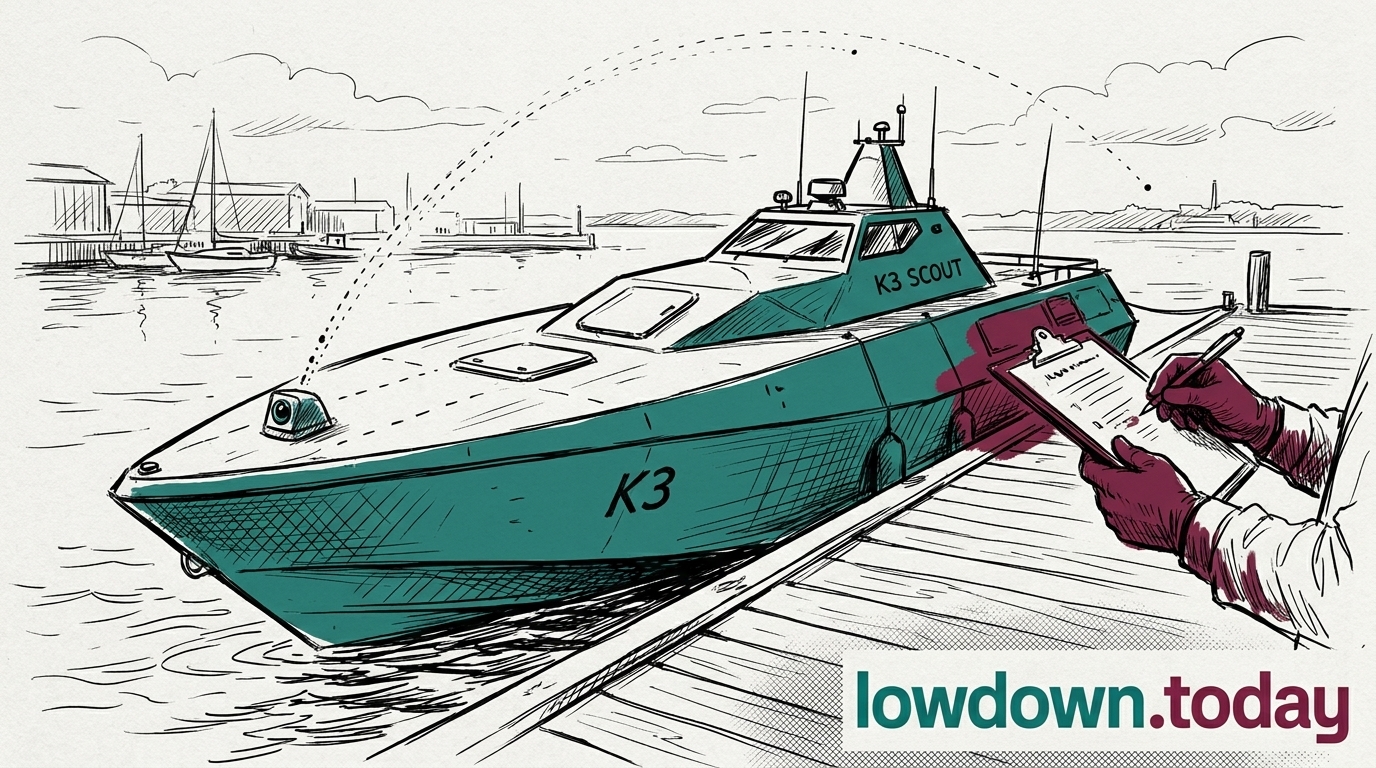
The Conservative opposition called on the Government on 9 August to 'urgently audit' equipment for hidden Chinese components, after the Telegraph's K3 SCOUT report. No named MP has been quoted on the record; the call came at party level, alongside the Ministry of Defence's own 10 August statement that no data had been compromised.
Netherlands Ministry of Defence
The Netherlands Ministry of Defence authorised Dutch Naval Design on 4 August to design 12-metre anti-submarine warfare uncrewed vessels for the Dutch-Belgian frigate programme, and to buy an adapted Compact FLASH dipping sonar from Thales Underwater Systems France. The order commits money and a named supplier while Britain's own certification body remains at the market-engagement stage.
Kraken Technology Group
Kraken Technology Group is a UK maritime-defence company based in Portsmouth that builds the K3 SCOUT, and crossed a $1bn valuation in July on a single-sourced $175m raise. The camera components reached the fleet under a third party's written security assurance, which the Platform Authority, which does not yet exist, was never positioned to check.
Navy Commercial
Navy Commercial
Navy Commercial at Whale Island published two notices on 5 August: 074032-2026, asking industry how to build a Platform Authority to certify uncrewed vessels, and 074351-2026, a GBP10m multi-role USV testbed for the Defence Chief Technology Officer. Responses on the Platform Authority close 19 August, ten days after the cameras were found transmitting to China.
Ministry of Defence
Ministry of Defence
The Ministry of Defence said on 10 August that a routine cyber vulnerability assessment found the camera fault, and a thorough investigation found no evidence that MoD data or systems had been accessed, compromised or transmitted externally. It stripped the cameras of internet connectivity but did not say whether it acted against the supplier.
Thales
Thales
Thales converted its 6 July engaging accord with Exail into a definitive combination agreement on 30-31 July, but the tender offer for Exail's remaining shares now closes by early 2028, later than July's timetable implied. Thales integrates its new undersea prime while still bidding against Kongsberg and DRASS's 2027 target for the AUKUS Pillar II contest.
