Skip to content
Briefings are running a touch slower this week while we rebuild the foundations.See roadmap
Artemis II Moon Mission
3APR

Electron Flux Alert Fires While Crew Coasts Unshielded

2 min read
12:59UTC

A satellite sensor tripped an alert threshold this morning. No news outlet has reported it. The crew is beyond Earth's magnetic protection.

ScienceDeveloping
Key takeaway

An unreported electron flux alert adds a second radiation hazard for the unshielded crew.

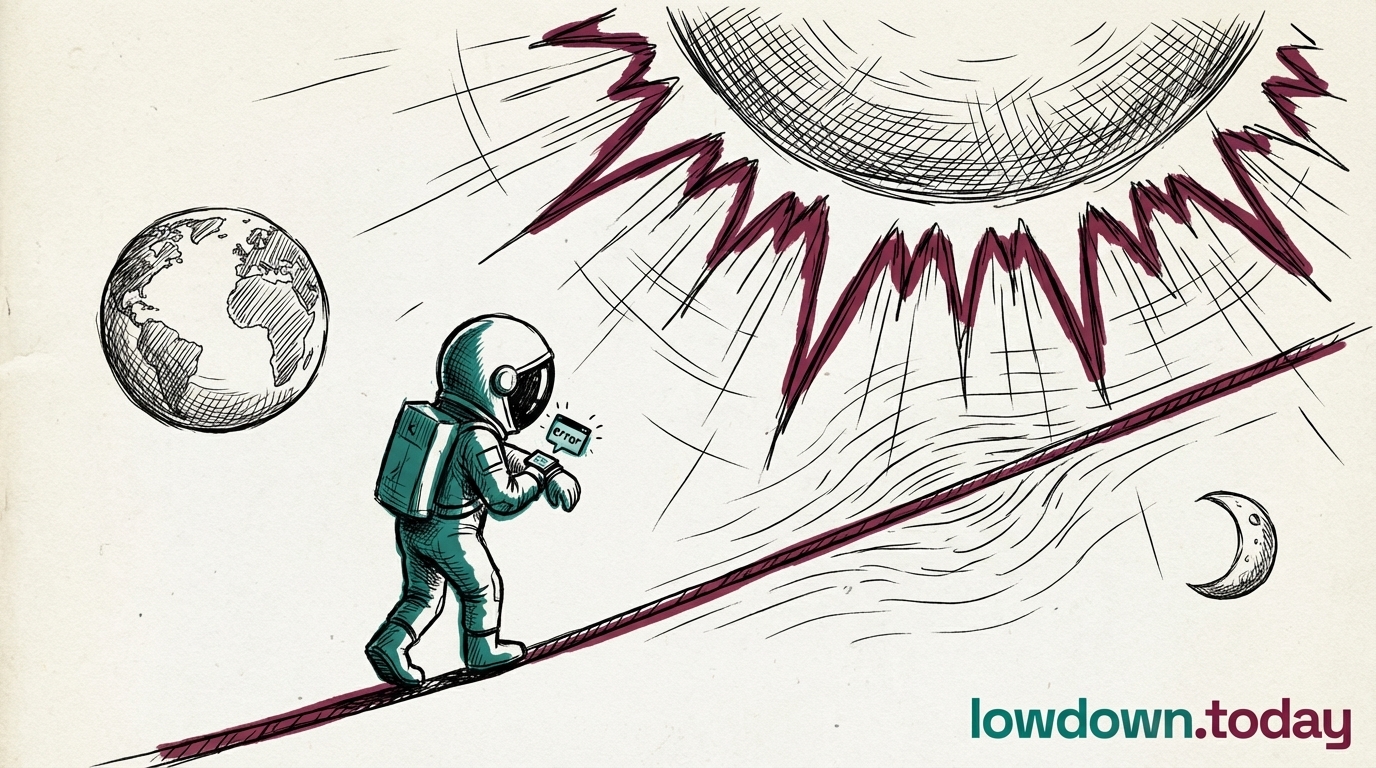
GOES-19, a NOAA geostationary weather satellite, triggered an electron flux alert at 09:20 UTC on 3 April after the 2 MeV integral electron flux exceeded 1,000 particle flux units 1. No news outlet has reported this specific alert in the context of Artemis II.

Elevated electron flux is a distinct hazard from the geomagnetic Kp index that measures storm intensity . High-energy electrons primarily threaten satellite electronics through deep dielectric charging, but for a crewed vehicle in translunar space they contribute to the cumulative radiation dose the crew absorbs. The two hazards, geomagnetic storm and elevated particle flux, are related but not identical.

NOAA SWPC forecasters remain in direct communication with NASA's Space Radiation Analysis Group (SRAG), the team responsible for crew dose management 2. Six HERA sensors throughout the cabin are feeding real-time data. Whether the current particle environment has meaningfully increased crew exposure beyond the baseline mission estimate is not publicly known.

Only the top 5% of solar particle events produce nausea-level radiation exposure 3. The current environment does not appear to approach that threshold. But the absence of public dose reporting means the margin of safety is, for now, a matter of institutional trust rather than verifiable data.

Deep Analysis

In plain English

A space weather satellite picked up a spike in high-energy electrons this morning — enough to trigger an automated alert. High-energy electrons are a type of radiation that can damage electronics and add to the radiation dose that people and equipment absorb in space. This alert happened on top of the geomagnetic storm already in progress. The two hazards are related but distinct, like getting both sunburnt and heat stroke on the same day. No news outlet reported this alert, which was logged quietly in publicly available government data.

Deep Analysis
Root Causes

The electron flux alert is a downstream consequence of the same solar maximum conditions driving the G2 geomagnetic storm. High-energy electron populations are elevated during active solar periods; the GOES-19 alert threshold being crossed is a predictable consequence of the space weather environment the mission entered at launch.

The structural root cause is that no crewed deep-space mission has flown during solar maximum since Apollo, leaving operational procedures for multi-channel simultaneous radiation hazards without prior real-world testing.

What could happen next?
  • The concurrent G2 storm and electron flux alert provide the first opportunity to validate crew dose models against real translunar conditions with simultaneous multi-channel radiation hazards.

First Reported In

Update #2 · Solar storm threatens Orion beyond Earth

NOAA Space Weather Prediction Center· 3 Apr 2026
Read original
Different Perspectives
JAXA
JAXA
JAXA is an Artemis Accords signatory with the Lunar Cruiser rover planned for south-pole surface operations; Chang'e 7's first-arrival timeline compresses the window those surface systems were designed to operate in alongside American crew.
Space Research Institute RAS / Roscosmos
The LILEM instrument on Chang'e 7 gives Russia science-cooperation presence at Shackleton's rim with no independent crewed lunar capability on a public timeline. This is Roscosmos's only confirmed path to south-pole science in the current decade.
CNSA / China Manned Space Agency
Chang'e 7 at Wenchang confirmed a second-half 2026 launch for Shackleton rim, 18 to 24 months before any American crewed arrival. The mission carries a Russian LILEM instrument, giving Roscosmos a south-pole science foothold inside China's programme.
Jeremy Hansen / Canadian Space Agency
Hansen appeared at the 16 April JSC press conference in his only public moment since splashdown. Canada's Canadarm3 remains without a confirmed deployment host after Gateway cancellation, with CSA maintaining institutional silence on the programme's status.
Airbus Defence and Space
Airbus has issued no post-mission ESM performance statement; its press room returned a 404 error on a 14 April check. The only named Airbus engineer quote on the mission appeared in a Nature interview, not a company release.
Daniel Neuenschwander / European Space Agency
ESA's 11 April statement praised ESM translunar injection precision and omitted the pressurisation valve anomaly; the June 2026 Council is the sole stated review forum. ESM-3 is at KSC without a corrected-baseline disclosure to justify its readiness.