Skip to content
Briefings are running a touch slower this week while we rebuild the foundations.See roadmap
AI: Jobs, Power & Money
2MAY

Democrats kill the Sanders AI moratorium

2 min read
15:17UTC

The moratorium was not defeated by Republicans. It was destroyed by its own party.

EconomicAssessed
Key takeaway

Fellow Democrats killed the Sanders AI moratorium; only bipartisan data measurement survives.

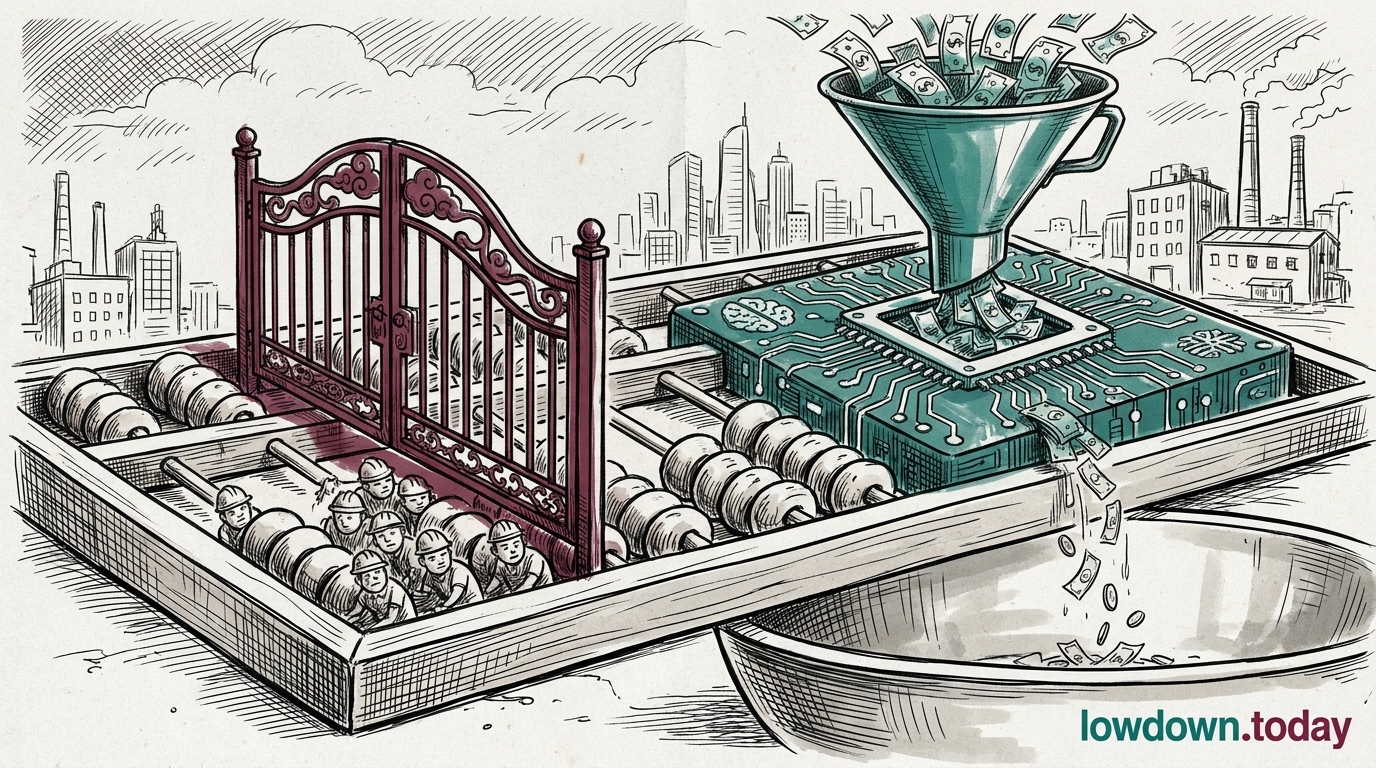
The AI Data Centre Moratorium Act introduced by Senator Bernie Sanders and Representative Alexandria Ocasio-Cortez is dead on arrival, killed not by the Republican majority but by the Democratic caucus itself. Senator John Fetterman branded it "China First." Senator Mark Warner called it "idiocy" 1.

Neither the moratorium nor the earlier robot tax proposal has a legislative path. What survives is measurement. The bipartisan nine-senator coalition led by Warner and Senator Josh Hawley wrote to the Department of Labour, the BLS, and the Census Bureau urging expanded AI workforce data collection. Federal agencies can act on this request without new legislation.

Deep Analysis

In plain English

Senator Bernie Sanders and Representative Alexandria Ocasio-Cortez introduced a bill that would have stopped the construction of any new AI data centres until Congress had passed laws protecting workers, consumers, and the environment from AI's effects. The bill did not die because Republicans voted against it. It died because fellow Democrats Senators Fetterman and Warner rejected it publicly, with Fetterman calling it 'China First' and Warner calling it 'idiocy.' The argument is that halting American AI investment would simply let China build the infrastructure instead. Whatever the merits, this debate illustrates that AI data centres are now treated as a national security asset, not just a corporate investment, which changes what kinds of restrictions politicians are willing to support.

What could happen next?
  • The moratorium's defeat by its own party signals that no restrictive AI infrastructure legislation will pass in the current Congress. Worker protection measures will be limited to disclosure, data collection, and retraining subsidies.

First Reported In

Update #4 · AI leads US layoffs as cuts go uncounted

SSRN / Stanford Digital Economy Lab· 4 Apr 2026
Read original
Different Perspectives
UK financial regulators (BoE FPC / FCA)
The Bank of England's April FPC directive on agentic AI in payments was scoped around one frontier model; AISI confirmed a second model cleared the same 32-step threshold on 1 May. The supervisory architecture is one model behind the capability it was built to contain.
Indian IT sector workers (TCS, Infosys, Wipro)
TCS posted its first annual revenue decline in the modern era, Infosys shed 8,400 workers in a quarter, and Wipro hit its zero-fresher target. Western Big Tech's AI automation is cannibalising the offshored-services model that employs roughly five million Indian IT workers.
Chinese workers (Hangzhou and Beijing plaintiffs)
Workers Zhou and Liu won cases that established a two-court doctrinal chain: AI adoption is the employer's deliberate strategy, placing the cost of displacement on the employer rather than the worker. Any Chinese employee facing AI-driven dismissal now has a citable legal route that American, British, and European counterparts do not.
Chinese government, courts, and domestic employers
The Hangzhou rulings were released on Workers' Day eve alongside the Ministry of Human Resources' recognition of 42 new AI occupations. Domestic firms now face mandatory retraining obligations; the Orgvue estimate of 8-14 months added to displacement timelines will feature in employer compliance briefings throughout 2026.
EU regulators and European Parliament
The second Digital Omnibus trilogue collapsed without agreement on 28 April; the third is scheduled for 13 May with the binding employer AI-literacy obligation still contested. Brussels is arguing over a non-binding encouragement clause while Beijing's courts have already bound employers.
US legislators (Warner, Rounds, Hawley, Sanders)
Warner and Rounds produced the Economy of the Future Commission Act, the most concrete federal vehicle still moving, endorsed by the companies it would notionally regulate. The Sanders-AOC moratorium was killed by Democratic senators; the Hawley-Warner disclosure bill remains in committee with no floor date.
