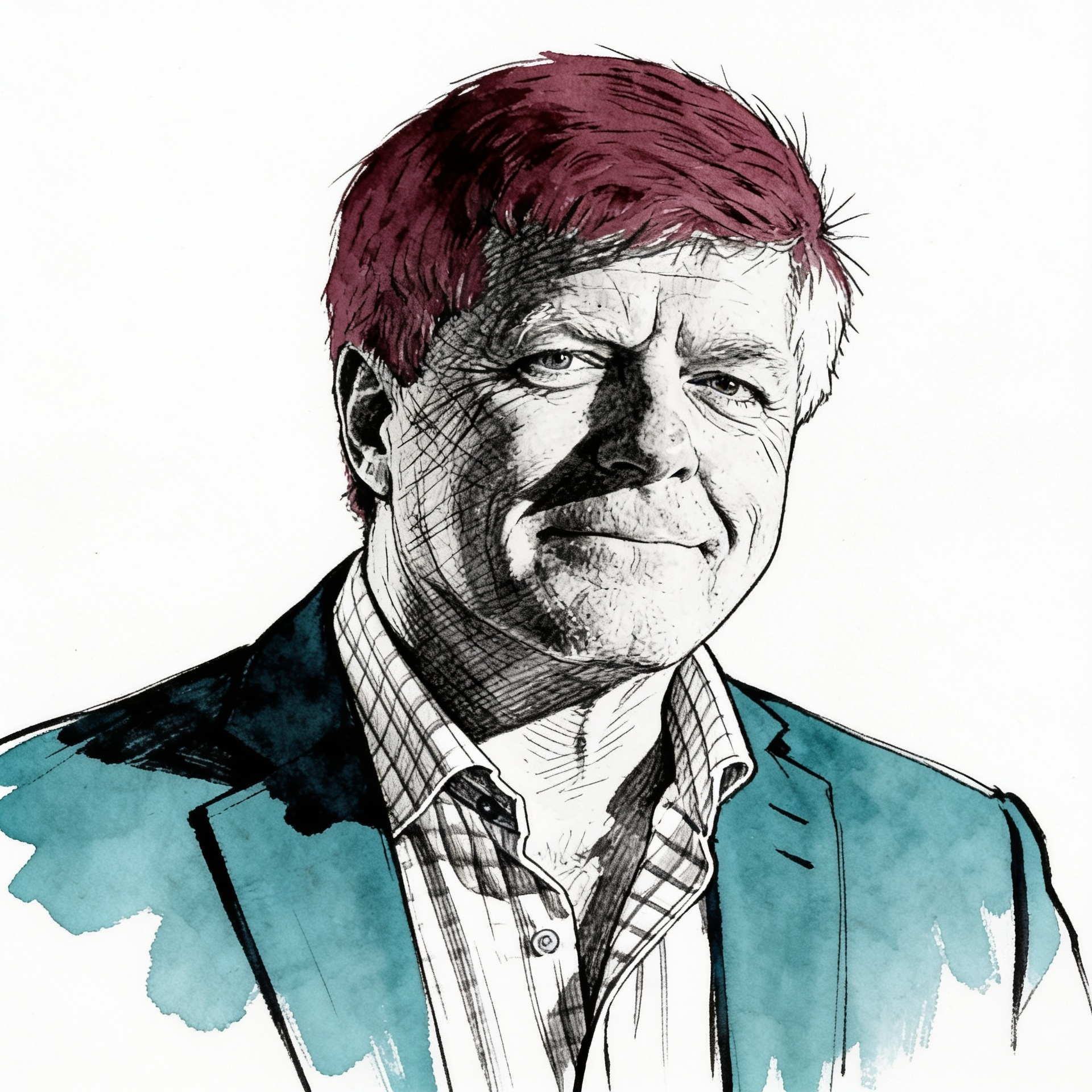
If 98% of AI layoffs happen before any AI is deployed, what does that say about corporate honesty?
Timeline for Thomas H. Davenport
Mentioned in: MIT economist: AI layoffs are a cover story
AI: Jobs, Power & MoneyMentioned in: AI exposure highest among educated women
AI: Jobs, Power & MoneyMentioned in: AEI: AI is an equaliser, not a destroyer
AI: Jobs, Power & MoneyOnly 2% of layoffs tied to real AI: HBR
AI: Jobs, Power & MoneyMentioned in: One in five Q1 tech layoffs blame AI
AI: Jobs, Power & MoneyBackground
Thomas H. Davenport is a Distinguished Professor at Babson College and a research fellow at MIT's Initiative on the Digital Economy, where he studies the application of analytics, data Science, and artificial intelligence in business. He is among the most widely cited scholars on AI adoption in enterprise settings, having written or co-authored more than twenty books on the subject including The AI Advantage and Competing on Analytics.
Davenport came to prominence in the current AI-jobs debate as co-author, with Laks Srinivasan, of research published in the Harvard Business Review finding that only approximately 2% of organisations that cited AI in layoff announcements had actually deployed the AI in question. The remainder were cutting in anticipation of capability not yet in use. The finding was reinforced in June 2026 when MIT Sloan professor Paul Osterman independently described AI attribution in layoff announcements as largely a cover story, arguing technology has been used as an executive alibi for two decades.
Davenport's work sits at the methodologically sceptical end of the AI-displacement debate. Where Challenger, Gray & Christmas tracks stated attribution and Stanford models suppressed hires, Davenport's research interrogates the gap between what companies say they are doing with AI and what they have actually implemented. His conclusion that AI-washing is pervasive in layoff communications has been widely cited by Labour economists, journalists, and policymakers examining the 2025-2026 restructuring cycle.
Who is Thomas Davenport and what did he find about AI layoffs?
What is Thomas Davenport's research on AI and job displacement?
What books has Thomas Davenport written about AI in business?
Written with AI from Lowdown's published reporting. Not individually reviewed by an editor. Updated 8 June 2026. Editorial standards.