Skip to content
You can now search across every topic, entity and event.What's new
AI: Jobs, Power & Money
1JUL

Colorado guts its AI hiring law

4 min read
11:00UTC

Colorado replaced the most advanced US state AI employment statute with a notice-only shell after a federal court stayed it and the DOJ joined Elon Musk's xAI in challenging it as unconstitutional.

EconomicDeveloping
Key takeaway

The federal executive is now litigating against state AI worker protection, not merely declining to legislate.

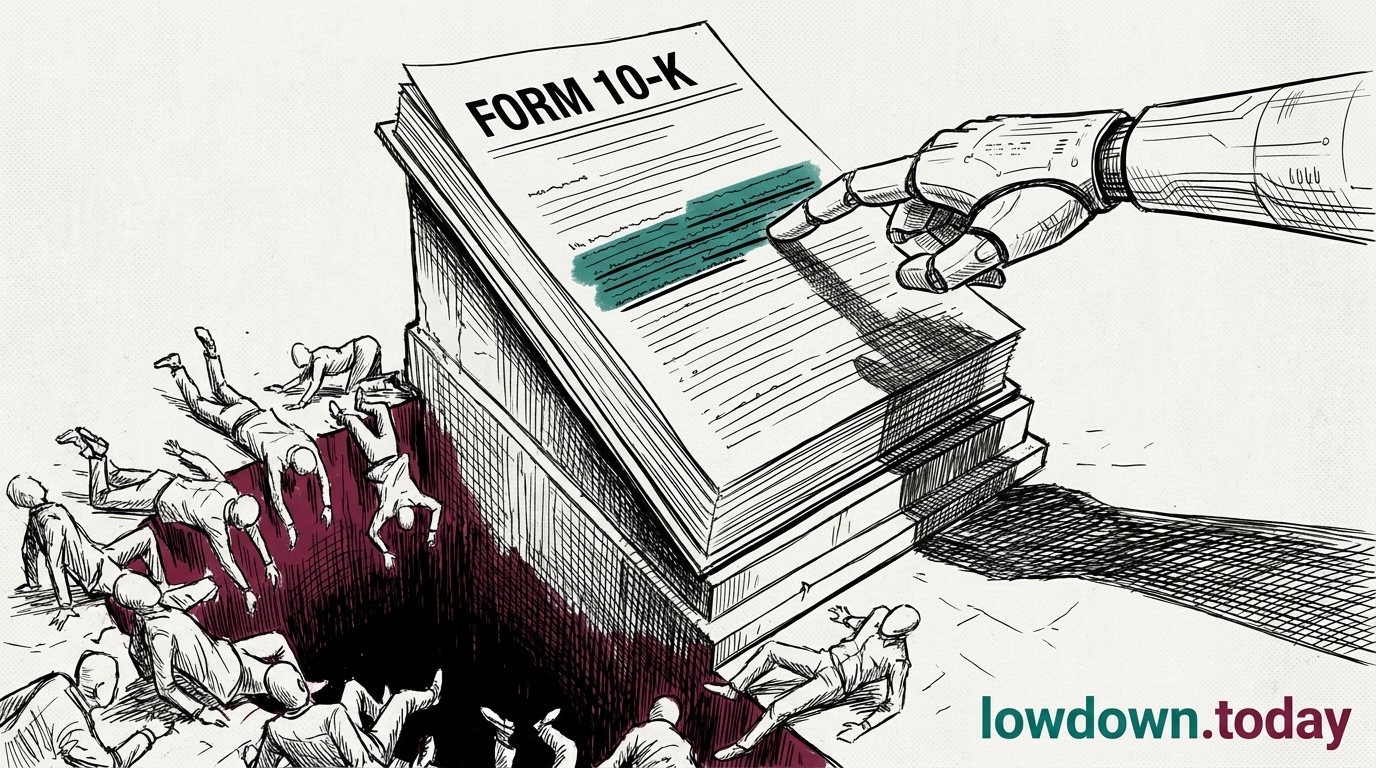
Colorado's governor signed SB 26-189 in mid-May 2026, replacing the state's AI Act (SB 24-205) with a notice-only framework that takes effect in January 2027. 1 The replacement drops the risk-management programmes, annual impact assessments and algorithmic-discrimination duties that had made SB 24-205 the most advanced AI employment-discrimination statute in the United States. What survives is a duty to give pre-use notice and run an adverse-action process, the minimum a worker can be told before an AI tool decides their job.

The retreat followed a federal court. A magistrate judge stayed SB 24-205 on 27 April, with the US Department of Justice (DOJ) joining Elon Musk's xAI, his frontier-model company, in arguing the law was unconstitutional. 2 A state passed AI worker protection; the federal executive and a model-maker sued to stop it; the legislature replaced it with a shell. Other states weighing similar bills now have a worked example of how one is dismantled.

Brussels moved the same direction in the same fortnight. The EU Digital Omnibus provisional deal weakened the employer AI-literacy duty from an obligation to ensure workers understand AI systems to one to take measures supporting that understanding . The supporters of intervention lost a law in Denver and a worker-facing clause in Brussels at once, a retreat on both sides of the Atlantic while the displacement count kept rising.

A fair counter holds that SB 24-205 was constitutionally fragile and over-broad, which is the ground it fell on, not the merits of protecting workers. Yet Washington's most viable federal vehicle, the Warner-Rounds commission bill , only studies the problem. The one US instrument with enforcement teeth has now been struck down, leaving a study bill as the realistic ceiling.

Deep Analysis

In plain English

Colorado passed a law called SB 24-205, the Colorado AI Act, which required companies using AI in hiring and employment decisions to run risk assessments, check for algorithmic discrimination, and publish regular impact reports. It was the most demanding AI employment law in the United States. Before it took effect, a federal judge paused it. The US Department of Justice (DOJ, the federal government's main legal body) joined a lawsuit brought by xAI (Elon Musk's AI company) arguing the law was unconstitutional. Under that pressure, Colorado's governor scrapped the original law and replaced it with a much weaker version called SB 26-189, which only requires companies to tell workers when AI is being used in a decision that affects them, and give them a way to appeal. SB 26-189 removed the risk assessments, discrimination checks, and impact reports entirely. At the same time, in Europe, negotiators finalising the EU Digital Omnibus (a package of laws updating the EU's AI rules) weakened a similar obligation. Employers originally had to ensure their workers understood AI systems. The new text says employers should take measures to support that understanding, which has no enforcement mechanism. The Warner-Rounds bill is a US Senate proposal to create a commission to study AI's effect on jobs. It has no powers beyond making recommendations. That is now the strongest US federal response available.

Deep Analysis
Root Causes

The Colorado law's constitutional vulnerability traces to a specific structural gap: the US has no federal statute regulating AI in employment decisions. In the absence of that statute, the field is legally unoccupied at the federal level.

When a state fills an empty field with obligations that affect interstate commerce (every large AI hiring tool operates across state lines), the dormant Commerce Clause is a live preemption argument. Colorado's architects knew this and built the law anyway, betting on a favourable court. They lost.

The DOJ's decision to join xAI's challenge, rather than remain neutral, converts this from a private industry challenge into a statement of federal executive policy: the executive branch does not want state-level AI employment protection. That changes the calculus for every state legislature now considering similar laws. The Warner-Rounds bill exists precisely because the executive has signalled it will oppose state action, but Congress has not yet provided an alternative.

What could happen next?
  • Precedent

    The DOJ constitutional doctrine used against Colorado can be cited by any firm challenging any state AI employment law that imposes compliance costs on interstate AI systems.

    Short term · Assessed
  • Risk

    Other states weighing AI employment law now have a worked example of full legal dismantlement: constitutional challenge, federal executive support for the challenger, legislative retreat to a notice-only shell.

    Short term · Assessed
  • Consequence

    Anthropic, xAI and OpenAI collectively face lower compliance overhead in 35 US states that had been considering Colorado-style laws; the constitutional precedent forestalls them without requiring new legislation.

    Medium term · Assessed
First Reported In

Update #10 · Rival studies split on AI's hit to jobs

AI Laws By State· 24 May 2026
Read original
Different Perspectives
Barclays
Barclays
Barclays economist Pooja Sriram flagged a 28,000-a-month bleed in finance and information roles the same week Microsoft disputed that AI drove its own 4,800 cuts. The bank treats Challenger's AI-attribution share as a lagging indicator against faster erosion visible in raw labour-market data.
European Commission
European Commission
Brussels deferred the Digital Omnibus's Annex III employment-compliance deadline from 2 August 2026 to December 2027, even as California advanced three binding AI-hiring bills the same week. The 17-month delay leaves EU workers without the algorithmic-hiring safeguards the regulation already promises.
OpenAI
OpenAI
OpenAI proposed a 5% US government equity stake worth $42.6bn, structured as a public wealth fund modelled on the Alaska Permanent Fund, with Sam Altman pitching it directly to Trump, Bessent and Lutnick. The offer pre-empts Sanders' rival one-time 50% AI-stock tax, which has not yet reached committee.
India's IT and outsourcing sector
BAT's transfer of 3,500 roles to Accenture on 29 June fits a delivery model Indian IT firms increasingly run: consultancies win Western contracts, then execute through offshore centres. The sector expects more Fit2Win-style transfers, not straight redundancies, as employers absorb AI without cutting outsourced headcount.
European Trade Union Confederation
ETUC says the Council's shift from 'ensure' to 'support' in the AI-literacy duty, confirmed in the Digital Omnibus's final adoption on 29 June, is a collapse of the legal threshold, not a drafting tidy-up. It expects EU workers to face AI-driven hiring and monitoring decisions with a statutory right to explanation that exists in name only.
British American Tobacco's Fit2Win workforce
BAT is cutting 9,000 roles under Fit2Win, transferring 3,500 to Accenture rather than making them redundant, to reach roughly £500m in AI-driven savings by 2027. For affected staff, that distinction decides whether they keep a job at all, just not at BAT.
