Skip to content
Briefings are running a touch slower this week while we rebuild the foundations.See roadmap
2026 FIFA World Cup
15APR

Travel ban bars fans from four nations

4 min read
09:43UTC

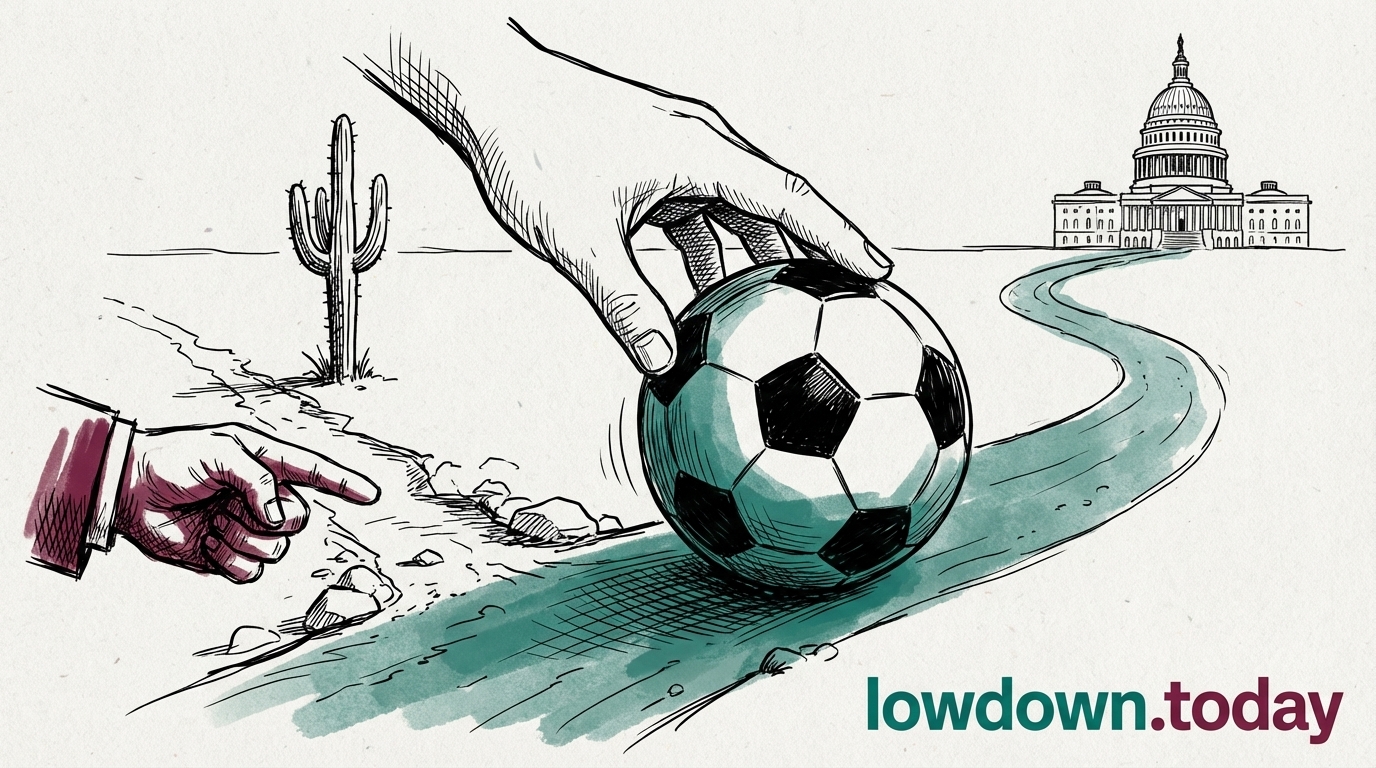
Supporters from Haiti, Iran, Senegal and Côte d'Ivoire cannot obtain US tourist visas to watch their teams play — the first time a World Cup host has excluded qualified nations' fans by law.

SportAssessed
Key takeaway

For the first time in World Cup history, a host nation's immigration law legally bars fans of four qualified nations.

Trump's travel ban — imposed in June 2025, expanded in December — prohibits tourist visas for nationals of 39 countries. Four of those countries have qualified for the 2026 World Cup: Haiti, Iran, Senegal and Côte d'Ivoire 1. Their fans cannot enter the United States to watch their teams play. Athletes and accredited officials are exempt. A further twelve qualified nations face tightened immigration restrictions, though their citizens can still obtain tourist visas 2.

No previous World Cup host has barred supporters of qualified nations by law. When Russia hosted in 2018, it created a Fan ID system that functioned as a visa waiver for all ticket holders. Qatar did the same in 2022. FIFA's hosting agreements historically include guarantees of entry for everyone with a valid match ticket — a principle the US travel ban directly contradicts. FIFA has not publicly stated whether it sought or received assurances on fan access before the ban's December expansion.

The four affected nations span three continents. Haiti returns to the World Cup for the first time since 1974 — a 52-year wait — and its diaspora, concentrated heavily in south Florida and the New York metropolitan area, cannot legally travel to matches 3. Senegal and Côte d'Ivoire, the reigning Africa Cup of Nations finalists and champions respectively, have large diaspora communities in France rather than the US, but supporters travelling from West Africa are blocked entirely. Iran's fans face a double exclusion: the travel ban bars their entry, while the separate factional dispute over Iran's participation means they may have no team to watch at all.

The result is a two-tier tournament. These teams will compete in stadiums where the opposing side's supporters can attend freely and theirs cannot. The American Immigration Council has argued the ban may violate FIFA's own anti-discrimination statutes 4, but FIFA has offered no public response. For the affected nations, the practical message is that entry to the 'World' Cup tracks US Foreign Policy priorities, not footballing qualification.

Deep Analysis

In plain English

The US government has banned tourist visas for citizens of 39 countries. Four of those countries — Haiti, Iran, Senegal, and Côte d'Ivoire — have qualified for this World Cup. Ordinary fans from those nations cannot legally obtain visas to enter the US to watch their teams. Players and officials receive exemptions, so the matches go ahead, but the supporters cannot follow. This is unprecedented: no prior World Cup host has used its domestic immigration law to legally exclude the fans of qualified competing nations. US-based diaspora members who are American citizens or permanent residents can still attend, but family members travelling from those home countries cannot — creating a painful institutional division within diaspora communities in host cities.

Deep Analysis
Synthesis

Events 14 and 15 together reveal a structural contradiction at the heart of this tournament: the US has made fan exclusion legally codified, while Congressional Democrats are attempting to create narrow sporting carve-outs that will almost certainly fail. FIFA's silence on the travel ban — contrasted with its public statement rejecting Iran's match-relocation request — signals an asymmetric institutional response that prioritises host-government relations over the universal-access principles FIFA publicly espouses.

Root Causes

The travel ban's application to World Cup fans appears to be a collateral consequence rather than a deliberate policy targeting these four nations specifically. Haiti and Côte d'Ivoire are not typically cited in US threat assessments as high-risk tourist-visa sources. The December 2025 expansion of the ban — occurring after host-city agreements were signed — creates a contractual tension that FIFA has not publicly resolved, suggesting it lacks the institutional will to confront the host government on immigration policy.

Escalation

African and Caribbean football federations — CAF and CONCACAF — are likely to raise formal objections at the 30 April FIFA Congress as the exclusion receives wider media attention in the approach to the tournament.

FIFA has not publicly addressed whether the travel ban violates the visa-facilitation clauses standard in host-city agreements. That silence functions as de facto endorsement and will draw escalating criticism from Global South member associations whose constituents are disproportionately affected.

What could happen next?
  • Precedent

    If unchallenged, the 2026 tournament establishes that a host nation may legally exclude qualifying nations' supporters without FIFA penalty or contractual remedy.

    Long term · Assessed
  • Risk

    CAF and Caribbean football federations raise formal objections at the 30 April FIFA Congress, creating a procedural confrontation over host-city visa obligations FIFA has not publicly addressed.

    Short term · Suggested
  • Consequence

    Future World Cup host-city bid criteria may require explicit, enforceable visa-guarantee requirements to prevent a recurrence of this structural gap.

    Long term · Suggested
  • Risk

    Televised imagery of near-empty sections where excluded nations' fans would have sat generates reputational damage to FIFA's universal-access branding during live broadcast.

    Immediate · Suggested
First Reported In

Update #1 · Iran splits on World Cup boycott

ESPN· 22 Mar 2026
Read original
Different Perspectives
Argentina / Lionel Scaloni
Scaloni confirmed Messi for a record sixth World Cup on 28 May, choosing the 38-year-old captain's institutional authority over 18-year-old Franco Mastantuono's development potential. Commercial as well as sporting considerations weigh on any Messi decision, and Argentina's AFA was never likely to backstop an exclusion on pure sporting logic.
DFB / Rudi Völler
DFB / Rudi Völler
Völler issued informal guidance to Germany's squad on around 27 May to keep politics and sport separate, stopping short of the formal ban that produced Qatar 2022's OneLove armband collision. The approach gives the federation documented deniability while preserving each player's legal freedom to act independently.
England Football Association / Thomas Tuchel
Tuchel cut Alexander-Arnold, Foden and Palmer on system grounds, the clearest signal yet that the FA has genuinely ceded selection authority to the coaching staff. England travel without Palmer, one of the Premier League's sharpest creators, accepting a narrower build-up vocabulary against low-block opponents in exchange for off-ball discipline.
Football Supporters Europe / Euroconsumers
The fan coalition's Article 102 TFEU complaint, filed in March and unacknowledged past the April deadline, was confirmed for assessment by the European Commission on 28 May. Brussels logging the file gives the complainants a live regulatory record FIFA must preserve, building on the European Super League judgment that exposed FIFA and UEFA rules to EU competition scrutiny.
New York and New Jersey Attorneys General / UNITE HERE Local 11
On 28 May, Letitia James and Jennifer Davenport subpoenaed FIFA under their broad state authority to pursue an entity trading in their states, regardless of FIFA's Swiss registration; that same week UNITE HERE Local 11 moved its campaign to California privacy law, filing with the CPPA over FIFA accreditation data shared with DHS and ICE without worker consent.
FFIRI / Mehdi Taj
FFIRI / Mehdi Taj
Taj framed Tijuana as resolving entry friction while simultaneously demanding multiple-entry US visas, because single-entry papers would strand the squad in Mexico after the first match-day crossing. Both are needed: the camp solves accommodation, the visa solves the border crossings Iran's three group matches require, the first before 15 June.



