Skip to content
You can now search across every topic, entity and event.What's new
2026 FIFA World Cup
25JUL

Iran draw 2-2; banned flags fill stands

3 min read
11:57UTC

A Los Angeles court upheld FIFA's ban on the pre-revolution flag hours before kickoff; thousands then entered the stadium and FIFA made no attempt to stop them.

SportDeveloping
Key takeaway

FIFA secured a court order against the lion-and-sun flag and then let thousands of them into the stadium unchallenged.

Iran twice came from behind to draw 2-2 with New Zealand at Los Angeles Stadium on Monday 15 June, Ramin Rezaeian and Mohammad Mohebbi cancelling out an Elijah Just brace before a crowd that was overwhelmingly Iranian 1. The result left every team in Group G level on a point.

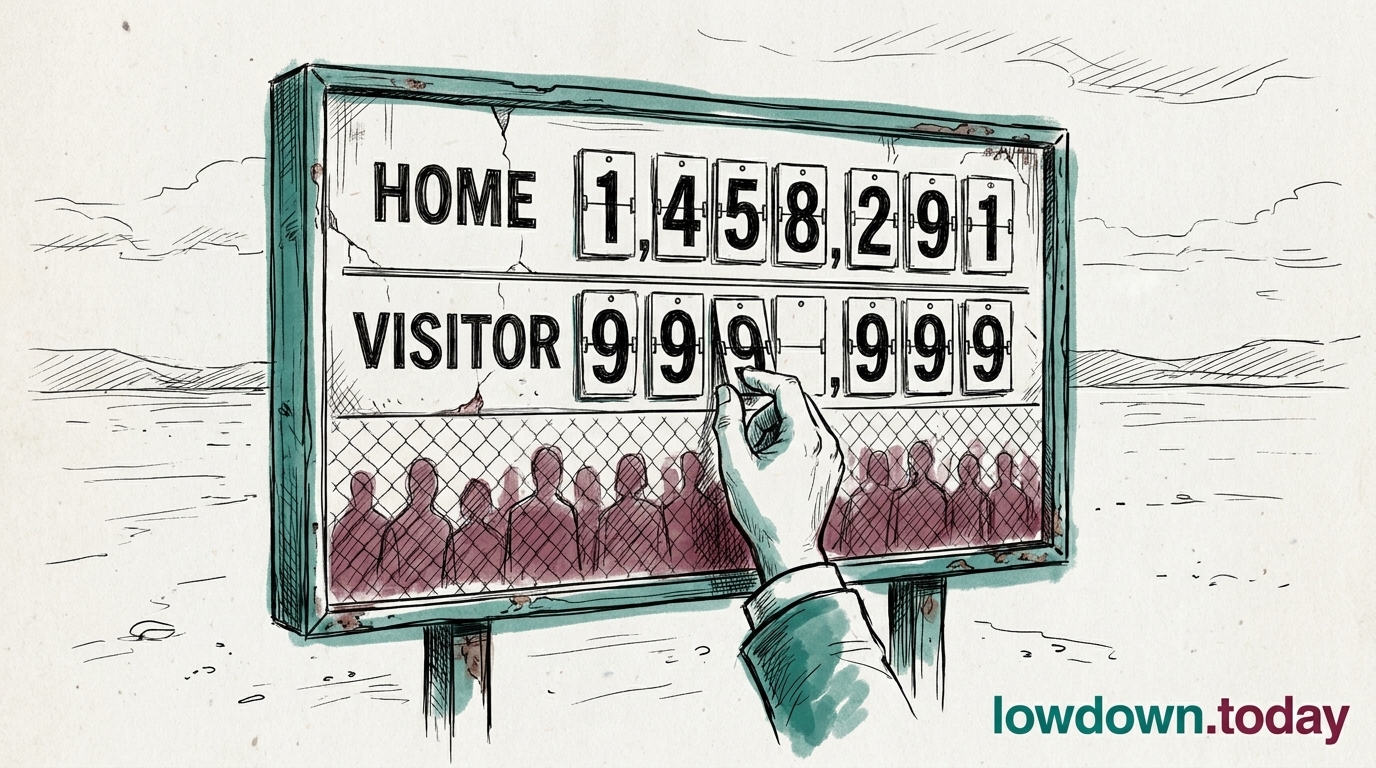
Hours before kickoff, a Los Angeles Superior Court judge upheld FIFA's ban on the pre-revolution lion-and-sun flag inside World Cup venues, rejecting an emergency injunction in Kermanian v. FIFA, filed on 10 June by the Institute for Voices of Liberty 2. Thousands of the flags then entered the stadium and FIFA made no attempt to enforce the ruling; the governing body did not respond to a request for comment on the failure 3. FIFA controls accreditation and the schedule but delegates venue search and crowd policing to local operators, who had no instruction and no incentive to confiscate flags from a paying, friendly crowd. A ban won in a California court still depends on stadium staff to apply it.

A small pro-Pahlavi protest gathered outside, chanting at Donald Trump to "finish the job", but stayed contained 4. Captain Mehdi Taremi named the cost: "This kind of tension, it undermines that joy and it undermines peace" 5. Iran's supporters had already lost their official 8% ticket allocation for all three group matches under United States sanctions , and 14 federation officials remained barred from American soil . The diaspora filled the seats regardless.

Deep Analysis

In plain English

Iran's football team played New Zealand at a stadium in Los Angeles on 15 June. The crowd was mostly Iranian diaspora, many of whom support the pre-revolution Iranian government that was overthrown in 1979. They brought a flag from that era, the lion-and-sun flag, which FIFA had banned as a political symbol at the tournament. A court in Los Angeles ruled in FIFA's favour that the ban was legal, just hours before kick-off. But FIFA did nothing to actually enforce the ruling inside the stadium. Thousands of the banned flags went in, and FIFA made no attempt to remove them. Iran's captain Mehdi Taremi said after the match that the political tension had undermined the joy of playing. This episode sits in a pattern: FIFA wins legal arguments but lacks the practical tools to enforce them at venues it does not control.

Deep Analysis
Root Causes

Two structural conditions created the enforcement gap. First, FIFA's Host City Agreement with Los Angeles does not transfer security staffing authority to FIFA itself.

Stadium security at SoFi Stadium answers to Legends Global, the venue operator, whose contract runs through the NFL season and whose workforce had already been in a labour dispute with UNITE HERE Local 11. A demand that Legends staff seize flags from paying customers would have required FIFA to invoke a contractual clause none of the published agreements contain.

Second, the pre-revolution lion-and-sun flag occupies an ambiguous political status inside the United States. No US federal statute bans it; California has no state prohibition; and the OFAC sanctions framework targets Iranian state actors, not diaspora cultural symbols. Any attempt at physical enforcement risked a First Amendment challenge that a US court would have prioritised over FIFA's tournament regulations.

What could happen next?
  • Precedent

    FIFA's failure to enforce the flag ruling means any diaspora group with a banned symbol and sufficient numbers can render enforcement impractical at subsequent matches, including Iran's fixtures against Belgium on 21 June and Egypt on 26 June.

  • Risk

    Iran's remaining two Group G matches in the United States could see repeated flag incidents, escalating political pressure on FIFA from the Iranian government, the diaspora, and the US State Department simultaneously.

First Reported In

Update #21 · Three records fall in one afternoon

Al Jazeera· 17 Jun 2026
Read original
Different Perspectives
Real Madrid
Real Madrid
Operating internally on the basis Rodri joins, according to David Ornstein's reporting, despite no talks having taken place with Manchester City. The gap between internal planning and actual negotiation is itself notable.
Manchester City
Manchester City
Unwilling to sell Rodri, with manager Enzo Maresca stating he returns to the club after back surgery. No club-to-club talks with Real Madrid are taking place, contradicting the framing of a deal in motion.
CONMEBOL
CONMEBOL
Backs the move to a 64-team 2030 tournament co-hosted across South America. Has not engaged publicly with FIFPRO's workload or heat-threshold objections drawn from this tournament's data.
FIFA
FIFA
Points to its 30 June technical and officiating reviews as the authoritative account of the tournament's football, including Collina's rejection of bias claims. Has not publicly responded to the renewed compensation call or disputed FIFPRO's heat-threshold figures.
FIFPRO
FIFPRO
Measures a four-degree gap between its own 28C postponement threshold and FIFA's 32C cooling-break trigger, breached in 19% of matches played. Cites a 70-83 match workload projection to oppose the 64-team 2030 format.
Human Rights Watch
Human Rights Watch
Documents 54 immigration-custody deaths before kickoff and two since, and revives the compensation duty FIFA's own advisers identified after Qatar 2022 and never acted on. Treats the pattern as unresolved FIFA liability, not a closed file.



