Skip to content
You can now search across every topic, entity and event.What's new
2026 FIFA World Cup
24MAR

State Dept has no data on visa impact

3 min read
19:01UTC

The government that expanded entry bonds to 50 countries has produced no estimates of how the policy will affect attendance or the $2 billion economic projection.

SportDeveloping
Key takeaway

The US government expanded visa restrictions affecting 9 qualified nations' fans without modelling the attendance impact.

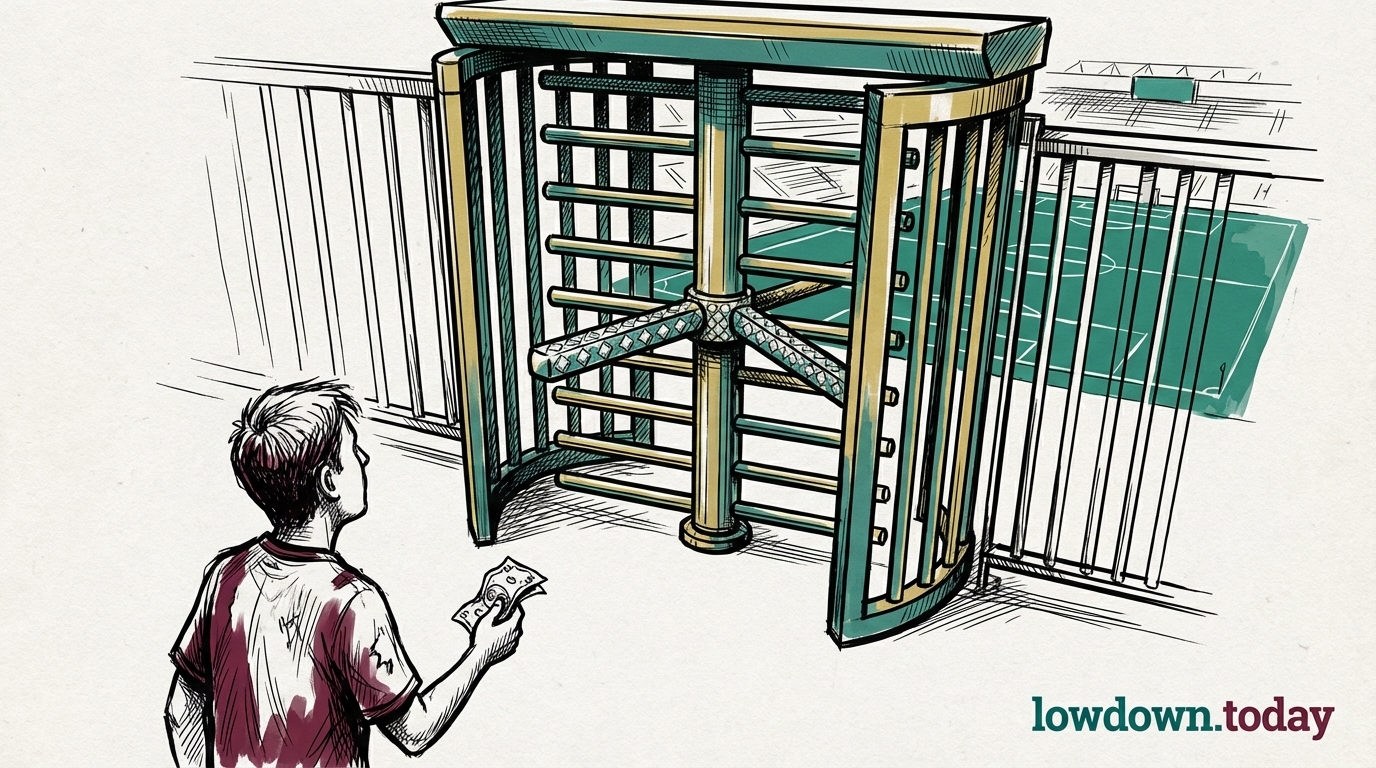
The State Department expanded the bond programme to 50 countries on 2 April and admitted seven days later it had not modelled the impact. The original travel ban bars fans from four qualified nations outright; the bond programme layers financial barriers on top of that.

The Council on Foreign Relations independently identified at least nine qualified World Cup nations whose fans face outright bans or significant barriers, 18.75% of the 48-team field. The admission is a governance gap, not a stated policy position: expanding programme scope without baseline measurement contradicts standard performance metrics guidance. When attendance figures arrive in July, neither the government nor FIFA will have a counterfactual to measure against.

South Africa's 2010 approach (waiving visa requirements for all ticket holders and receiving 300,000 international visitors) represents the policy inverse. The current US trajectory is the opposite on every dimension.

North Texas's $2 billion economic projection now stands as an untested assumption. No government body has modelled how many of the projected 6 million visitors come from the 50 bond-programme countries.


Deep Analysis

In plain English

The US government added 50 countries to a programme requiring fans to post $15,000 bonds to attend matches, then admitted it has no idea how many people this will keep away. It is confidence without data.

Deep Analysis
Root Causes

Originally, the visa bond programme was designed as an immigration enforcement tool, not a tournament access tool. The 2 April expansion to 50 countries was driven by the broader 'enhanced vetting' framework of the current administration, not by World Cup planning.

FIFA and the host committee have no authority over US immigration policy; their role is to advocate, not to determine. The governance gap—expanding restrictions without modelling tournament impact—reflects the absence of a formal coordination mechanism between immigration policy-making and tournament hosting obligations.

What could happen next?
  • The $2 billion North Texas economic projection lacks any government baseline modelling; if fan access shortfalls materialise, there is no official counterfactual.

    Medium term · 0.75
  • FIFA's failure to secure fan access guarantees from the host government may expose the organisation to legal challenge from affected national federations after the tournament.

    Long term · 0.45
  • The State Department admission that it has no impact estimates will be cited by congressional Democrats and international critics throughout the tournament.

    Short term · 0.9
First Reported In

Update #6 · FIFA's stealth price hike

Texas Public Radio / KERA News· 10 Apr 2026
Read original
Different Perspectives
FIFA
FIFA
FIFA had not opened disciplinary proceedings over the Malvinas banner as of 16 July, continuing a pattern set by its fast reversal of Folarin Balogun's ban while South Africa's appeal over Themba Zwane's ban remained outstanding. The nearest tariff, a CHF 30,000 fine from 2014, remains only a precedent, not a decision.
France
France
France's tournament ended at the semi-final stage for the first time since 2010, beaten 2-0 by Spain in Arlington, and Kylian Mbappe's Golden Boot chances are reduced to Saturday's third-place game alone. The 2022 runners-up now play for bronze rather than a second straight final.
Spain
Spain
Spain reached their first World Cup final since winning the trophy in 2010, beating France 2-0 through goals from Mikel Oyarzabal and Pedro Porro. Sixteen years after their only title, this squad returns to the same stage without the sovereignty politics attached to the other semi-final.
Downing Street (UK Government)
Downing Street said on the record that the Falkland Islanders 'are British with the right to determine their own future,' answering Argentina's vice-president and foreign minister. London rests its case on the islanders' 2013 referendum, not on the fixture, and lodged no formal protest despite the semi-final framing.
Argentina
Argentina
Vice-President Victoria Villarruel called England 'the usurping pirates' before kickoff; midfielder Leandro Paredes said after the 2-1 win that the Falklands 'will always be Argentine'. Argentina's 1994 constitution commits every office-holder to press the Malvinas claim, so a World Cup semi-final was never going to pass without it.
Switzerland
Switzerland
Switzerland reached their first World Cup quarter-final since 1954 and led Argentina before Breel Embolo's second yellow card left them a man down for the last half-hour. They expect the run to raise expectations for the next cycle rather than close a chapter.


