Skip to content
You can now search across every topic, entity and event.What's new
2026 FIFA World Cup
12JUN

MetLife stitching machine arrives; Tahoma 31 ships from Carolina

4 min read
09:25UTC

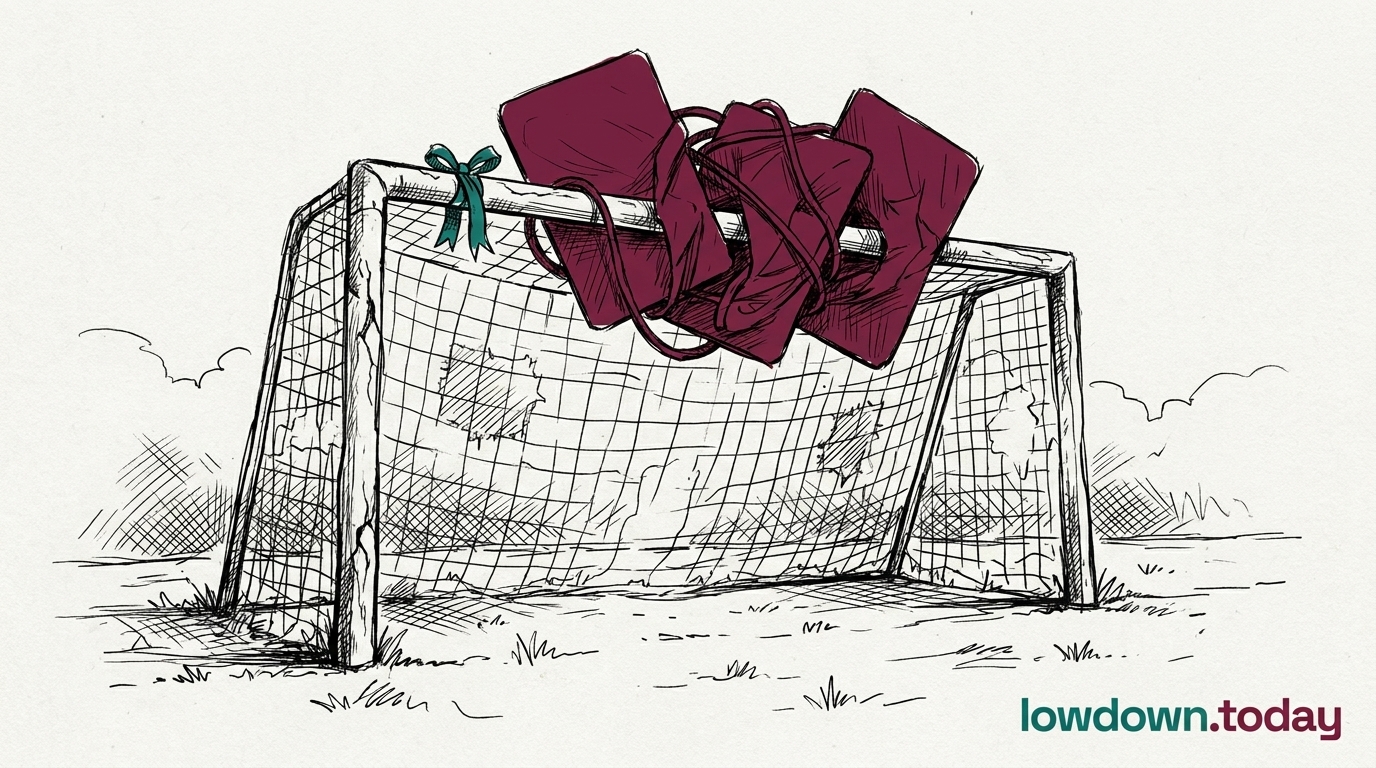
A mobile stitching machine arrived at MetLife Stadium during the week of 12 May to sew approximately 20 truckloads of Tahoma 31 bermudagrass into the hybrid surface FIFA requires, after the original New Jersey supplier was lost to winter conditions.

SportDeveloping
Key takeaway

MetLife began stitching Tahoma 31 turf the week of 12 May with no buffer before 13 June.

A mobile stitching machine arrived at MetLife Stadium in East Rutherford during the week of Tuesday 12 May 2026 to sew sections of Tahoma 31 bermudagrass into the hybrid surface FIFA requires for World Cup matches, with approximately 20 truckloads of turf arriving from Carolina Green Turf Farm in North Carolina across a 600-mile supply route. The original New Jersey grass farm that was meant to supply MetLife was lost to winter conditions earlier this year, forcing the National Football League stadium's groundskeeping team to reset the supply chain to North Carolina with a 38-day delivery window. NRG Stadium in Houston continued a parallel installation; Banorte Stadium in Monterrey, the Mexican host venue, still had its upper-tier seating bowl incomplete in the same week.

Tahoma 31 is a heat-tolerant warm-season bermudagrass cultivar developed for southern US conditions, chosen for the World Cup venues because it tolerates the loading of multiple 90-minute matches inside a fortnight without losing root density. Hybrid grass is the FIFA requirement: real turf reinforced with synthetic fibres stitched through the root layer to give the surface the tear-resistance that natural grass alone cannot provide under tournament use. The stitching machine, mobile because the stadium cannot be taken out of service for the duration of the install, sews the synthetic strands into the laid sod metre by metre. The machine that arrived at MetLife was the first of its kind to be deployed at a US World Cup venue .

Eight of the 16 host stadiums (50 per cent of the venue list) are converting from artificial surfaces to natural-and-synthetic Hybrid grass inside a ten-week window. Five indoor venues face an installation challenge with no precedent at tournament scale, despite the established horticultural science that grass needs light no fixed roof allows. The mitigation for the indoor venues is rotating panels and supplementary lighting, neither of which has been tested across a 39-day tournament window. The published target playable date at MetLife is Saturday 13 June for the Brazil vs Morocco Group C opener; the tournament itself opens at SoFi on Thursday 11 June, which gives the New Jersey turf a 38-day pad between sod arrival and first whistle and zero pad against any contingency.

The Banorte upper-tier construction in Monterrey is the only host venue with the seating bowl still incomplete in the most recent published photographs, yet no federation has issued a contingency statement. NRG Stadium in Houston is scheduled to host seven matches, more than any other US venue. Three otherwise unrelated venue stories share one feature: silence on the fallback plan if the install does not land on schedule. FIFA's venue-readiness communications team has not addressed the contingency questions in writing since the 6 May installation start .

Deep Analysis

In plain English

Many of the 16 stadiums hosting the 2026 World Cup normally have artificial grass, the kind used for American football. FIFA required all of them to switch to a hybrid surface: mostly natural grass with some artificial fibres woven in, which is better for football. At MetLife Stadium in New Jersey, which hosts the World Cup Final, the original grass supplier's crop was destroyed by winter cold. A replacement supplier in North Carolina had to truck 20 loads of grass 600 miles to New Jersey, where a mobile stitching machine is sewing it into the stadium surface. The target date for the grass to be ready is 13 June, the day Brazil play Morocco there.

Deep Analysis
Root Causes

The MetLife turf crisis has two root causes that predate the winter weather. First, FIFA's hybrid grass specification, mandating Tahoma 31 bermudagrass across all 16 venues, created a single-cultivar dependency that concentrated risk. When New Jersey's primary supplier lost product to freeze damage, there was no compatible alternative sourced locally; the Carolina Green Turf Farm in North Carolina was 600 miles distant, adding transport logistics.

Second, MetLife's NFL scheduling gave the stadium no installation window before March, and the NFL season's end coincided with winter temperatures in New Jersey that are suboptimal for bermudagrass root establishment. FIFA knew about this tension when it selected the venue but resolved it by mandating a specific grass variety rather than adjusting the installation timeline.

What could happen next?
  • Risk

    A delayed grass establishment at MetLife, combined with Banorte's incomplete upper seating, could force FIFA to adjust match allocations or ticket compensation structures within a 21-day window, an operational pressure the host committee has not publicly addressed.

  • Consequence

    The Carolina Green Turf Farm is now the supplier of record for the centrepiece World Cup venue: a commercial relationship that will drive their national profile and capacity expansion regardless of whether the installation timeline succeeds.

First Reported In

Update #11 · The names not on the bus

LAist· 21 May 2026
Read original
Different Perspectives
FIFA
FIFA
The 48-team tournament opened on schedule with 104 matches and a $13.1 billion projected revenue cycle, but three of the first weekend's most consequential stories, Iran's fan lockout, SoFi's embedded strike clause, and Malagò's eligibility suspension, were each decided by domestic legal systems operating outside FIFA's authority.
Morocco
Morocco
Mohamed Ouahbi takes charge of his first senior match in football management against the five-time world champions, with the full-strength defensive structure that reached the 2022 semi-finals intact and facing a Brazilian lineup missing its three most celebrated attackers.
Brazil
Brazil
Brazil open Group C on Saturday at MetLife without Neymar, Estêvão or Militão against a Morocco side managed by a first-time senior coach, making their opener the most consequential group-stage fixture of the opening weekend in terms of pre-tournament expectation versus squad availability.
FIGC / Italy
FIGC / Italy
CONI's referral of the Malagò eligibility question entirely to ANAC means Italy's federation enters the group stage without a confirmed president-elect, with the anti-corruption regulator holding the power to remove the Serie A-backed frontrunner from the ballot ten days before the 22 June election.
United States
United States
The co-host avoided its worst opening image when SoFi workers ratified a deal averting a strike before Friday's Paraguay opener, though the contractual walkout clause means the threat is deferred not dissolved. Pochettino named his XI with Tillman over Reyna, signalling he will manage risk rather than chase headlines against Paraguay.
FFIRI / Iran
FFIRI / Iran
Iran's squad trains in Tijuana with 14 staff still barred from the US, and learned on 9 June that their entire 8% supporter ticket allocation for all three Group G matches was revoked under OFAC sanctions. FFIRI is preparing an Article 4 FIFA complaint over the conditions of participation.




