Skip to content
Briefings are running a touch slower this week while we rebuild the foundations.See roadmap
2026 FIFA World Cup
22MAR

Eight US venues racing to lay real grass

4 min read
05:50UTC

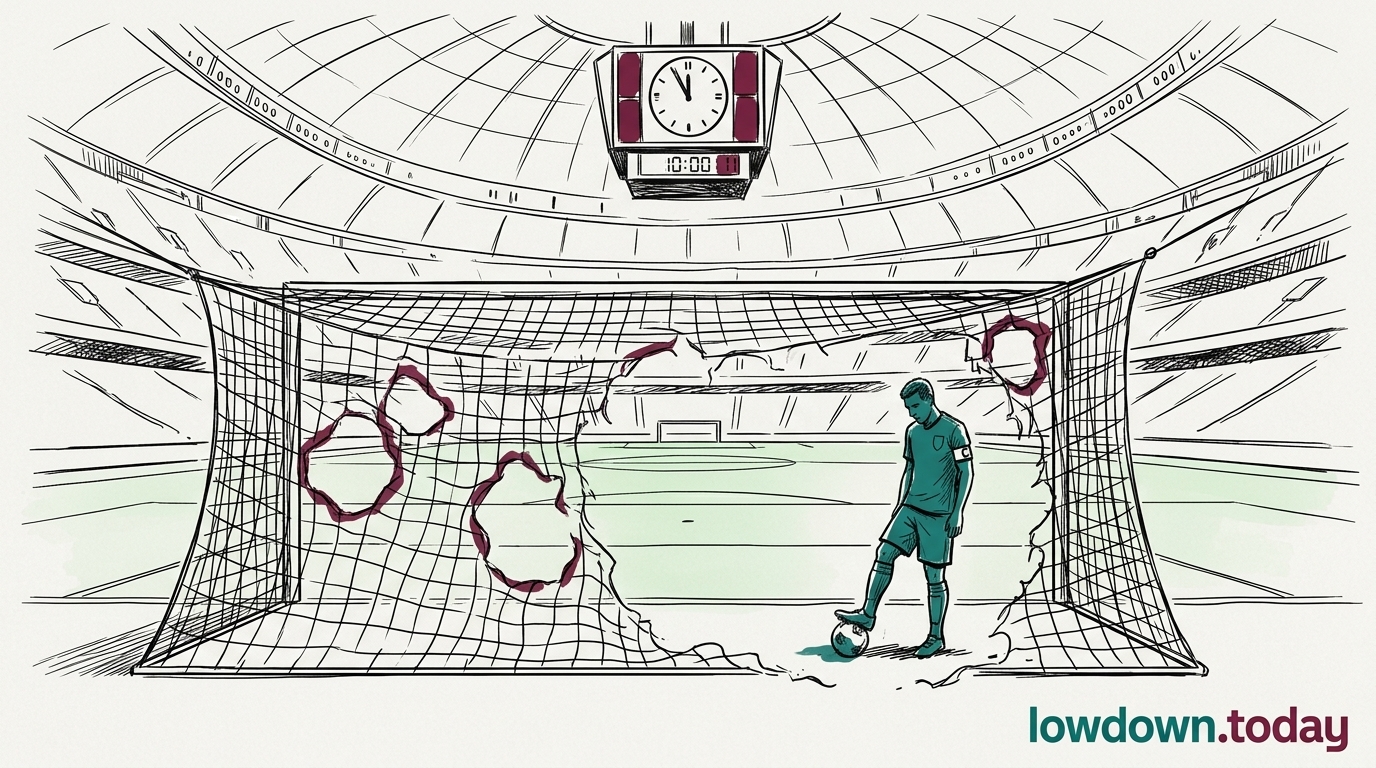
Eight stadiums built for American football must rip out artificial turf and install hybrid pitches in time for kickoff — a logistical challenge FIFA imposed after the Copa América 2024 debacle.

SportAssessed
Key takeaway

Eight simultaneous hybrid-grass conversions represent the most extensive pitch overhaul in World Cup history.

Eight of the 16 US World Cup venues must strip out their artificial surfaces and install hybrid grass — a mix of 90–95% natural turf reinforced with 5–10% synthetic filament 1. The conversions affect stadiums purpose-built for American football and other indoor events, where artificial turf has been standard for years. Five of the eight are fully enclosed or domed, which means natural grass must grow under artificial lighting with mechanical airflow in environments never designed to sustain living turf 2.

FIFA's mandate traces directly to Copa América 2024, hosted across US venues the previous summer. Players at that tournament described pitches as feeling "like a trampoline" 3, with seams separating, divots forming during play, and surface inconsistency drawing complaints from multiple national teams. The governing body's response was uncompromising: underground ventilation systems and sub-surface irrigation are now non-negotiable specifications. Fields must be installed a full two months before the first match, and ground staff are required to take moisture readings four times daily throughout the establishment period 4.

The engineering involved is considerable. Scientists at several US universities are working with FIFA's turf consultants to develop grass cultivars that can establish quickly under grow lights and tolerate the transition from controlled indoor environments to match-day conditions with 80,000 spectators altering humidity and temperature 5. At venues like AT&T Stadium in Arlington and SoFi Stadium in Los Angeles, retractable pitch trays — essentially massive steel platforms carrying the entire playing surface — must be rolled in and locked into position with millimetre precision.

The timeline leaves almost no margin. With FIFA taking full possession of stadiums in early May and the tournament opening on 11 June, any venue where the grass fails to root faces the same question now hanging over Estadio Azteca: where do the matches go? The difference is that Azteca's problems are construction-related and visible. A pitch that looks healthy in April but breaks apart under studs in June is a failure that reveals itself only when it is too late to fix.


Deep Analysis

In plain English

American football stadiums use synthetic turf because it withstands constant heavy use from NFL seasons without wearing out. But professional footballers need natural grass — it is softer underfoot, reduces injury risk, and the ball behaves more predictably. 'Hybrid grass' is a compromise: mostly real grass with synthetic fibres stitched through the root zone to stop it tearing up under repeated use. FIFA is also requiring an underground system of pipes to cool grass roots and automated irrigation to keep the surface consistent. Eight US stadiums — designed for American football, not football — have to complete this conversion simultaneously before FIFA takes possession in early May. That timeline has no margin for construction overruns.

Deep Analysis
Synthesis

The pitch conversion programme is a material test of whether FIFA's contractual leverage can override American venue operators' commercial incentives to minimise costly, temporary infrastructure. FIFA's shift to 'non-negotiable' language — absent from pre-Copa América contracts — signals it no longer trusts host-country assurances without hardened specifications. If all eight conversions succeed under that framework, it validates coercive compliance as FIFA's preferred tool for future North American events.

Root Causes

The structural driver is the multi-purpose stadium model that dominates American professional sports. NFL seasons run through January, leaving a window of only weeks between season end and required pitch installation. Venues were capitalised to serve multiple franchises and events, making single-sport infrastructure compliance permanently costly rather than a one-off adaptation.

Escalation

FIFA taking stadium possession in early May means hybrid-grass installations must be seeded and settled by approximately early April — within two weeks of today. Any ongoing construction work, including Azteca's renovation overrun, directly compresses the settling window. The daily moisture-reading protocol is an operational stress indicator: FIFA treats live pitch failure as a probable risk, not a precautionary scenario.

What could happen next?
2 risk1 precedent1 consequence1 opportunity
  • Risk

    Venues that have not formally commenced conversion by early April face a critically compressed settling period before FIFA possession in early May.

    Immediate · Assessed
  • Risk

    Substandard or poorly settled pitches at warm-climate venues increase soft-tissue injury probability, raising the prospect of formal national team protests or mid-tournament FIFA intervention.

    Short term · Suggested
  • Precedent

    FIFA's 'non-negotiable' infrastructure mandate for hybrid grass and sub-surface systems sets a binding contractual baseline for any future North American World Cup venue agreement.

    Long term · Assessed
  • Consequence

    Successful completion of all eight conversions would validate coercive FIFA specification enforcement as the operative model for future multi-use venue adaptations globally.

    Medium term · Suggested
  • Opportunity

    If conversions succeed, specialist hybrid-grass contractors gain a demonstrated large-scale US portfolio, reducing costs and timelines for future major-event bids.

    Medium term · Suggested
First Reported In

Update #1 · Iran splits on World Cup boycott

Sky Sports· 22 Mar 2026
Read original
Causes and effects
This Event
Eight US venues racing to lay real grass
The pitch conversion programme is the largest simultaneous turf replacement in football history, driven by player safety failures at Copa América 2024. If any venue's grass fails to establish, FIFA faces the choice of playing on substandard surfaces or relocating matches with less than two months' notice — compounding scheduling pressure already created by potential disruptions at Estadio Azteca.
Different Perspectives
Brazilian Football Confederation
Carlo Ancelotti's CBF named a 55-man preliminary squad on 9 May including Neymar, absent since October 2023, with the final 26 announced 18 May. Rodrygo and Militão were ruled out; the inclusion of Neymar serves both the coaching staff's tactical options and CBF's commercial interests in the home-continent cycle.
Confederation of African Football
CAF issued no public statement on the $15,000 visa bond affecting five qualified African nations, named by Al Jazeera on 5 May. Per BBC Africa Sport, CAF privately encouraged federations to use bilateral diplomatic channels rather than issue a collective protest, reflecting the body's institutional dependency on FIFA's commercial framework.
Giovanni Malagò / Serie A
Malagò reached 48% confirmed FIGC assembly bloc on 10 May after Lega B and Lega Pro signalled support, driven by Serie A clubs' need for parliamentary access to three debt-reduction reforms. A pre-vote majority before the 13 May declaration deadline would make the 22 June election ceremonial.
Football Supporters Europe / Euroconsumers
The Article 102 TFEU complaint filed on 24 March remains unacknowledged by DG COMP 18 days past the procedural deadline; MEP Brando Benifei and 24 colleagues filed a parliamentary question E-001336/2026 demanding an explanation from the Commission.
Human Rights Watch
Human Rights Watch
HRW's 11 May deadline for host cities to publish rights action plans passed with 12 of 16 cities non-compliant. HRW disputes FIFA's position that internal submission satisfies the transparency requirement, arguing fans cannot read what protections their city have committed to.
UNITE HERE Local 11
UNITE HERE Local 11
Filed NLRB and California AG complaints naming FIFA on 8 May, describing a SoFi Stadium strike as 'pretty realistic'. The filings follow five weeks of FIFA non-response to its April letter and test whether a Swiss event organiser can be bound by US employment and privacy law through its licensee chain.