Skip to content
Briefings are running a touch slower this week while we rebuild the foundations.See roadmap
2026 FIFA World Cup
5JUN

Anand: Taj revocation was unintentional, not policy

2 min read
08:45UTC

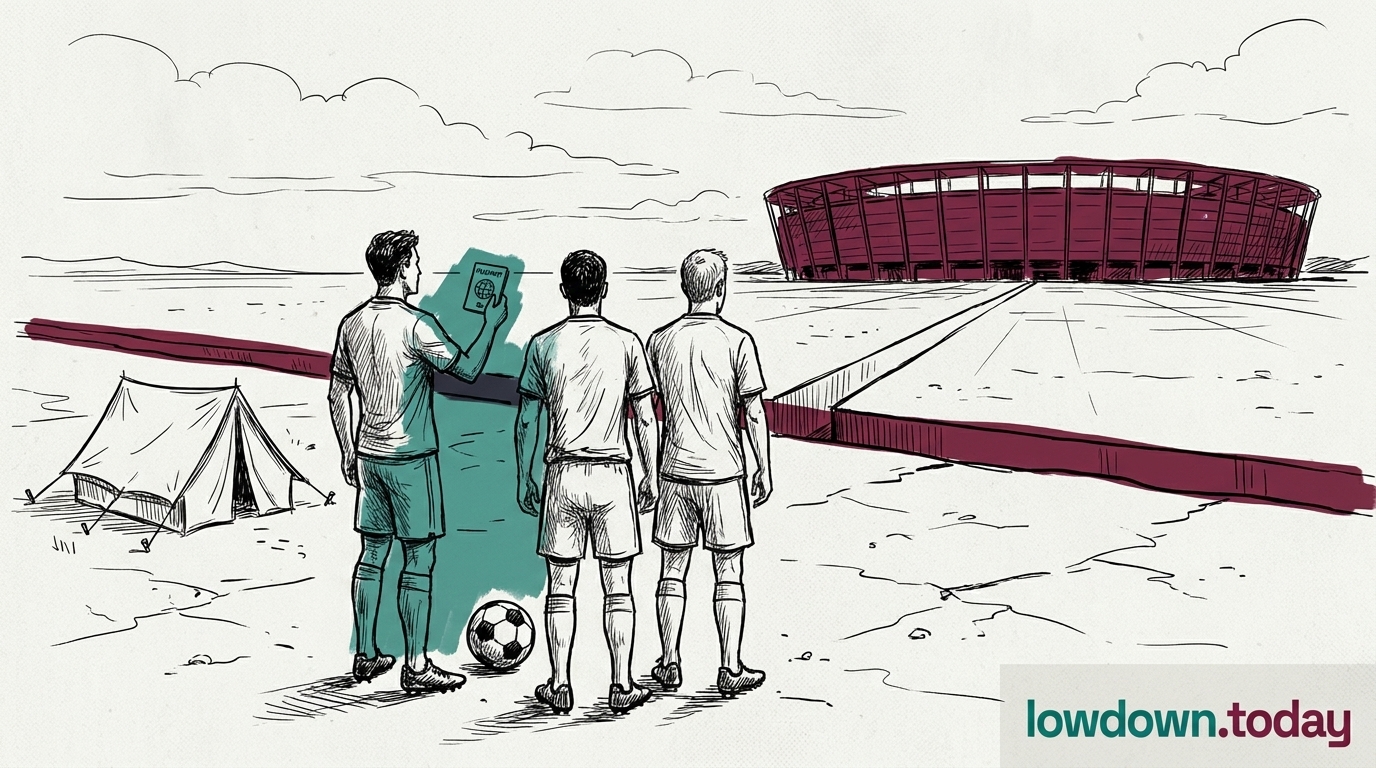
Canadian Foreign Affairs Minister Anita Anand described the late-stage revocation of Mehdi Taj's entry permission as 'unintentional', drawing a Conservative charge of 'gross incompetence or something worse' from immigration critic Michelle Rempel Garner.

SportDeveloping
Key takeaway

Ottawa called it unintentional; the missed Congress and the political fight remain.

Anita Anand, Canada's Foreign Affairs Minister, told reporters that the revocation of Mehdi Taj's Canadian entry permission was 'unintentional', executed Tuesday evening only hours after a Canadian consular post had cleared the same visa 1. Michelle Rempel Garner, the Conservative immigration critic, called the sequence 'gross incompetence or something worse' 2. The two characterisations marked the political fight Ottawa now has to manage on top of the diplomatic one.

Anand's framing locates the failure in the discretionary security check that overrode the consular decision, not in policy. The IRGC designation Canada adopted in 2024 is unchanged; the question raised by Pearson is whether Canada Border Services Agency officers can revoke a Foreign Affairs-issued visa hours before the holder lands. The answer on 29 April was yes. The diplomatic outcome did not reverse: Taj and his colleagues still missed the Vancouver Congress on 30 April, and Iran's empty chair sat through Infantino's roll call regardless of which Canadian institution had failed first.


Deep Analysis

In plain English

Canada's foreign minister said the cancellation of the Iranian officials' entry documents was a mistake in how it was handled: not that it was wrong to deny them, but that the cancellation happened at the airport rather than being sorted out before the delegation boarded their flight. The opposition called this an admission of serious government failure. Either way, the delegation had already flown back to Turkey by the time the minister spoke, so the apology arrived after the outcome was fixed.

Deep Analysis
Root Causes

Canada's IRGC terrorist designation, enacted in 2024, required CBSA to update its screening protocols for incoming individuals with IRGC command histories. The visa issuance and the security assessment ran on separate administrative tracks, with the consulate lacking access to CBSA's classified database at the point of issuance.

Anand's admission that the revocation was 'unintentional' points to a coordination failure between Global Affairs Canada (which issues visas) and the CBSA (which holds the IRGC classification data). That gap has not been closed publicly, meaning the same failure mode is structurally present for the Tucson entry on 10 May.

What could happen next?
  • Consequence

    Canada's 'unintentional' framing creates a documented gap between visa issuance and security-vetting completeness that other IRGC-designated nations (Australia, UK, EU member states) may audit in their own pre-tournament processes.

  • Risk

    If CBSA's standard operating procedure for IRGC-linked individuals was not followed on 28-29 April, a judicial review application by Taj or FFIRI could require Ottawa to disclose the classified basis for the security finding, producing a ruling before the 10 May Tucson arrival.

First Reported In

Update #9 · Iran's Pearson test

Global News· 1 May 2026
Read original
Causes and effects
This Event
Anand: Taj revocation was unintentional, not policy
Ottawa's admission that the revocation was a process failure, not a policy decision, fixes the political cost in Canada without reversing the outcome at Pearson.
Different Perspectives
France (FFF)
France (FFF)
Manager Didier Deschamps confirmed William Saliba will play, reversing the 'very doubtful' briefing from earlier in the week and deferring any surgery until after the tournament. France recovers its first-choice central defender for the group stage at a point when rivals were adjusting their tactical assessments.
Canada Soccer
Canada Soccer
Canada must submit its Flores replacement to FIFA before the 11 June 3pm ET deadline; Austin FC's Jayden Nelson is the favoured choice after Flores ruptured his ACL. Canada's Toronto opening ceremony on 12 June will feature Palestinian singer Elyanna, a booking that sets a political tone for the co-host's public face at the tournament.
Mexico (co-host)
Mexico (co-host)
Mexico certified Iranian visas and confirmed the Tijuana base camp on 3 June, acting as operational host for a team the northern co-host has not cleared. Guadalajara's Estadio Banorte still has no FIFA clearance after concrete fell from seats in Liga MX matches.
FIFA
FIFA
FIFA's Ethics Committee has taken no action on the Infantino complaint in six months, and FIFA has answered neither the NY/NJ subpoena nor the EU Article 102 filing. It approved Iran's Tijuana base camp but cannot issue a US visa; Infantino's April guarantee that Iran 'will be at the World Cup' was a commitment against authority he does not hold.
Norwegian Football Federation
NFF president Lise Klaveness submitted a letter of support for FairSquare's Article 15 complaint before 2 June, writing 'we are sending this letter alone' in a deliberate signal that the move was unilateral rather than coordinated. Norway's backing gives other federations a template for post-tournament solidarity without requiring them to act before kickoff.
US State Department
US State Department
Rubio restated on 3 June that IRGC-linked individuals will not embed in the delegation; waiver authority sits with the Secretary himself, not consulates, which is why Taremi's 2010-2012 service can hold the whole squad without a formal denial. The same government withholding entry from Iran is spending $1.47bn to protect the tournament.


