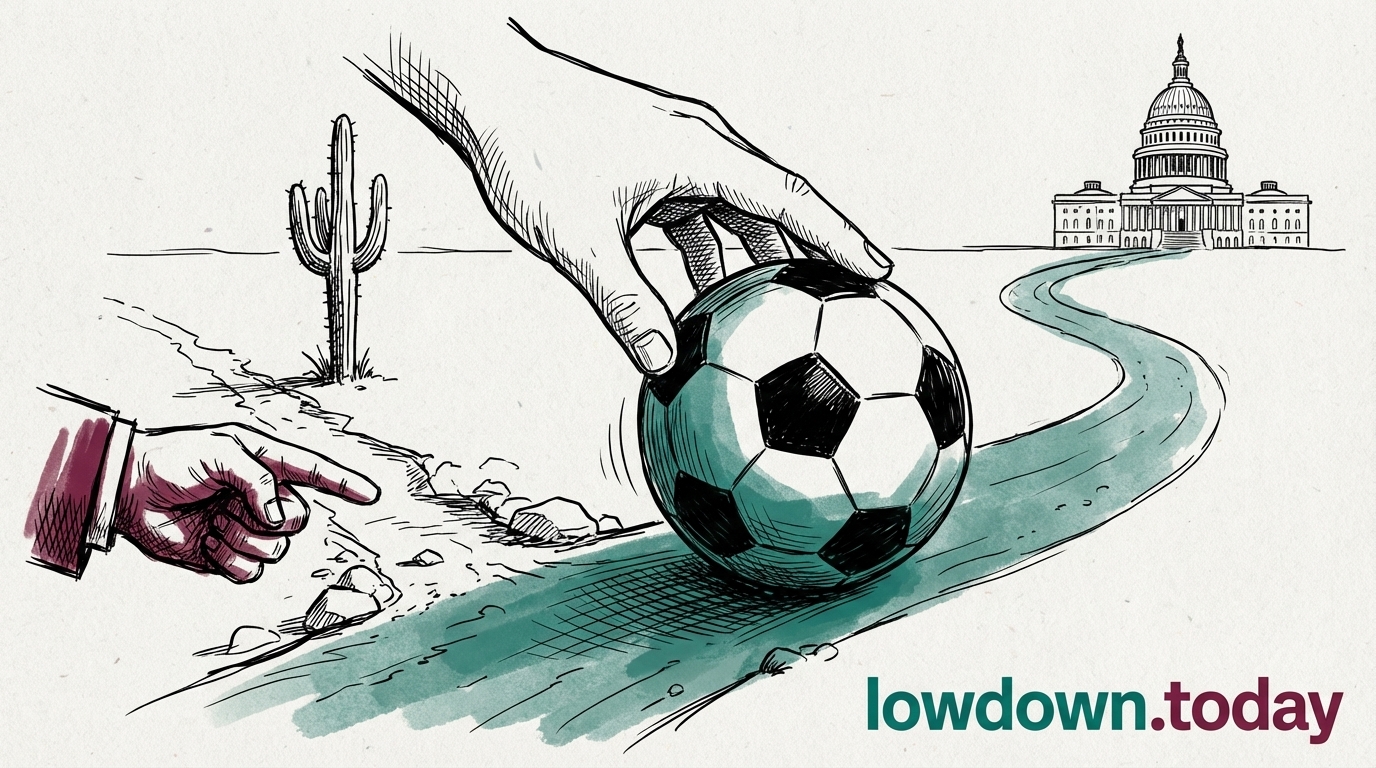
Gianni Infantino met FFIRI secretary general Mehdi Mohammed Nabi, international relations director Omid Jamali and head coach Amir Ghalenoei in Antalya, Turkey across 31 March and 1 April. Al Jazeera reported the FIFA president's words to the Iranian delegation directly: 'Iran will be at the World Cup. That's why we're here'1. The concrete offer that emerged was not a relocation of fixtures but a pre-tournament training camp in Turkey, a logistics package for a squad already assumed to be travelling.
FFIRI is Iran's national football governing body, distinct from the country's sports ministry. Its post-meeting statement made no reference to Mexico, no reference to relocation, and attached no condition to participation. The federation walked out of Antalya having accepted the structure FIFA was offering. Six days later, Sports Minister Ahmad Donyamali issued the public relocation demand without his federation's signature on it.
The Antalya meeting exposed an institutional asymmetry FIFA could exploit. FIFA recognises federations, not ministries, as the legal counterparties to its tournament agreements. Article 6 of the 2026 World Cup Regulations gives FIFA sole discretion over the consequences of a withdrawal, which carries an exposure of $10.5M in lost prize money and preparation funds, a disciplinary fine of up to $642,000, and possible exclusion from 2030. A force majeure exception exists at FIFA's discretion, citing the US travel ban on Iranian nationals, but FFIRI has not invoked it. A federation that has not invoked the exit clause is a federation that has chosen to play.
What Antalya really demonstrated is that FIFA can route around a hostile sports ministry by negotiating directly with the federation that holds the registration. That sequence becomes a template for any other participating nation whose government attempts a similar protest before kickoff on 11 June.




