Skip to content
Welcome, thoughtbot's Giant Robots listeners!Start here
2026 FIFA World Cup
22MAR

Trump's fifth Hormuz deadline expires tonight

2 min read
05:50UTC

The fifth reformulation of the same Hormuz ultimatum in six weeks is set to lapse at 8pm Eastern, with the most probable outcome a sixth extension framed around the Islamabad track.

SportDeveloping
Key takeaway

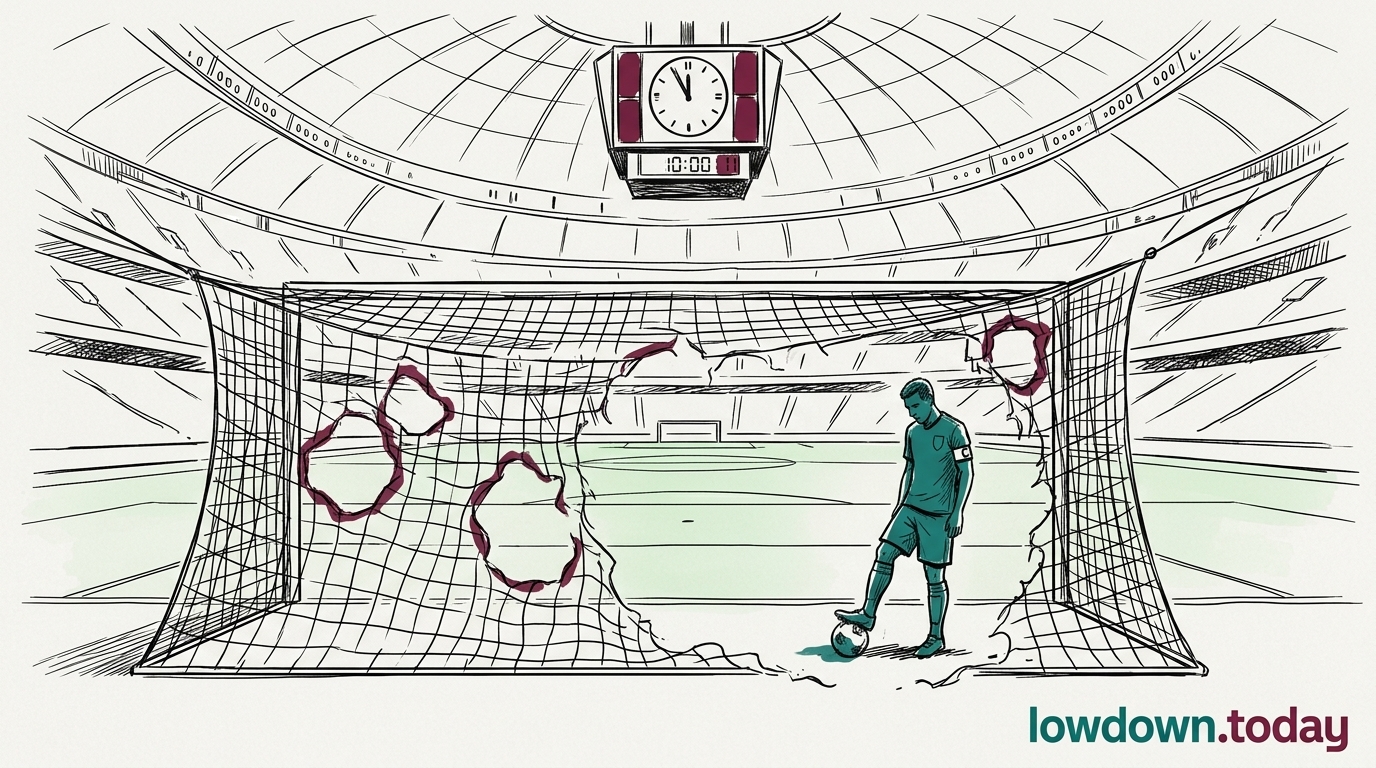
Five extensions in, the deadline mechanism has become the instrument rather than a precursor to action.

Donald Trump's fifth Hormuz ultimatum expires at 8pm ET (0000 UTC Wednesday). It follows the 6 April power-grid deadline and the second replacement that itself ran out, and reformulates the same threat for the fifth time in six weeks.

Each previous expiry produced an extension. The rhetoric escalated each cycle while the operational ceiling stayed flat: no civilian-infrastructure threshold ever crossed, no new target category announced, no military fact on the ground that the prior subsequents had not already established. The most probable outcome tonight, on the pattern, is a sixth extension framed around whatever the Islamabad track allows.

Tehran is now planning around the assumption that the deadline itself is the instrument, not a precursor to action. The risk is not that one of these expiries is theatre, it is that the day Trump genuinely intends to follow through, no actor in the system will read the signal differently from the four that preceded it.


Deep Analysis

In plain English

Trump has now issued five versions of the same ultimatum over six weeks: open Hormuz or face consequences. Each previous deadline has produced an extension rather than action , the 6 April power-grid deadline, the second replacement, and three further reformulations. Tonight's version expires at 8pm Eastern time. The most likely outcome, on pattern, is a sixth extension framed around whatever the Pakistan diplomatic track allows. The practical effect of five extensions is that Iran now plans on the assumption the deadline itself is the tool, not a warning of what follows. The danger is not that each expiry is theatre , it may well be , but that the day it is not, no one reads it differently.

Deep Analysis
Root Causes

The five-extension pattern reflects a structural mismatch between Trump's political need to signal toughness on Hormuz domestically and the operational reality that the US has not found a military solution within the constraints it has set for itself , no civilian infrastructure thresholds crossed, no new target categories announced, carriers moved out rather than in.

Each extension preserves the option while deferring the cost; the cumulative cost is the credibility of the next deadline.

Escalation

The fifth deadline expiry does not itself raise escalation risk; the pattern has lowered it by training both sides to treat expiry as routine. The risk is asymmetric: on the day the US genuinely intends to follow through, the signal will be indistinguishable from the four that preceded it, creating a window for catastrophic Iranian miscalculation.

What could happen next?
  • Risk

    Five consecutive extensions have habituated Iran to treating US deadlines as negotiating variables; if Trump does eventually order enforcement action, the prior pattern means the signal will not be read as materially different, raising the risk of a genuine miscalculation.

  • Precedent

    The five-extension cycle establishes that this administration will not cross civilian-infrastructure thresholds under deadline pressure alone, narrowing Iran's incentive to offer substantive concessions before a threshold is actually crossed.

First Reported In

Update #61 · Carriers retreat; Iran codifies Hormuz

Africa Report· 7 Apr 2026
Read original →
Different Perspectives
Council on Foreign Relations
CFR's analysis identified 18.75% of the 48-team field facing access barriers — the only available quantification after the State Department admitted it has none. The explicit contrast with South Africa 2010's visa waiver for all ticket holders positions the US as a regressive host by historical standards.
New York commuters / Assemblyman Bhalla
Bhalla framed Penn Station's closures as a class issue: 'For the 99 percent that can't afford to attend the games, it would be nice to at least know how you're going to get home from work.' Eight closures lock 650,000 daily commuters out for tournament traffic, with one on a Monday rush hour.
French Football Federation
The FFF called an 11:00 CEST press conference for 28 July, at its Paris headquarters, following an extraordinary executive committee meeting, at which Zinedine Zidane is expected to be presented as head coach succeeding Didier Deschamps. As of this writing no communique confirms the appointment, contract length or start date.
Morocco
Morocco
Morocco is pushing for the 2030 final at its Grand Stade Hassan II in Casablanca, a planned 115,000-seat venue that would be the world's largest football stadium on completion. The venue is contested by a Spanish petition for the Santiago Bernabeu, and FIFA has fixed neither the venue nor the tournament's proposed 64-team format.
FIFA
FIFA
FIFA's first tournament report, published 27 July, itemises nearly 300,000 accredited personnel, 73,700 security staff and 300,000 square metres of custom-grown turf, with no revenue or cost figure attached. As a Swiss association answering to its own Congress rather than a treasury, FIFA has followed the same operational-before-financial sequence it used after Qatar 2022.
Javier Tebas / La Liga
La Liga president Javier Tebas said on 21 July that FIFA's system is rotten from the root and that Gianni Infantino's time as president has, in his words, concluded. Tebas has no vote in FIFA's process, so days after the IOC declined jurisdiction over a separate ethics complaint, he used the only instrument he has.

Written with AI from Lowdown's published reporting. Not individually reviewed by an editor. Editorial standards.


