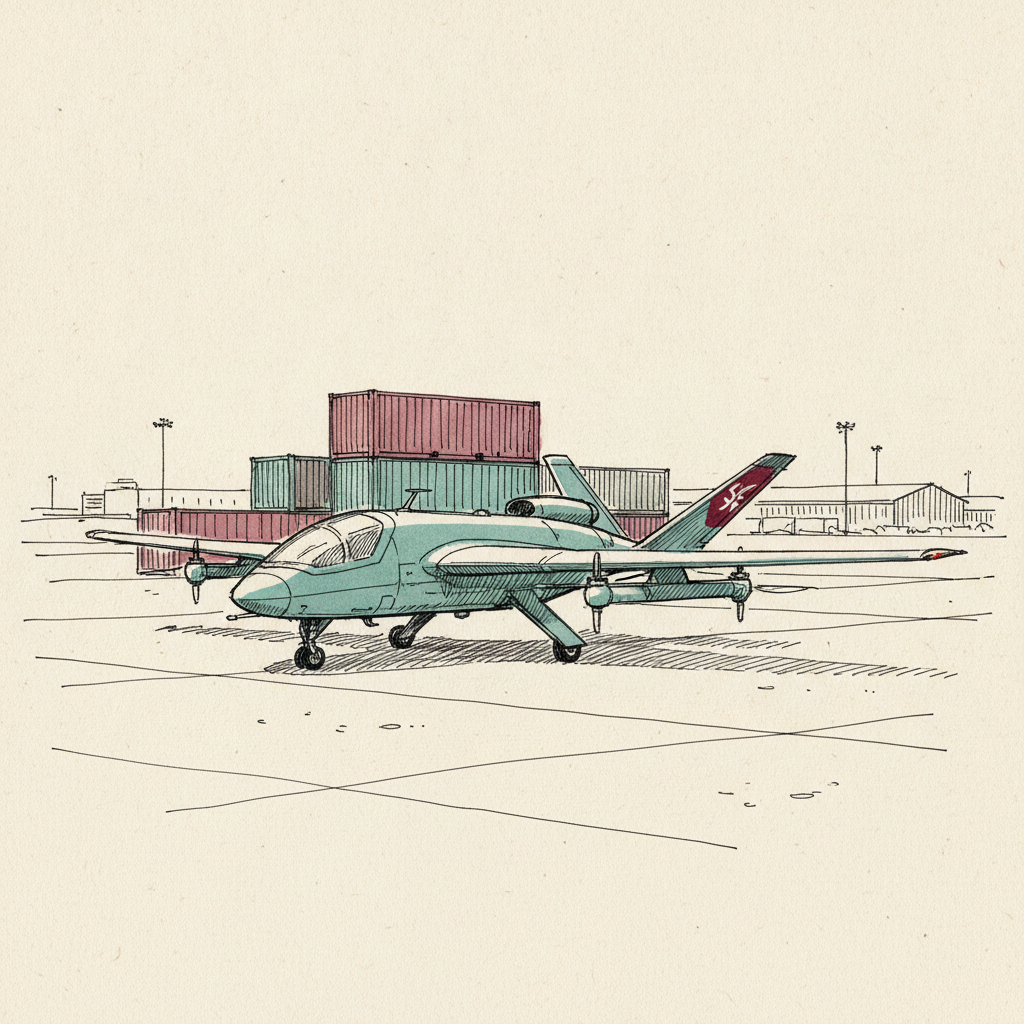
Virtus
Stark Defence VTOL loitering munition with 130km range and 90-minute endurance; 2,200 units contracted by Bundeswehr for €270M.
Last refreshed: 25 June 2026 · Appears in 1 active topic
Has Virtus been proven in combat, or is €3.5B a valuation on potential?
Timeline for Virtus
Stark closes €500m above its own ask
Drones: Industry & DefenceRemained Stark's sole product while EUR 2.5B fundraising was in progress
Drones: Industry & Defence: Berlin startup priced ahead of deliveryContracted for 2,200 units at €270M initial tranche; 130km range, 90-minute endurance
Drones: Industry & Defence: Germany awards €840M+ across three drone makersBackground
Virtus is the autonomous loitering munition built by Berlin-based Stark Defence and the product behind one of the fastest defence-company valuations in European history. The system identifies and strikes targets autonomously before detonating, with a range of over 130 kilometres and an endurance of up to 90 minutes. In February 2026 the German Bundeswehr awarded Stark and fellow startup Helsing contracts worth approximately €269 million each to supply Virtus drones to the 45th Armoured Brigade stationed in Lithuania, the first major German armed-forces order for the system. Stark is in talks to raise €500 million led by Sequoia and Founders Fund at a valuation above €3.5 billion, more than triple its €1 billion mark from February 2026.
Stark Defence was founded in 2024 by Florian Seibel and Johannes Schaback. Seibel previously founded Quantum Systems, a German drone maker. The company is headquartered in Berlin and has grown rapidly by targeting the European NATO market's urgent demand for organic loitering-munition capability. Despite no demonstrated volume production as of mid-2026, Stark's combination of a Bundeswehr framework contract and USD-denominated venture capital from Peter Thiel's Founders Fund places it in an unusual position: a European defence startup being priced on American venture terms before it has shipped at scale.
Virtus sits at the intersection of two structural trends reshaping European defence procurement: the shift from institutional loyalty to delivery proof at price, and the influx of Silicon Valley capital into sovereign-capability programmes. The system directly competes with Israeli and Turkish loitering munitions that have dominated the market since 2020. Its performance in Bundeswehr acceptance trials will set a benchmark for whether European alternatives can displace established imports across the NATO alliance.
What is the Stark Defence Virtus drone and what does it do?
Has Virtus been ordered by the German military?
Why is Stark Defence valued at over €3.5 billion without volume production?
Who are the founders of Stark Defence?
How does Virtus compare to Israeli loitering munitions like the Harop?

