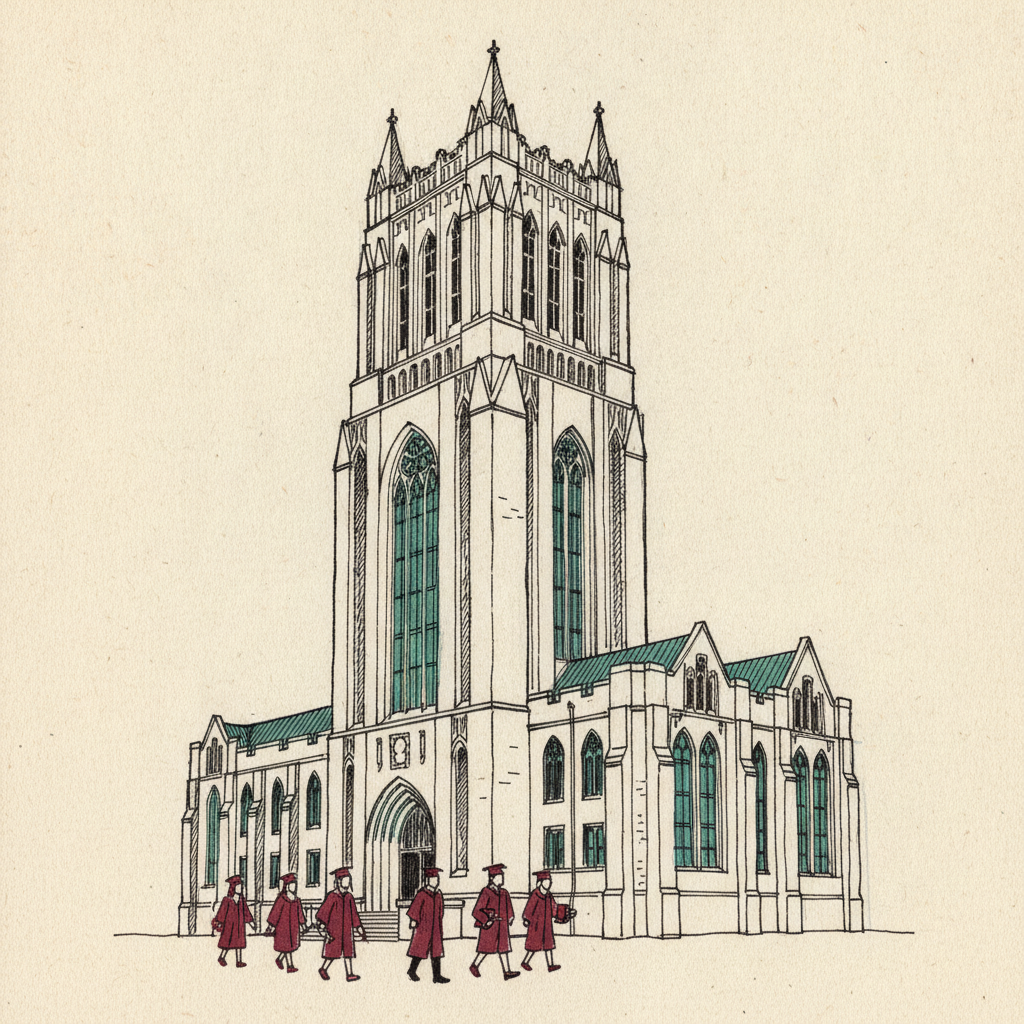
University of Pittsburgh
State-related US research university known as Pitt, founded in 1787.
In June 2026, Pitt researchers showed that H5N1 targets receptors in cow udder tissue rather than lungs, explaining how the virus spread through more than 1,000 US dairy herds while respiratory surveillance looked elsewhere.
Last refreshed: 22 October 2026 · Appears in 1 active topic
How did Pitt's receptor mapping show H5N1 was hiding in plain sight in US dairy herds?
Timeline for University of Pittsburgh
Mentioned in: Cuba lets foreign branches hire Cubans
Cuba DispatchMentioned in: Cambodia, not US herds, makes cases
Pandemics and BiosecurityWhy H5N1 hid in cow udders
Pandemics and BiosecurityBackground
The University of Pittsburgh, commonly called Pitt, is a state-related research university in Pittsburgh, Pennsylvania. It began as Pittsburgh Academy in 1787 and is a member of the Association of American Universities. Its research spans health, Science, engineering, the humanities and social sciences.
Pitt's relevance to current coverage comes from more than one field. Its researchers study infectious disease and animal-to-human spillover, while its University Center for International Studies supports long-running work on Latin America. Carmelo Mesa-Lago, Distinguished Service Professor Emeritus of Economics and Latin American Studies, is known for scholarship on Cuba's economy and social policy. Those two strands place Pitt in both biosurveillance and Cuban Reform debates, although each claim rests on the work of specific scholars rather than a single university position.
Udder tropism exposes surveillance blind spots
In June 2026, a Pitt team led by Suresh Kuchipudi found that H5N1 binds receptors abundant in cow udder tissue but scarce in the respiratory tract. The infection therefore presented as mastitis rather than influenza. For Pitt, the result explained why respiratory surveillance missed spread through more than 1,000 US dairy herds for roughly two years.
By 17 July, the confirmed US human-case count remained at 71 while the dairy-herd outbreak continued. That figure describes detected human infections; it does not show that Pitt's cow-tissue finding explains the human total. The study's direct implication is narrower: animal surveillance built around respiratory disease can miss an udder-Tropic strain, so tissue choice matters when testing cattle.
Reference
What is receptor mapping and how does it help predict the next pandemic?
When was the University of Pittsburgh founded?
What did University of Pittsburgh researchers discover about H5N1 in 2026?
Who led the H5N1 udder tropism discovery at the University of Pittsburgh?
How many US dairy herds have been infected with H5N1?
What is the University of Pittsburgh?
Why is Pitt cited in Cuba's investment debate?
Written with AI from Lowdown's published reporting. Not individually reviewed by an editor. Updated 22 October 2026. Editorial standards.