Can Sri Lanka hold the line on neutrality with 208 Iranian crew ashore at Trincomalee?
Timeline for Trincomalee
Hosted the interned IRIS Bushehr under Sri Lanka's Hague Convention action
Iran Conflict 2026: Sri Lanka interns IRIS Bushehr, 208 crewBackground
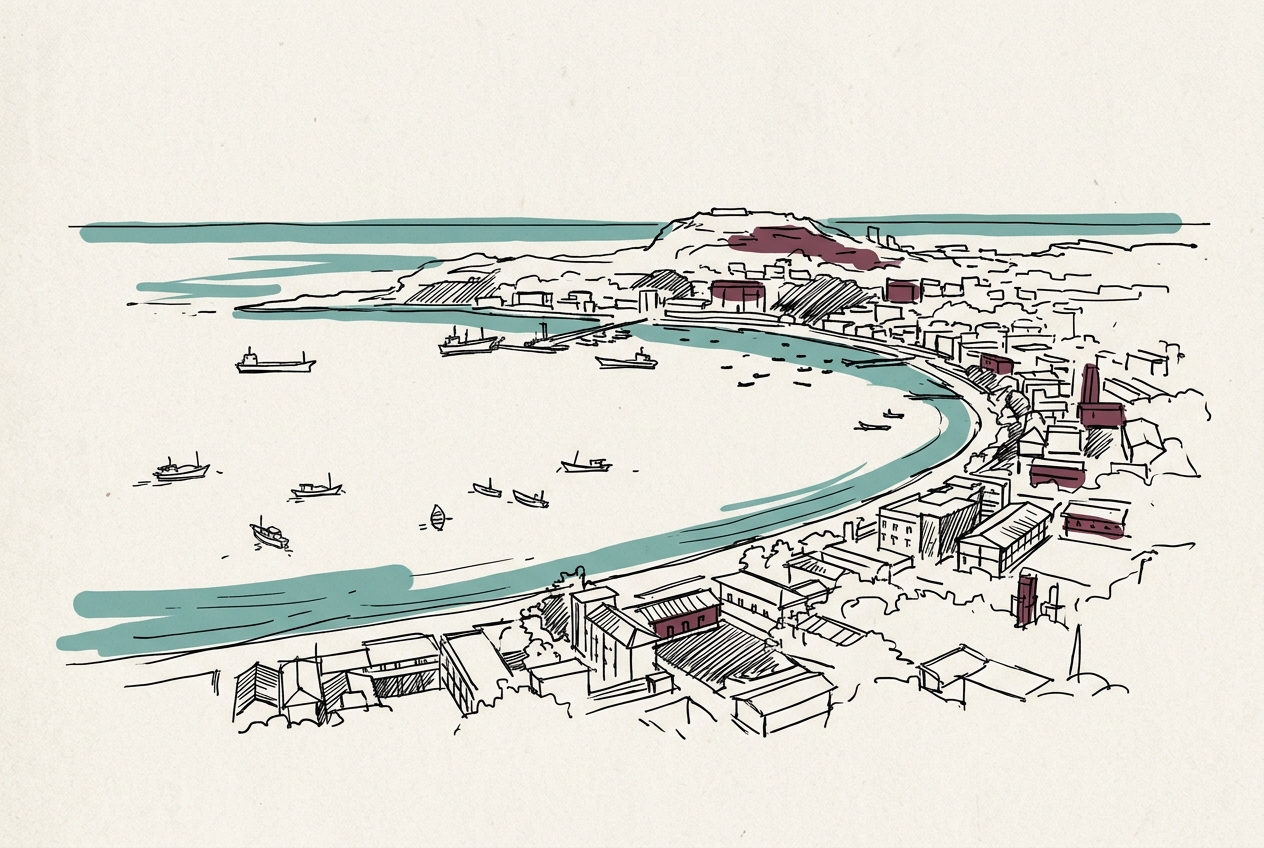
Trincomalee is a port city on Sri Lanka's northeastern coast, commanding one of the world's finest natural deep-water harbours. Strategically positioned on the Indian Ocean, it has been contested by colonial powers for centuries: the Portuguese, Dutch, and British all fortified its Anchorage. The Royal Navy used it as a major base during The Second World War, and it remains the home of the Sri Lanka Navy's Eastern Naval Command.
Trincomalee entered global news in 2026 when Sri Lanka invoked the 1907 Hague Conventions to intern the Iranian Navy replenishment vessel IRIS Bushehr (A-422) after it sought refuge in territorial waters during the Iran-Israel-US conflict. The 208-strong CREW were brought ashore and transported to Trincomalee for the conflict's duration, making the port the site of the first formal naval internment under the Hague Convention in decades.
Sri Lanka's decision to intern rather than expel the vessel signals a careful act of neutrality in a conflict that could reshape Indian Ocean power balances. Trincomalee's harbour has long been coveted by both India and China as a naval access point; hosting interned Iranian CREW under international law tests that neutrality while asserting Sri Lanka's sovereign credibility on the world stage.
What is Trincomalee?
Why are Iranian sailors in Trincomalee?
Why is Trincomalee strategically important?
What is a naval internment under the Hague Convention?
Does India or China have a base at Trincomalee?


