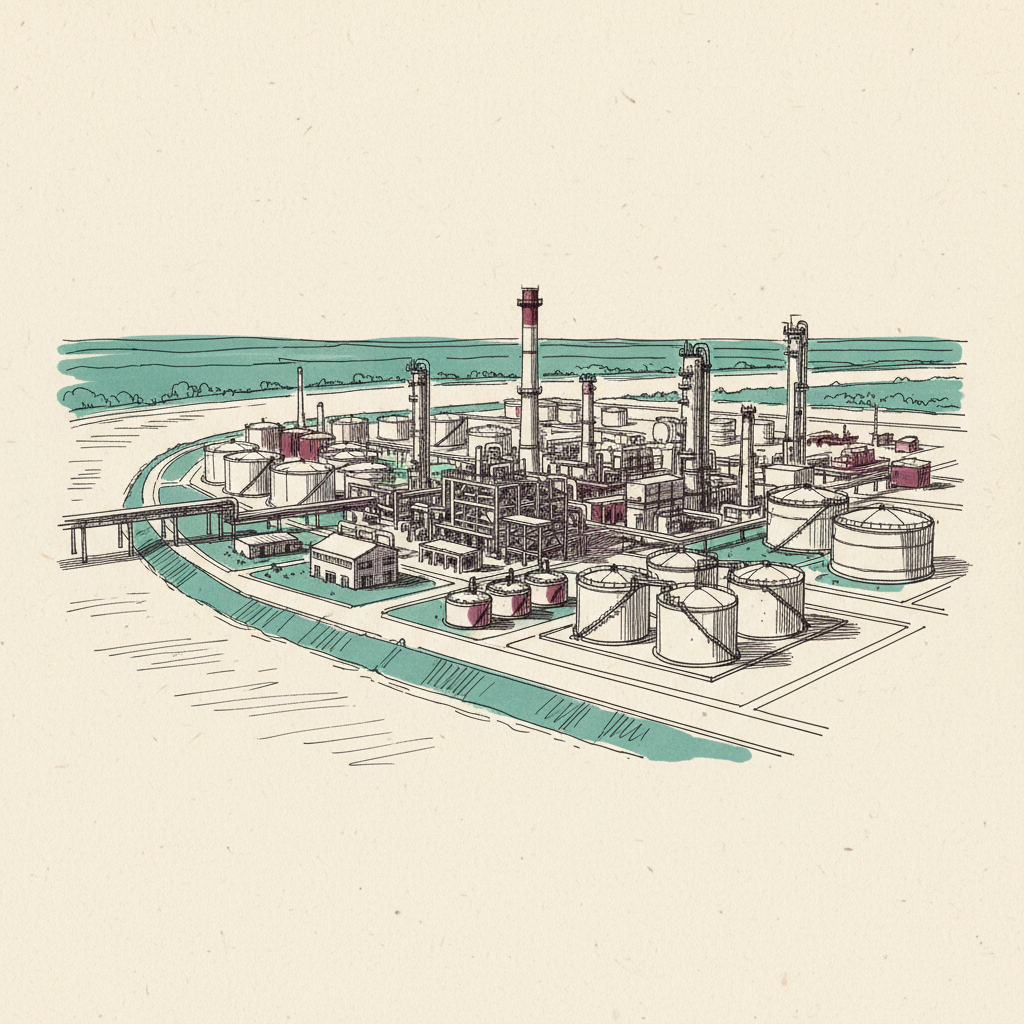
Syzran refinery
Rosneft refinery in Samara Oblast; shut 25 May after Ukrainian drone strike; supplies the Russian Air Force.
The Syzran refinery shut on 25 May 2026 after a Ukrainian drone strike, the 11th Russian refinery hit that month. The Rosneft plant supplies fuel to the Russian Air Force.
Last refreshed: 12 October 2026 · Appears in 2 active topics
Will the Syzran refinery restart before its shutdown degrades Russian Air Force fuel supply?
Timeline for Syzran refinery
Mentioned in: Ukraine strikes Yandex AI data centres
Russia-Ukraine War 2026Syzran refinery shuts after drone strike
Russia-Ukraine War 2026Mentioned in: Ukraine kills 65 drone cadets at Snizhne
Russia-Ukraine War 2026Mentioned in: Syzran Hit, Quarter of Refining Halted
Russia-Ukraine War 2026Mentioned in: 1,000-Drone Barrage Kills Indian Refinery Worker
Russia-Ukraine War 2026Background
The Syzran refinery is a Rosneft crude-oil plant in the city of Syzran, Samara Oblast, in Russia's Volga region. Built in the early 1940s to supply the Soviet war effort, it is one of the country's oldest working refineries, with capacity of roughly 8.5 to 9 million tonnes a year.
Its military role makes it a target. The plant produces jet fuel and diesel for the Russian Air Force and for units across central and southern Russia, so damage there reaches aviation fuel at the source rather than at the pump.
Samara Oblast has stayed in range. On 2 October 2026 Ukrainian drones hit an oil-pumping complex in the region, and on 4 October Kyiv put the share of Russian refining knocked out by its drones at 51%, a campaign in which Syzran was an early casualty. That claim is unverified, but it places Syzran inside a campaign aimed at Russia's whole refining base.
A drone strike took the plant offline
Ukrainian drones hit Syzran on 20 to 21 May 2026, part of a wave that had already halted about a quarter of Russian refining. The plant shut down on 25 May, the 11th refinery struck that month, Ukraine's most intensive month of refinery attacks in the war to that point.
The target was chosen for what the plant makes. Syzran supplies jet fuel to the Russian Air Force, and Russian petrol output was already down 30% and diesel 25% before it closed. No restart had been publicly confirmed by mid-July. The plant sits more than 800 km from the front line, which put it among the deepest strikes of the campaign.
Reference
Where is the Syzran refinery and how far is it from Ukraine?
Who owns the Syzran refinery and what does it produce?
Why does Ukraine target oil refineries inside Russia?
How much of Russia's refining capacity has Ukraine's drone campaign disrupted?
What happened at the Syzran refinery in May 2026?


Written with AI from Lowdown's published reporting. Not individually reviewed by an editor. Updated 12 October 2026. Editorial standards.