Skyhammer
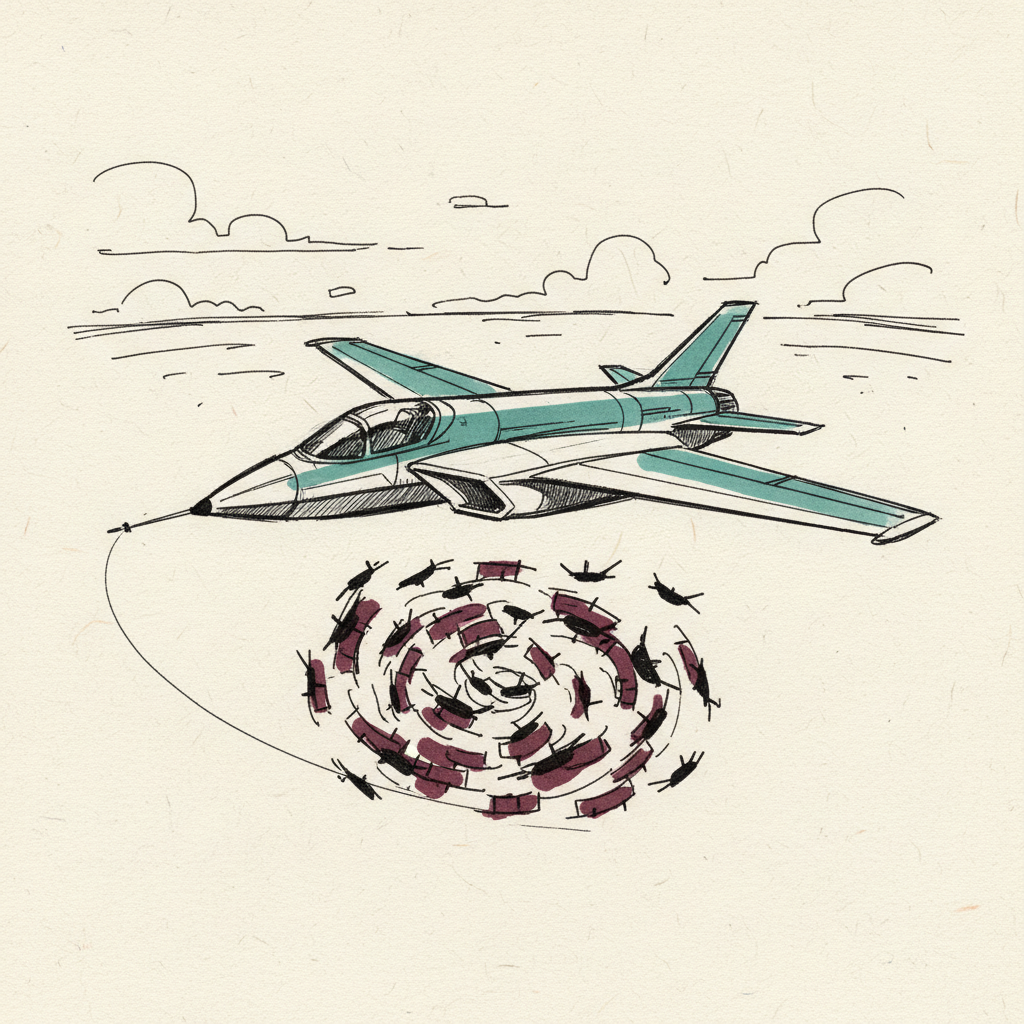
British subsonic turbojet interceptor with 30km range, designed to defeat Shahed-class drones at standoff distance.
Last refreshed: 14 July 2026 · Appears in 1 active topic
Why is the UK buying a missile from a startup with no delivery record?
Timeline for Skyhammer
Mentioned in: Britain awards first LEAP effector money
Drones: Industry & DefenceMentioned in: RTX demos reusable Coyote against swarms
Drones: Industry & DefenceMentioned in: Healey commits £752M for 120,000 Ukraine drones in Berlin
Drones: Industry & DefenceUK buys Skyhammer from unproven startup
Drones: Industry & DefenceMentioned in: UK doubles drone spend to £4 billion
Drones: Industry & DefenceBackground
Skyhammer entered the spotlight in April 2026 when the UK Ministry of Defence placed an initial order with Cambridge Aerospace, a British startup with no prior delivery record. The contract, announced under the UKDI rapid investment tranche, positions Skyhammer as the UK's primary dedicated counter-drone interceptor. First deliveries are scheduled for May 2026, a timeline that draws scrutiny given the company's early-stage status. In July 2026 Cambridge Aerospace also won a share of the UK's first LEAP/LCADE counter-drone awards (£3.16 million across three SMEs, 13 July), giving the Skyhammer manufacturer a second confirmed MoD production line.
Skyhammer is a subsonic turbojet missile with a 30km range and an active X-band radar seeker, allowing it to autonomously track and intercept Shahed-class drones without GPS dependence. The design sits between cheaper loitering munition interceptors and premium surface-to-air missiles, filling a cost gap the MoD identified as critical. It was cited as one component of the UK's wider £4 billion drone investment announced in the same period.
The MoD's willingness to buy from an unproven supplier reflects broader Western urgency to field counter-drone systems after Shahed saturation attacks exposed the limits of legacy air defence in Ukraine. If Cambridge Aerospace meets its May 2026 delivery commitment, Skyhammer will be one of the fastest British defence acquisition programmes in recent memory. A delivery failure, by contrast, would reignite debates about the UK's Reliance on nascent domestic suppliers for critical defence capability.
How much does Skyhammer cost compared to Patriot missiles?
Can Skyhammer shoot down Shahed drones?
What is the Skyhammer missile and why did the UK buy it?
Has Cambridge Aerospace won any other UK contracts besides Skyhammer?


Written with AI from Lowdown's published reporting. Not individually reviewed by an editor. Updated 14 July 2026. Editorial standards.