Skrydstrup
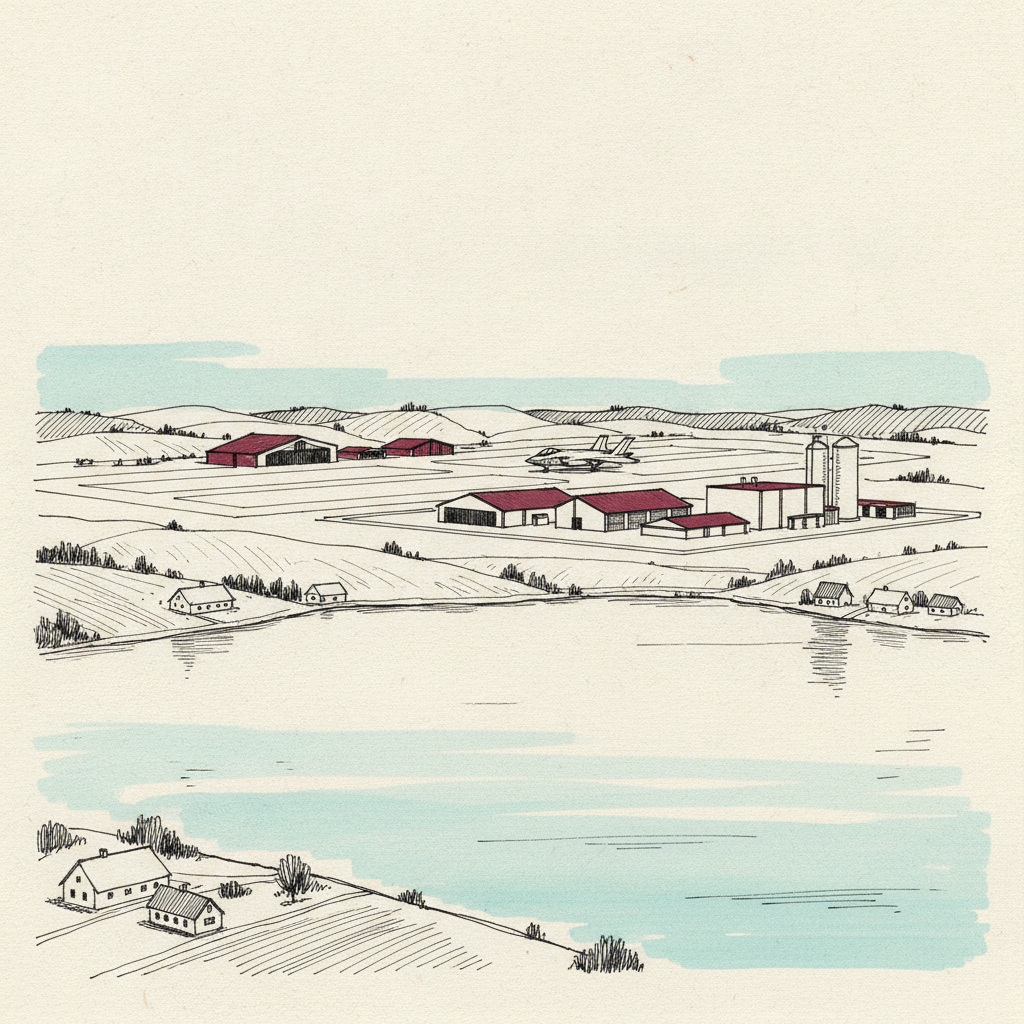
Town in southern Denmark hosting a Danish Air Force F-35 base and, from 2026, a Fire Point solid-rocket-fuel production plant.
Last refreshed: 7 June 2026 · Appears in 1 active topic
Why did Denmark let Ukraine build a weapons plant next to its F-35 base?
Timeline for Skrydstrup
Mentioned in: Latvia, Ukraine build drones on border
Drones: Industry & DefenceMentioned in: Ukraine exports the factory, not the drone
Drones: Industry & DefenceMentioned in: Zelensky plans 10 EU arms export offices
Drones: Industry & DefenceHosted construction of first Ukrainian NATO-soil weapons plant
Drones: Industry & Defence: Ukraine breaks ground on NATO-soil plantBackground
Skrydstrup, in southern Denmark's Haderslev municipality, became a landmark in Western defence cooperation in 2026 when Ukrainian firm Fire Point began construction of a solid-rocket-fuel production plant adjacent to the Royal Danish Air Force's F-35 base: the first Ukrainian weapons manufacturing facility on NATO soil. The agreement was signed on the sidelines of the NATO summit in June 2025; Danish authorities fast-tracked the project by temporarily suspending over twenty regulatory provisions in September 2025. Initial production was due to commence in 2026, with full-scale output in 2027.
The base at Skrydstrup (formally Flyvestation Skrydstrup) is the home of the Danish Air Force's F-35A fleet, Denmark having replaced its F-16s with F-35s under a 2016 order. The proximity of Fire Point's new facility to an operational NATO F-35 base is deliberate: it embeds Ukrainian propulsion production within a defended perimeter and creates a symbolic and practical link between Ukraine's long-range strike programme and the Alliance's most advanced combat aircraft.
Fire Point's Flamingo cruise missile, with a stated range of 3,000 km, will use propellant produced at the Skrydstrup plant. The facility also plans to produce engine casings and carry out final assembly of rockets, including stages for the FP-7 and FP-9 operational-tactical ballistic missiles. The Danish precedent has accelerated discussion of similar agreements in Baltic states and sets a template for NATO-hosted Ukrainian industrial capacity.
Where is Skrydstrup and why is it significant for Ukraine?
What is Fire Point building at Skrydstrup?
Why did Denmark agree to host a Ukrainian weapons factory?







Written with AI from Lowdown's published reporting. Not individually reviewed by an editor. Updated 7 June 2026. Editorial standards.