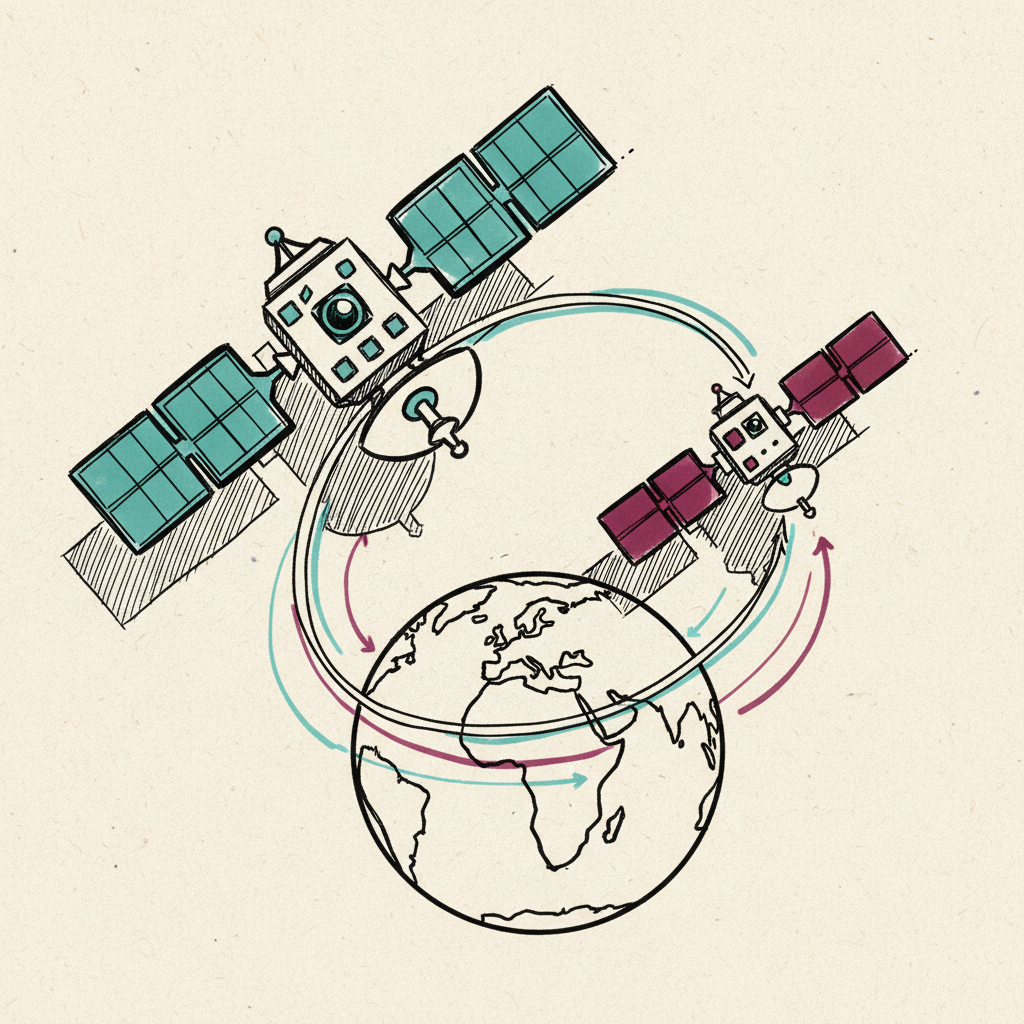
Sentinel-2
ESA Earth-observation satellite pair; free multispectral imagery used for open-source intelligence.
Sentinel-2 is ESA's free-imagery satellite pair whose 7 and 12 July passes gave the first Independent evidence a strike reached Bushehr's perimeter.
Last refreshed: 19 July 2026 · Appears in 1 active topic
When anyone with a browser can see Iran's military movements from space, does 'secret' still mean anything?
Timeline for Sentinel-2
Mentioned in: Iran says strike hit unfinished reactor
Iran Conflict 2026Mentioned in: IAEA opens a file on Darkhovin strike
Iran Conflict 2026Satellite scars confirm a Bushehr strike
Iran Conflict 2026Mentioned in: Trump ranks blockade above Iran bombing
Iran Conflict 2026Background
Sentinel-2 is a pair of European Space Agency Earth-observation satellites, Sentinel-2A launched in 2015 and Sentinel-2B in 2017, providing multispectral optical imagery at 10-metre resolution. Under ESA's Copernicus open-data policy the imagery is free within hours of acquisition, making it the default starting point for open-source conflict monitoring by journalists and researchers rather than a tool restricted to state intelligence agencies.
The satellites revisit any given point roughly every five days, improved to two to three days when both spacecraft's passes are combined. That resolution is enough to show cratering and impact scars but not sub-building damage, so it can confirm a strike reached a site's perimeter without settling what inside it was hit.
Sentinel-2 imagery has been used repeatedly through the Iran conflict: in April 2026 to identify roughly 33 IRGC fast-attack craft clustered off Kargan, and the same open, low-latency model has been applied well beyond this war, including to document a nationwide fall in Cuban nighttime lighting.