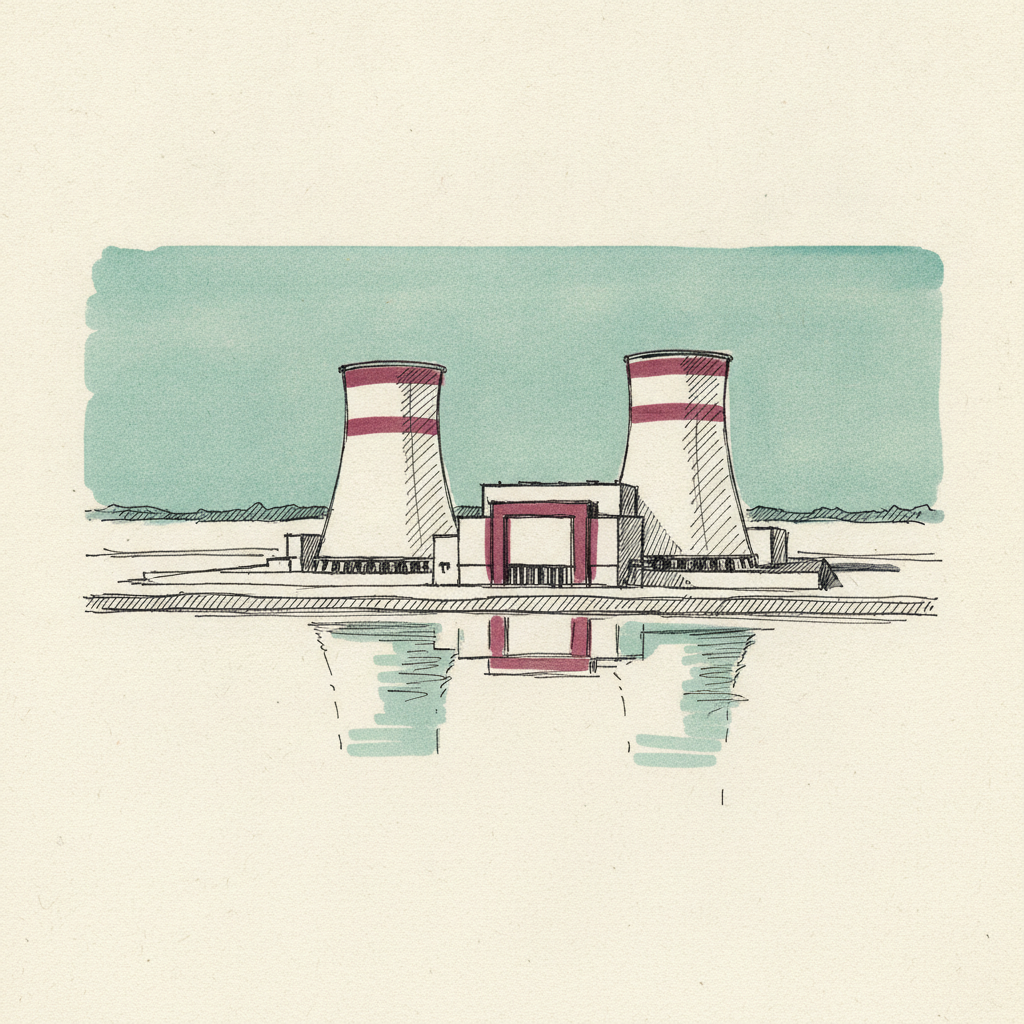
Nogent-sur-Seine
French nuclear power station on the Seine river in Aube; its cooling water operations are subject to the 28°C river-temperature regulatory limit enforced during heatwaves.
Last refreshed: 13 July 2026 · Appears in 1 active topic
How far does heatwave curtailment spread across France's nuclear fleet when rivers warm nationwide?
Timeline for Nogent-sur-Seine
Mentioned in: EDF adds Chooz to the curtailment list
European Energy MarketsThrottled on river-temperature constraints alongside Golfech
European Energy Markets: France stays the cheaper power legRamped a reactor down on 23 June on the 28°C river cooling limit
European Energy Markets: French reactors curtail on river heatBackground
Nogent-sur-Seine is a two-unit pressurised water reactor station operated by EDF on the right bank of the Seine in the Aube department, roughly 120 kilometres south-east of Paris. Its two 1,300 MW PWRs entered commercial operation in 1987 and 1988, making Nogent one of France's older nuclear stations and a consistent supplier to the Paris region's grid balance. As with all French riverside nuclear plants, Nogent is subject to environmental temperature limits on river discharge; when Seine cooling water rises, the station must reduce output to comply with thermal load regulations, regardless of reactor condition.
Nogent produces approximately 18.5 TWh of electricity per year, around 5% of France's national nuclear output. It sits within the EDF-operated fleet of 56 reactors and plays a structural role in suppressing French day-ahead power prices below the German CCGT-set clearing level.
Nogent-sur-Seine ramped one reactor down on 23 June 2026, the day after Golfech Unit 2 shut on the Garonne, as the same record heatwave sent Seine temperatures rising. The two simultaneous curtailments reduced the French nuclear output by several hundred MW at precisely the moment demand peaked, contributing to German day-ahead clearing at €207.84/MWh and Belgium intraday trading above €1,000/MWh. The back-to-back curtailments on France's two most geographically separated river systems, the Garonne in the south-west and the Seine in the north-east, illustrated that heatwave risk to the French nuclear floor is not confined to a single river basin but scales with the spatial extent of a heat event. This compounds the forward risk sitting in the scheduled September Flamanville-3 overhaul, which strips a further 1.6 GW from the fleet at the start of the heating season. A second heat dome on 12 July 2026 repeated the pattern elsewhere on EDF's fleet, with Chooz, Golfech and Bugey 3 taken fully offline on the same river-cooling constraint that curtailed Nogent in June, confirming June's episode as one instance of a recurring summer risk rather than an isolated event.
Why did Nogent-sur-Seine nuclear plant reduce output in June 2026?
Where is Nogent-sur-Seine nuclear power station?
How much power does Nogent-sur-Seine produce?
What river does Nogent-sur-Seine nuclear plant use for cooling?
