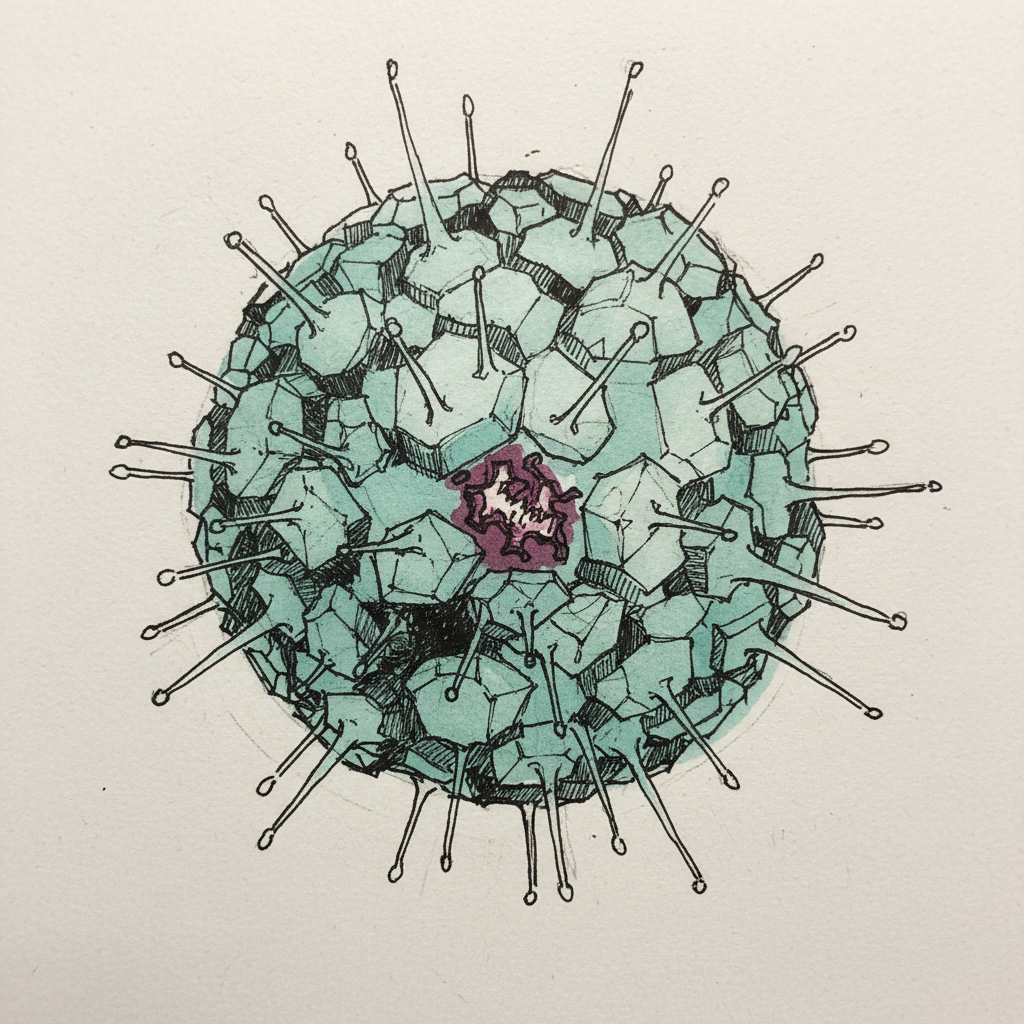
Andes virus
The only hantavirus capable of person-to-person transmission; endemic to Patagonia; confirmed in the MV Hondius cruise-ship cluster, May 2026.
Last refreshed: 2 June 2026 · Appears in 1 active topic
Is the MV Hondius Andes virus cluster still spreading, or is it fading?
Timeline for Andes virus
Showed Rt of 0.7 and near-identical sequences confirming single-spillover origin
Pandemics and Biosecurity: Ship hantavirus cluster is winding downCaused 12 cases and 3 deaths in the MV Hondius cluster with passengers traced to 12 countries
Pandemics and Biosecurity: Hondius hantavirus cluster hits 12 casesCounted at 11 confirmed or probable cases across 6 countries in the ECDC 12 May surveillance page
Pandemics and Biosecurity: ECDC counts 11 Andes cases, three more than WHOPrompted 45-day isolation protocol at Arrowe Park and military supply drop to Tristan da Cunha for suspected case
Pandemics and Biosecurity: CDC mandates airborne isolation for Andes patientsConfirmed by PCR and sequencing in all 6 laboratory cases from the MV Hondius cluster
Pandemics and Biosecurity: UK airdrops supplies to isolated island Andes caseBackground
Andes virus (ANDV) is a New World hantavirus and the only hantavirus with documented person-to-person transmission. It is endemic to the Andean and Patagonian regions of Argentina and Chile, where its primary reservoir is the long-tailed pygmy rice rat (Oligoryzomys longicaudatus). Andes virus causes hantavirus cardiopulmonary syndrome (HCPS) with a case-fatality rate of approximately 30-40% in laboratory-confirmed cases. Person-to-person transmission was first documented in the 1996 El Bolsón cluster in Patagonia, where secondary cases included healthcare workers treating index patients without full protective equipment. All other hantaviruses, including Sin Nombre virus (the primary US agent), are believed to spread only via rodent-to-human contact. Because of the person-to-person transmission risk, clinical management of suspected Andes cases requires airborne infection isolation, a higher infection-control tier than the standard droplet precautions applied to other hantaviruses. ECMO (extracorporeal membrane oxygenation) can improve survival to approximately 80% if initiated early in severe cases. Andes virus belongs to the genus Orthohantavirus, family Hantaviridae. There is no licensed antiviral treatment.
Andes virus was confirmed in passengers from the MV Hondius, an expedition cruise ship that departed Ushuaia (Argentine Tierra del Fuego) on an Antarctic voyage. The cluster grew from an initial WHO DON 599 (2 May 2026, 7 cases with a rodent-only risk framing) to 13 cases and 3 deaths as genome sequencing confirmed all laboratory cases carried Andes virus and established a single rodent-to-human spillover event as the origin. By 28 May, WHO DON604 placed the effective reproduction number (Rt) at 0.7, indicating the chain of person-to-person transmission was fading. The 42-day quarantine window for highest-risk contacts closes in mid-June 2026. Passengers from 23 nationalities were aboard; cases were traced across 12 countries, with nine EU/EEA member states among them. The cluster was the first time Andes virus appeared in a documented multi-country outbreak context, activating ECDC monitoring protocols previously unused for this pathogen and triggering a US CDC Health Alert Network advisory (HAN00528) on 8 May requiring airborne isolation for all suspected US cases. PAHO had flagged elevated Southern Cone hantavirus activity in December 2025, five months before the MV Hondius sailed from Ushuaia.