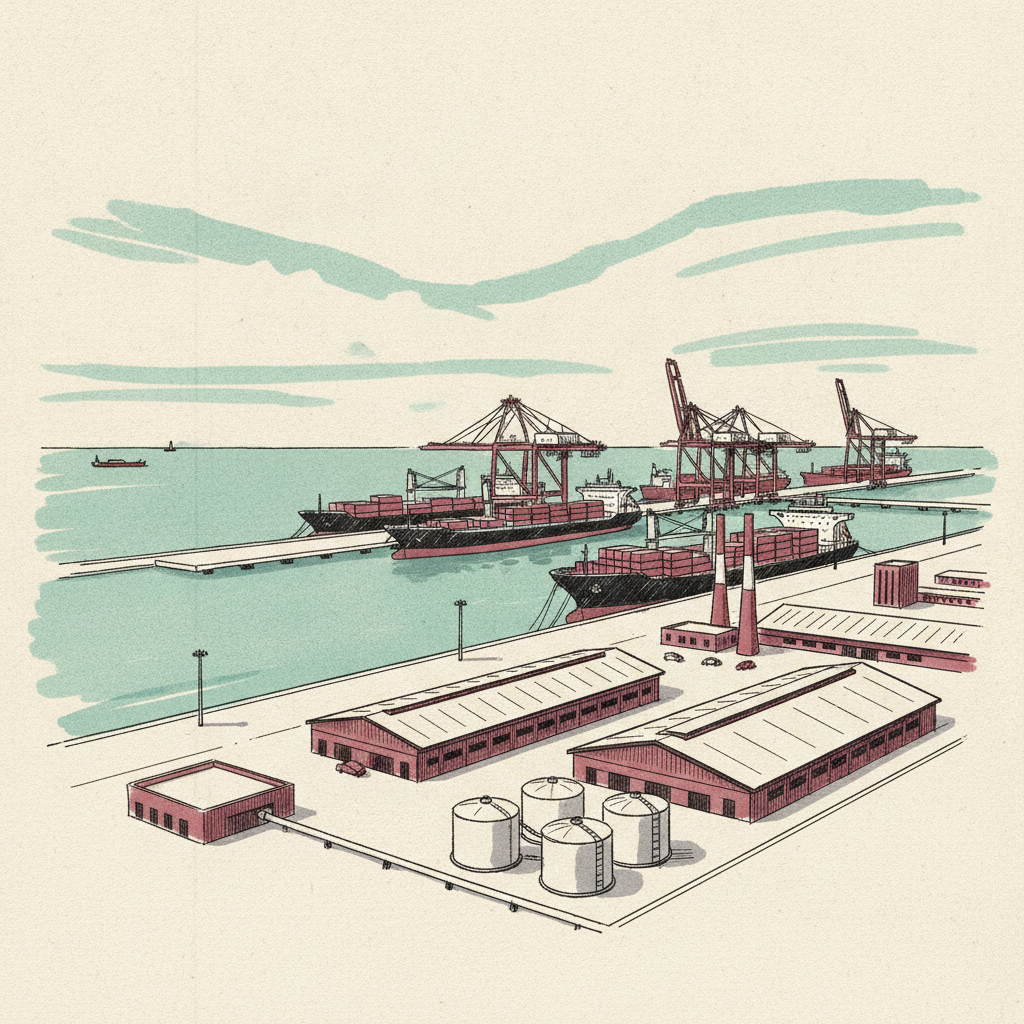
Mariel
Port city west of Havana, home to Cuba's special economic development zone; identified by energy expert Jorge Pinon as the only port that could theoretically handle isotank fuel imports without a physical CUPET connection.
The Mariel Container Terminal and shipping firm Coral Maritima were placed on the US sanctions list on 23 July 2026, after Washington alleged a mid-June ownership transfer designed to help GAESA, Cuba's military conglomerate, evade existing restrictions.
Last refreshed: 4 August 2026 · Appears in 1 active topic
Why is Mariel the only port that might bypass Cuba's CUPET sanction, and is it enough?
Timeline for Mariel
Mentioned in: GAESA was designated first, on 7 May
Cuba DispatchMentioned in: Guiteras stops a 20th time, 64.6% dark
Cuba DispatchMentioned in: OFAC names a Mariel evasion transfer
Cuba DispatchMentioned in: Cuba blames blockade for 64% gas rise
Cuba DispatchMentioned in: Felton trips, and the grid falls again
Cuba DispatchBackground
Mariel is a port city roughly 45 kilometres west of Havana, on Cuba's north coast. Its strategic weight rests on the Mariel Special Development Zone (ZED Mariel), a purpose-built free-trade area and deepwater container port opened in 2013 to attract foreign investment and serve as a trans-shipment hub, developed with Brazilian financing and Odebrecht construction expertise and operated in part through a joint arrangement with Singapore's PSA.
ZED Mariel's container-handling infrastructure is physically separate from CUPET's network of conventional fuel terminals, a distinction that became significant once CUPET itself was sanctioned in June 2026: goods routed through the zone do not automatically touch the CUPET pipeline system the sanction placed off-limits.
The zone has attracted less foreign investment than originally projected, partly because US sanctions restrict dollar-clearing for firms operating there, a constraint the 2026 crisis has not eased.
Its terminal itself is now sanctioned
OFAC placed the Mariel Container Terminal and the shipping firm Coral Maritima on the sanctions list on 23 July 2026, alleging a mid-June ownership transfer designed to help GAESA, Cuba's military conglomerate, dodge existing restrictions. Washington stopped short of calling Coral Maritima a Shell company, describing the transfer as evasion rather than a genuine change of control.
The designation lands on the same terminal energy expert Jorge Pinon had identified weeks earlier as the one port that could theoretically receive isotank fuel containers bypassing CUPET's sanctioned pipeline network. With the terminal operator itself now designated, whether that narrow isotank workaround still functions, or has been closed off along with the conventional tanker route, is not established.
Mariel offers a narrow fuel gap
Why is the Mariel port important for Cuba's fuel crisis in 2026?
Reference
What is Cuba's Mariel Special Development Zone?
