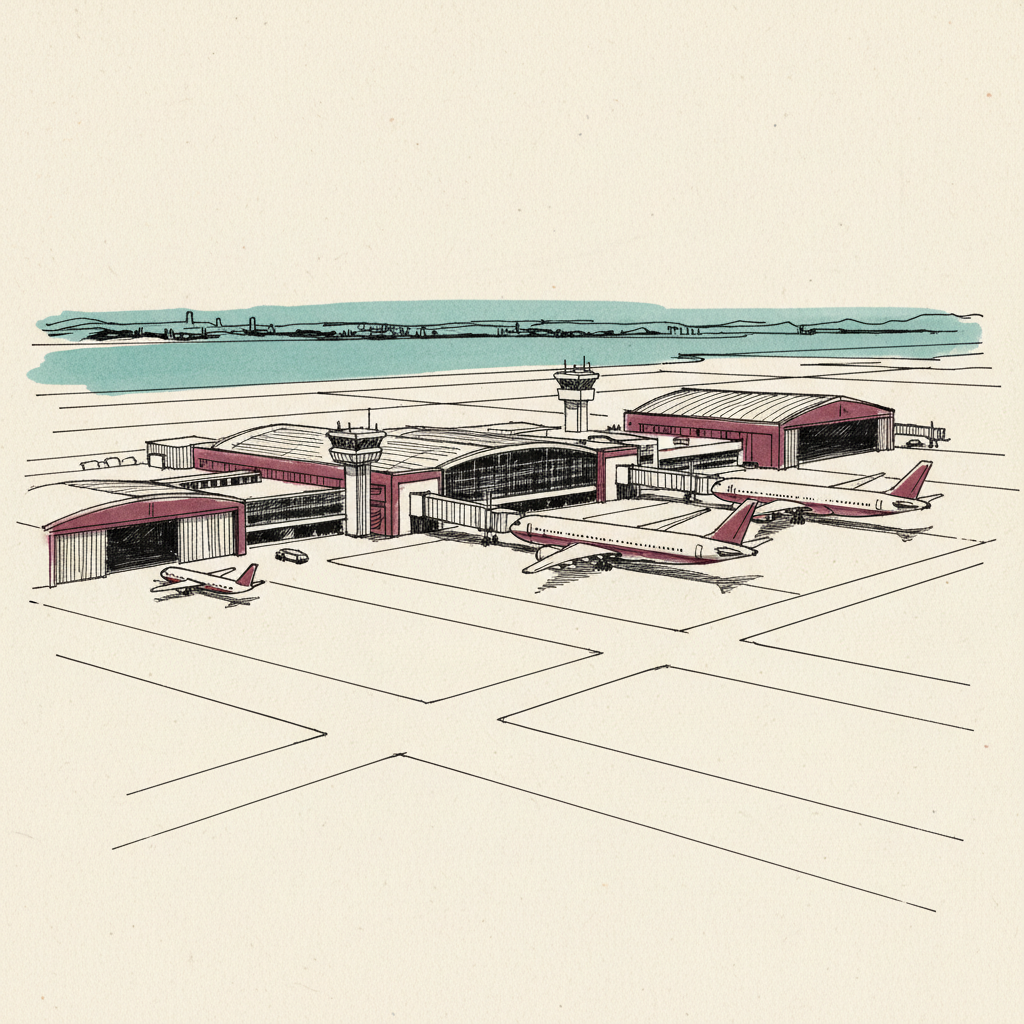
Manchester Airport
UK's third-busiest airport in Greater Manchester; served the MV Hondius Andes repatriation flight, 10 May 2026.
Last refreshed: 22 September 2026 · Appears in 2 active topics
How did Manchester Airport's Port Health team handle a hantavirus-exposed repatriation flight?
Timeline for Manchester Airport
Mentioned in: NPIF II hits £275m across 449 Northern deals
UK Startups and InnovationMentioned in: CDC mandates airborne isolation for Andes patients
Pandemics and BiosecurityMentioned in: UK airdrops supplies to isolated island Andes case
Pandemics and BiosecurityBackground
Manchester Airport (MAN) is the United Kingdom's third-busiest airport, located in Wythenshawe, Greater Manchester, approximately 14 km south of Manchester City centre. It handled roughly 27 million passengers in 2023 and serves as the primary long-haul gateway for northern England. The airport is majority-owned by Manchester Airports Group (MAG), which is itself majority-owned by ten Greater Manchester councils. It operates three terminals and two runways, with direct connections to over 200 destinations.
In the multi-topic context, Manchester Airport is relevant to future Lowdown coverage on UK connectivity, regional economic development, UK infrastructure investment, and climate-resilience (the airport published a net-zero roadmap in 2022). It is a major employer in the north-west with a workforce of around 20,000 across the site.
The airport also has a Port Health Authority function: its Imported Food TEAM and Port Health TEAM handle public health surveillance for incoming passengers and cargo. The airport's proximity to Arrowe Park Hospital (approximately 30 km) and its capacity to handle Charter repatriation flights have made it the designated entry point for UK biosecurity repatriations from the Canary Islands and southern Europe on multiple occasions.
On 10 May 2026, a dedicated repatriation flight carrying UK passengers from the MV Hondius landed at Manchester Airport, following the Andes hantavirus cluster identified aboard the vessel. Passengers were transferred under UKHSA supervision from the airport directly to Arrowe Park Hospital in Wirral for monitoring. Manchester's Port Health TEAM coordinated with UKHSA on the arrival protocol. The airport's role as the UK repatriation point reflected both its operational capacity and its established biosecurity logistics with Arrowe Park.