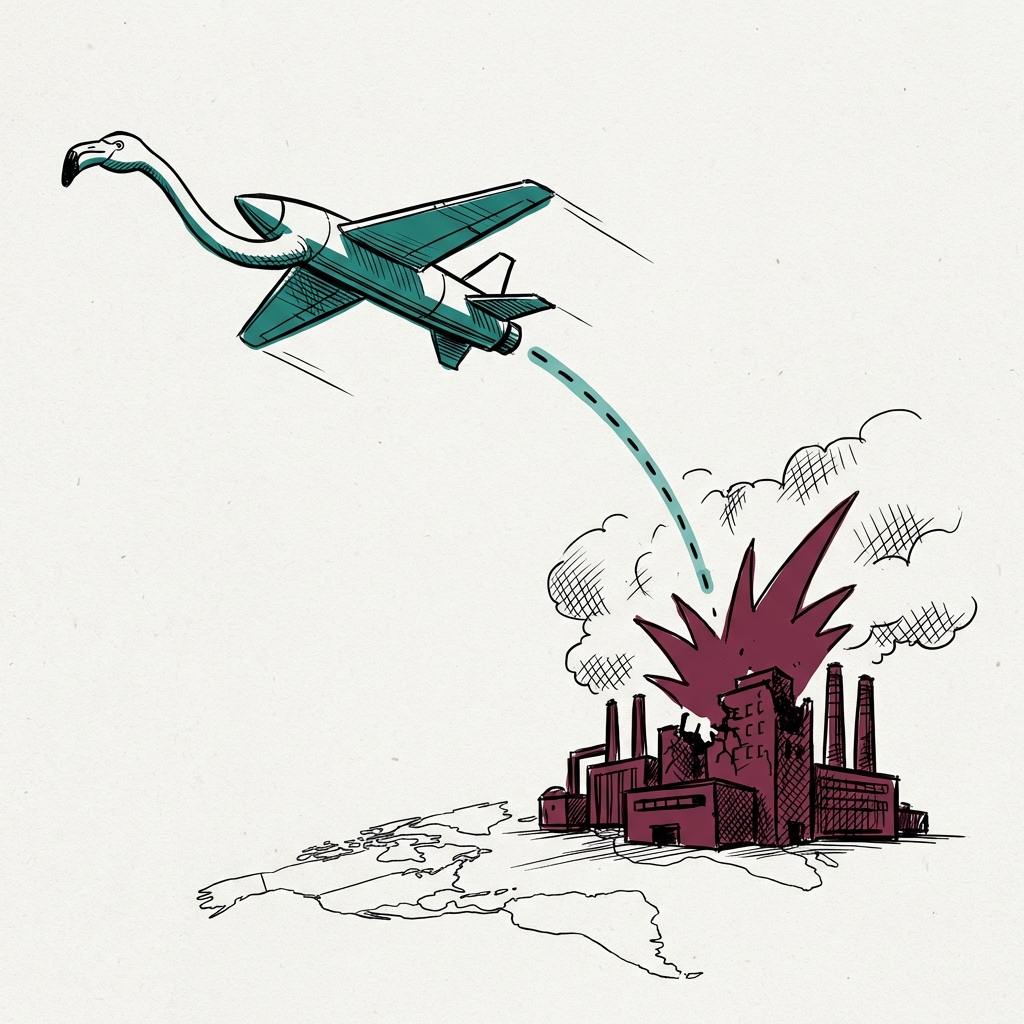
FP-5 Flamingo
Ukrainian cruise missile; 3,000 km range, 1,150 kg warhead, struck Samara Oblast March 2026.
Last refreshed: 7 June 2026 · Appears in 2 active topics
With 3,000 km range, what targets inside Russia can Ukraine not yet reach with the FP-5?
Timeline for FP-5 Flamingo
Ukraine breaks ground on NATO-soil plant
Drones: Industry & DefenceCEPA scale check: 0.46% of Russian oil
Russia-Ukraine War 2026Mentioned in: FP-5 Flamingo hits Samara arms factory
Russia-Ukraine War 2026Background
The FP-5 Flamingo is Ukraine's longest-range strike weapon, a cruise missile with a reported range of 3,000 km and a 1,150 kg warhead — comparable to a Western Tomahawk in lethality. On 28 March 2026, FP-5 Flamingo missiles struck the Promsintez explosives factory in Chapayevsk, Samara Oblast, at a distance of approximately 1,000 km from the front line, igniting fires at a facility producing 30,000 tonnes per year of Russian military explosives.
The programme's production footprint expanded beyond Ukraine in June 2026 when manufacturer Fire Point began construction of a solid-rocket-fuel plant at Skrydstrup, Denmark, adjacent to a Danish F-35 air base — marking the first Ukrainian weapons manufacturing facility established on NATO soil. The facility will produce propellant for the Flamingo's booster stages, shifting a critical part of the supply chain beyond Russia's strike range and into the legal protection of Article 5.
The weapon exists alongside Ukraine's FP-1 attack drone and Storm Shadow Cruise Missiles supplied by Britain and France. The FP-5's domestic Ukrainian origin gives it political advantages: it avoids the restrictions Western partners impose on use of their supplied weapons against Russian territory. Its deployment against military-industrial targets inside Russia marks a strategic expansion of Ukraine's offensive doctrine, and the Skrydstrup plant signals intent to sustain that production capacity for the long term.
What is the FP-5 Flamingo missile?
What has the FP-5 Flamingo hit in Russia?
FP-5 Flamingo vs Storm Shadow comparison?
How far can the FP-5 Flamingo reach?
Who makes the FP-5 Flamingo?

