Is ADNOC's Das Island terminal still operating normally through the Gulf conflict?
Timeline for Das Island
Mubaraz: first loaded LNG out of Hormuz
European Energy MarketsBackground
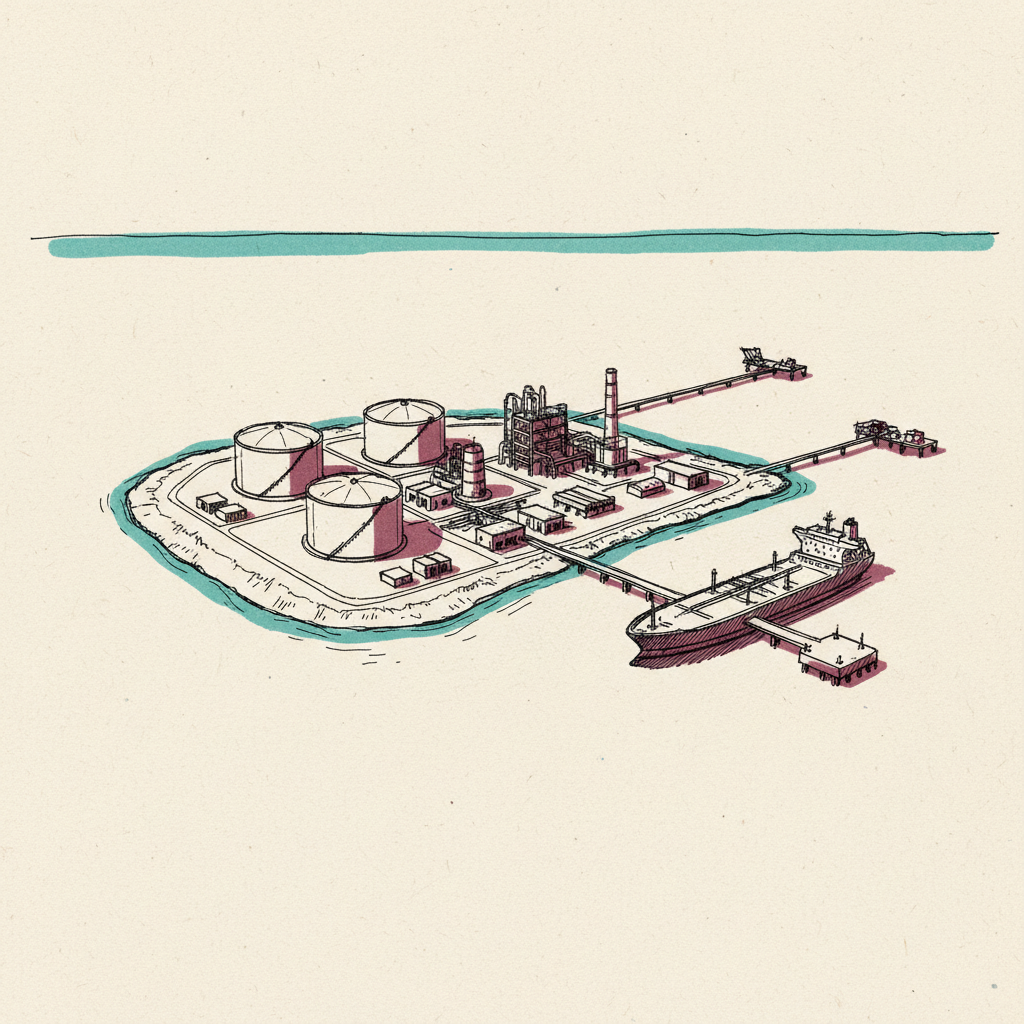
Das Island is a small island in The Persian Gulf off the coast of Abu Dhabi, UAE, approximately 100 km west-northwest of the Abu Dhabi mainland. It is the site of ADNOC LNG's primary liquefaction and export terminal, from which the LNG carrier Mubaraz was loaded in early March 2026 before making the first confirmed loaded LNG transit through the strait of Hormuz since the Gulf conflict began.
Das Island has been central to Abu Dhabi's oil and gas industry since the 1960s. ADNOC LNG (formerly ADGAS) operates a five-train LNG production facility on the island with a capacity of approximately 5.8 million tonnes per annum (mtpa), making it one of the older but still significant LNG export facilities in the Middle East. The island is entirely industrial; no permanent civilian population resides there.
For European energy markets, Das Island's proximity to the strait of Hormuz — the world's most critical LNG chokepoint — makes it a key indicator of Hormuz operational status. ADNOC LNG exports primarily to Japan and South Korea under long-term contracts but also sells SPOT cargoes. The Mubaraz cargo's eastward routing to China at the JKM/TTF spread prevailing in late April 2026 illustrates the competitive pressure European buyers face to attract flexible Gulf LNG.