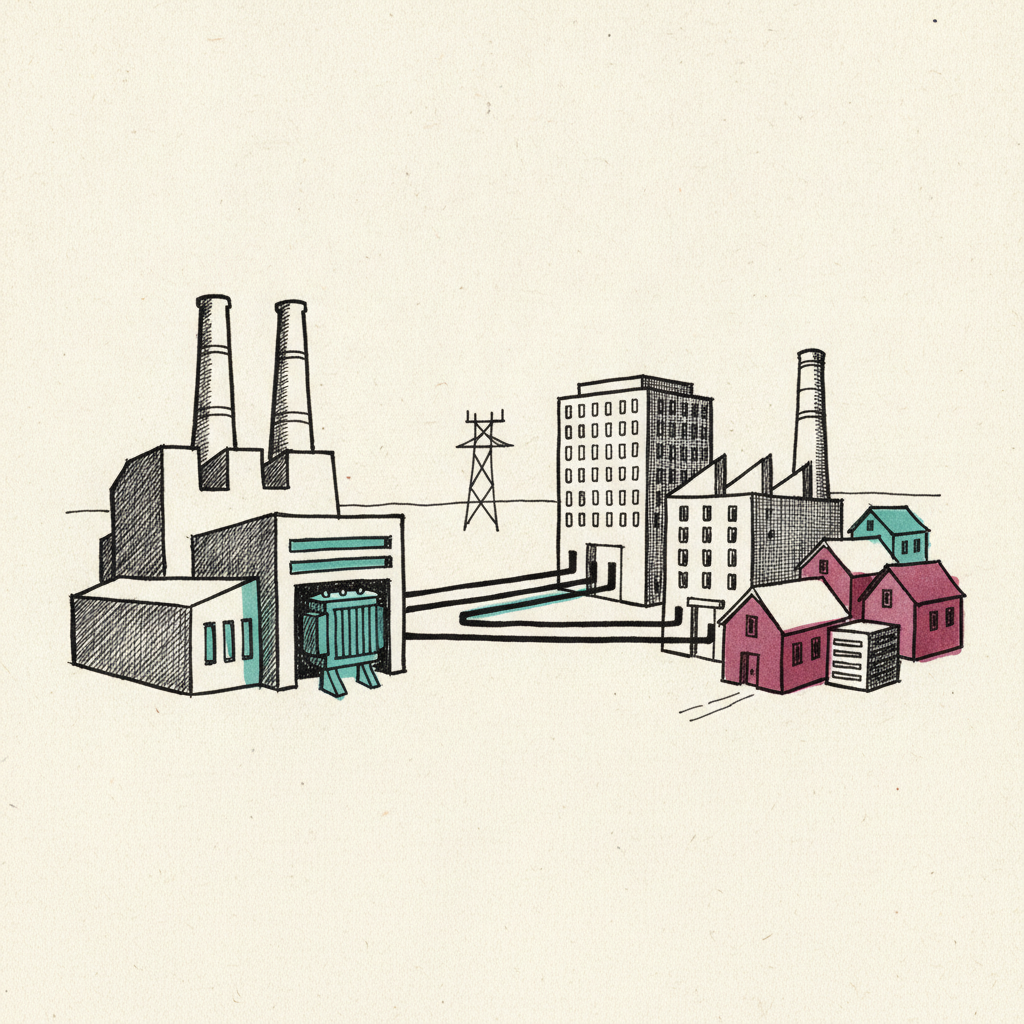
Co-Located Generation
A power plant built beside its load, supplying electricity directly behind the meter without grid transit.
Last refreshed: 28 June 2026 · Appears in 1 active topic
Can behind-the-meter generation remain a viable escape from US grid queues if both federal and state regulators keep narrowing the route?
Background
co-located generation moved from the margins to the centre of US energy policy in 2026 as data-centre operators built or contracted captive plants to bypass an interconnection queue now running three or more years. The year's defining example is Project Kilby, Chevron's 2.67 GW gas plant beside a West Texas Microsoft data centre, the largest single co-located generation deal struck for a data centre in 2026. The plant feeds the data centre directly without crossing the public grid: a configuration called behind-the-meter (BTM), which exempts it from interconnection queues and regional operator curtailment orders.
co-located generation is not new: aluminium smelters, steel mills, and paper manufacturers built captive plants through the 20th century whenever grid supply was too slow or too costly. What changed in 2026 is the scale, the speed, and the regulatory response. The Department of Energy twice ordered curtailment of behind-the-meter backup generators in PJM territory this year, raising the question of whether the same authority reaches fully owned co-located plants. Virginia passed the first US state levy covering self-generated BTM power in June. Both actions narrow the economic advantage of co-location even as the strategy grows. Fuel types in 2026 BTM builds span natural gas (Kilby; xAI Colossus 1.2 GW) and solar-plus-storage (Meta's 365 MW Wyoming campus), reflecting operators' varying timelines and carbon commitments.

