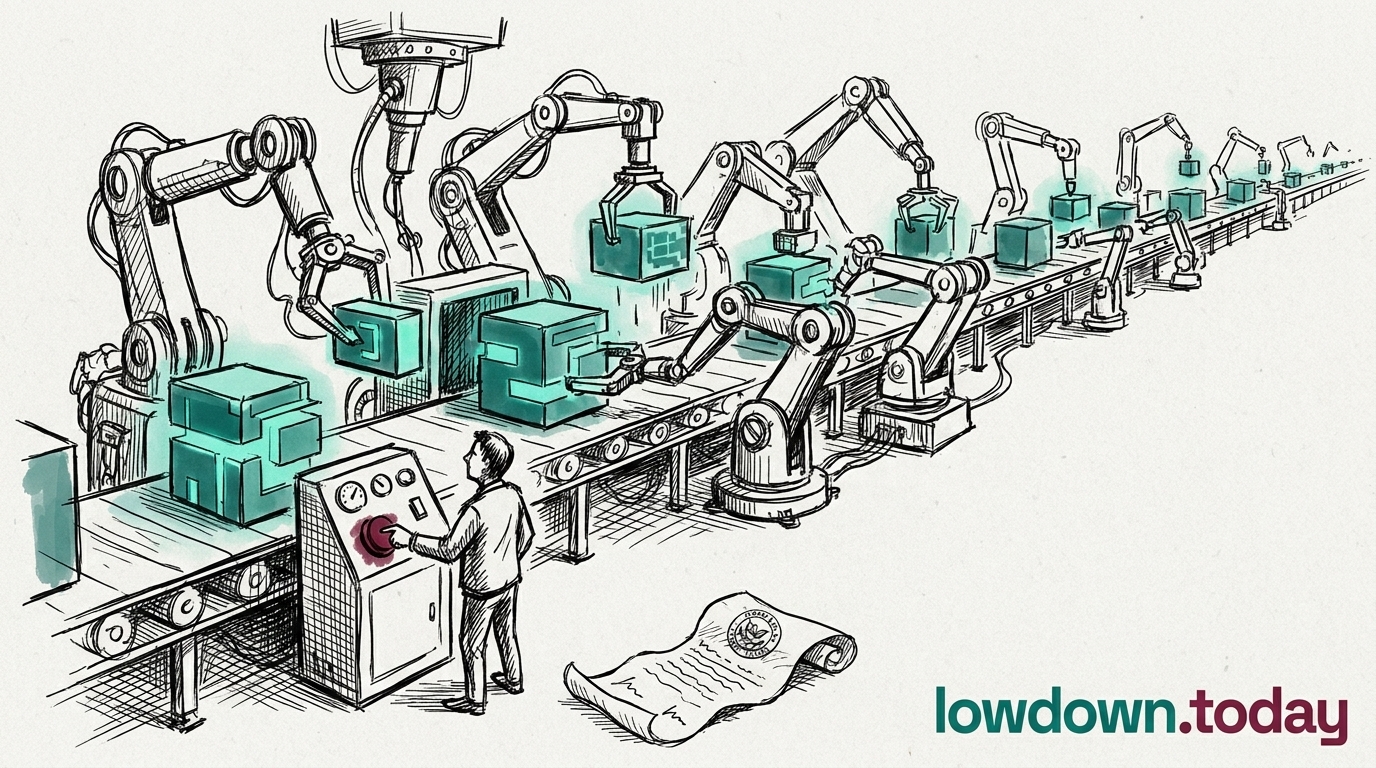
Microsoft announced a voluntary retirement programme in early May 2026 targeting US employees with high combined age and tenure, covering approximately 8,750 workers, and took a $900 million one-time charge against Q4 FY2026 operating expenses. The programme excludes AI divisions, Azure cloud engineering, and strategic partnerships. LinkedIn (the Microsoft-owned professional networking platform with over 1 billion members) confirmed engineering, product, and marketing cuts on Wednesday 13 May 2026. CFO Amy Hood confirmed headcount will shrink further in FY2027.
Microsoft had already disclosed this trajectory. In April 2026, the company confirmed that total headcount would decline year-on-year in 2027 alongside a $190 billion capital-expenditure commitment to AI infrastructure. The voluntary retirement programme fulfils that confirmation without requiring a single public announcement naming a cut figure. The $900 million charge appears in a quarterly earnings footnote.
The legal architecture behind the voluntary structure does specific work across three risk categories. Targeting departure eligibility by combined age and tenure rather than by performance avoids age-discrimination liability under the Age Discrimination in Employment Act while achieving the same demographic result. Structuring departures as voluntary avoids the WARN Act's 60-day mandatory notice window, which applies only to involuntary mass layoffs at qualifying sites. And dispersing the programme across a quarterly earnings cycle rather than a single announcement date means no single-day headline count appears in press coverage.
Microsoft's approach sits alongside the same WARN Act navigation PayPal's phased timeline demonstrates: voluntary, stretched, or geographically dispersed cuts do not reach the statutory threshold. Oracle's former workers alleged remote-worker reclassification specifically to reduce notice obligations; the same legal geography applies here. GitLab published a manifesto; Microsoft published a $900 million charge in a quarterly footnote. Both companies are reducing engineers and redirecting capital to AI infrastructure; only one approach generates a press release.





