How close did Israeli strikes actually get to the centre of Tehran?
Timeline for Azadi Square
Mentioned in: Tehran's 14 million: no sirens, shelter
Iran Conflict 2026Background
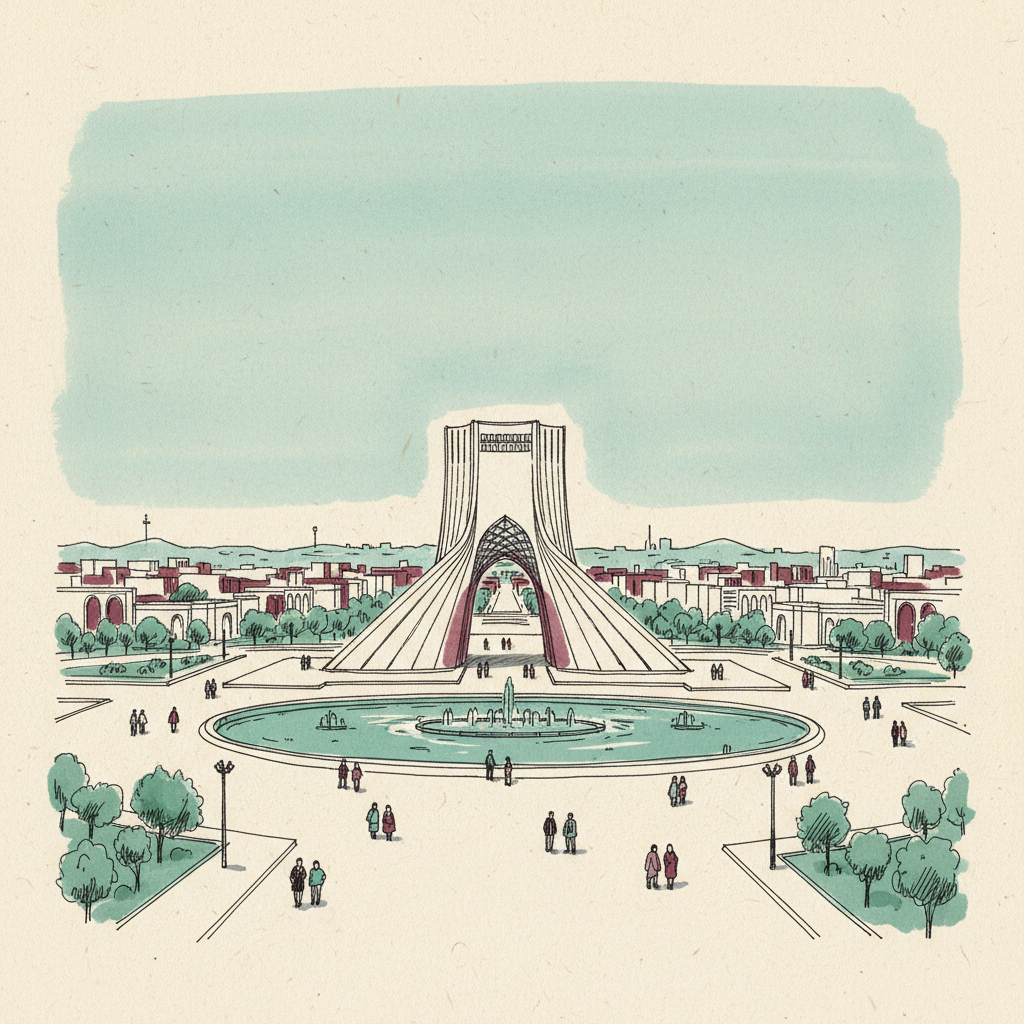
Azadi Square — whose name means 'Freedom' in Persian — is the symbolic heart of Tehran, anchoring the city's western axis at the base of the iconic Azadi Tower built for the 1971 imperial celebrations. With a capacity for millions, the square hosts the largest state-organised gatherings in Iran, from revolution anniversaries to military parades. When the Islamic Republic wants to demonstrate popular legitimacy, Azadi Square is where it does so.
The square entered active-conflict coverage during the Iran war of 2026. In April, AP correspondents inside Tehran reported the Azadi Tower archway enveloped in smoke after Israeli strikes hit nearby targets. The surrounding streets, normally among the most trafficked in a city of 14 million, were largely empty as residents sheltered indoors. Bombs arrived without warning: Tehran had no air raid sirens and no functioning bomb shelters. By late April, Iran's nationwide internet shutdown had entered its 60th consecutive day, the longest sustained national internet restriction NetBlocks had ever recorded, leaving the civilian population informationally isolated.
As a symbolic and architectural landmark rather than a military installation, the square's appearance in conflict dispatches underscored the proximity of strikes to Tehran's civilian core and the degree to which the war was reshaping daily life in the Iranian capital.
Where is Azadi Square in Tehran?
Was Azadi Tower damaged in the Iran war?
How far did Israeli strikes reach into Tehran?


Written with AI from Lowdown's published reporting. Not individually reviewed by an editor. Updated 3 May 2026. Editorial standards.