Skip to content
Iran Conflict 2026
13MAR

Tehran's 14 million: no sirens, shelter

4 min read
17:56UTC

AP's first detailed dispatch from inside Tehran describes 14 million people absorbing sustained bombardment without warnings, shelters, or internet — conditions worse than anything the city faced during the Iran-Iraq War.

ConflictDeveloping
Key takeaway

Iran built one of the world's largest missile arsenals but made no investment in shelters or sirens for the 14 million people those missiles were meant to protect.

The Associated Press published the most detailed dispatch from inside Tehran since the war began on 28 February. Fourteen million people in Tehran province are living under sustained aerial bombardment with no air raid sirens, no warning systems, no bomb shelters, and no functioning internet. Bombs arrive without notice. Families rely on phone calls where mobile networks still function, word of mouth otherwise. An athlete in northern Tehran told The AP: "The psychological pressure is real." Streets built for 9 million daily occupants are empty.

The physical toll on the city is visible in its monuments. The Azadi Square archway — the 45-metre tower built in 1971 to mark 2,500 years of the Persian Empire, renamed after the 1979 revolution, and Tehran's most internationally recognised structure — was photographed enveloped in smoke after nearby strikes. The Golestan Palace, a Qajar-era royal complex and UNESCO World Heritage Site since 2013, had its windows blasted out from a strike on adjacent Arag Square. Residents report persistent sore throats and burning eyes — symptoms consistent with Iranian Red Crescent warnings last week that acidic black rain from 30 Israeli-struck fuel depots carried toxic hydrocarbon compounds, sulphur, and nitrogen oxides, posing risks of chemical burns and lung damage across the metropolitan area. The strikes that created those fires produced an environmental health emergency layered on top of the kinetic one.

The last time Tehran endured sustained aerial bombardment was during the Iran-Iraq War's "War of the Cities" between 1985 and 1988, when Iraqi Al-Hussein missiles — modified Scuds with extended range — struck the capital in intermittent barrages. A generation of Tehranis learned to sleep in basements when sirens sounded. Today there are no sirens. Iraq's missile capacity in the 1980s was limited to dozens of launches per campaign phase; the ordnance now falling on Tehran includes precision-guided munitions from fifth-generation aircraft striking around the clock.

UNHCR reported this week that up to 3.2 million Iranians have been internally displaced since 28 February — but for the millions who remain in Tehran, leaving requires transport, fuel, money, and a destination. The city sits at the base of the Alborz Mountains with limited northward road capacity; primary exit routes run south and west, toward the areas under heaviest strike activity. During the War of the Cities, Baghdad and Tehran exchanged barrages with pauses of days or weeks between them. Residents had time to adapt, stockpile, relocate. Fourteen days into this campaign, no such rhythm has formed. The bombardment has been continuous, and the population has fewer means to endure it than their parents did forty years ago.


Deep Analysis

In plain English

When bombs fall on a city, governments normally have systems to protect civilians: sirens that give people time to find cover, designated shelters to run to, and emergency broadcasts telling people where it's safe. Tehran has none of these. There are no public sirens — bombs arrive without any warning. There are no public shelters. The government has shut down the internet, so families cannot even track news or warn each other via social media. Fourteen million people are living in what military planners call an 'open city' — entirely unprotected from air attack. What makes this additionally striking is that this is not the result of war destroying those systems. Iran simply never built them. For four decades, the government spent enormous resources developing ballistic missiles and proxy forces across the region, operating on the assumption that Iran would never be the one being bombed. That assumption has now failed, and there is no civil defence infrastructure to fall back on. On top of the bombing itself, the government's own decision to shut down the internet — apparently to prevent anti-government organising — has eliminated the one communication network Tehranis were using to share information and warn each other.

Deep Analysis
Synthesis

The internet shutdown is analytically distinct from the bombing and should be tracked as a separate indicator of regime stability calculations. A government genuinely focused on protecting its population would maintain emergency communications infrastructure at all costs during active bombardment. Iran's decision to shut it down reveals that the regime ranks information control above civilian safety — it is protecting its own political position at a quantifiable cost in civilian lives. This is not an emergency measure; it is a choice about whose survival the government is optimising for.

Root Causes

The Islamic Republic's strategic doctrine was built entirely around deterrence-by-projection and power extension — Hezbollah, proxy networks, ballistic missiles — with zero investment in homeland civil defence. This was a conscious doctrinal choice, not an oversight: the government assumed deterrence would prevent attacks, and that if deterrence failed, the war would be fought on others' soil. The internet shutdown compounds this failure: the regime is suppressing the one tool Tehranis could use for mutual aid and early warning because it also transmits information the government cannot control. Civilian safety is being sacrificed to information control — a priority inversion with measurable mortality consequences.

What could happen next?
  • Risk

    Without sirens or shelters, Tehran's casualty rate per strike is structurally higher than in comparable historical campaigns — the death toll trajectory will worsen non-linearly as bombardment continues.

    Short term · Assessed
  • Consequence

    Daily sore throats and burning eyes from refinery smoke signal chronic benzene and hydrogen sulphide exposure — a public health crisis that will generate elevated cancer and respiratory disease rates for years after the campaign ends.

    Long term · Assessed
  • Meaning

    Golestan Palace's window destruction from a nearby strike implicates Hague Convention 1954 obligations on cultural property — a war crimes vector independent of civilian targeting allegations.

    Short term · Suggested
  • Risk

    The internet shutdown prevents accurate casualty reporting, emergency coordination, and organised evacuation — it will prolong the humanitarian consequences of every individual strike beyond what the strike itself would otherwise cause.

    Immediate · Assessed
First Reported In

Update #34 · Tehran march bombed; first deaths in Oman

AP· 13 Mar 2026
Read original
Causes and effects
This Event
Tehran's 14 million: no sirens, shelter
Tehran's civilian population of 14 million has no functioning warning or shelter infrastructure, compounded by toxic fallout from destroyed refineries, creating conditions where sustained bombardment proceeds without any civilian mitigation — worse in terms of protection than the 1980s War of the Cities.
Different Perspectives
South Korean financial markets
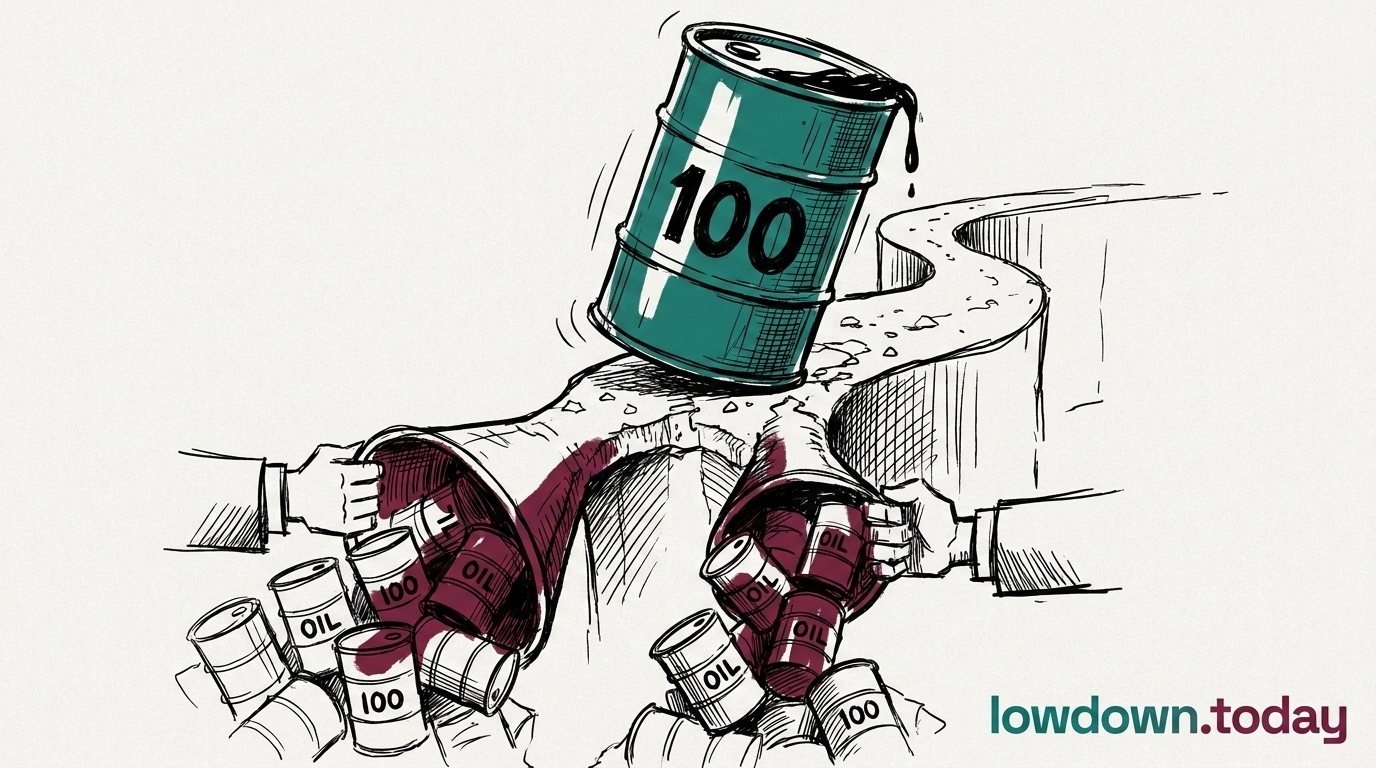
South Korea, which imports virtually all its crude oil, is absorbing the war's economic transmission most acutely among non-belligerents. The second KOSPI circuit breaker in four sessions — with Samsung down over 10% and SK Hynix down 12.3% — reflects an industrial economy unable to reprice energy costs that have risen 72% in ten days. The market response indicates Korean industry cannot sustain oil above $100 per barrel without margin compression across manufacturing, semiconductors, and shipping.
Migrant worker communities in the Gulf
The first confirmed civilian deaths in Saudi Arabia — one Indian and one Bangladeshi killed, twelve Bangladeshis wounded — fell on communities with no voice in the military decisions that placed them in harm's way. Migrant workers live near military installations because that housing is affordable, not by choice. Bangladesh and India face the dilemma of needing to protect nationals who cannot easily leave a war zone while depending on Gulf remittances that fund a substantial share of their domestic economies.
Azerbaijan — President Ilham Aliyev
Aliyev treats the Nakhchivan strikes as a direct act of war against Azerbaijani sovereignty, placing armed forces on full combat readiness and demanding an Iranian explanation. The response is calibrated to maximise international sympathy while stopping short of military retaliation — Baku cannot fight Iran alone and needs either Turkish or NATO backing to credibly deter further strikes.
Oil-importing nations (Japan, South Korea, India)
The Hormuz closure is an existential threat. Japan, South Korea, and India receive the majority of their crude through the strait — they will bear the heaviest economic cost of a war they had no part in.
Global South governments (Indonesia, Brazil, South Africa)
Neutrality was possible when the targets were military. 148 dead schoolgirls made it impossible — no government can explain that away to its own citizens.
Turkey
Turkey
Has absorbed three Iranian ballistic missile interceptions since 4 March without invoking NATO Article 5 consultation. Each incident narrows Ankara's political room to continue absorbing without Alliance-level response.