ARILAC
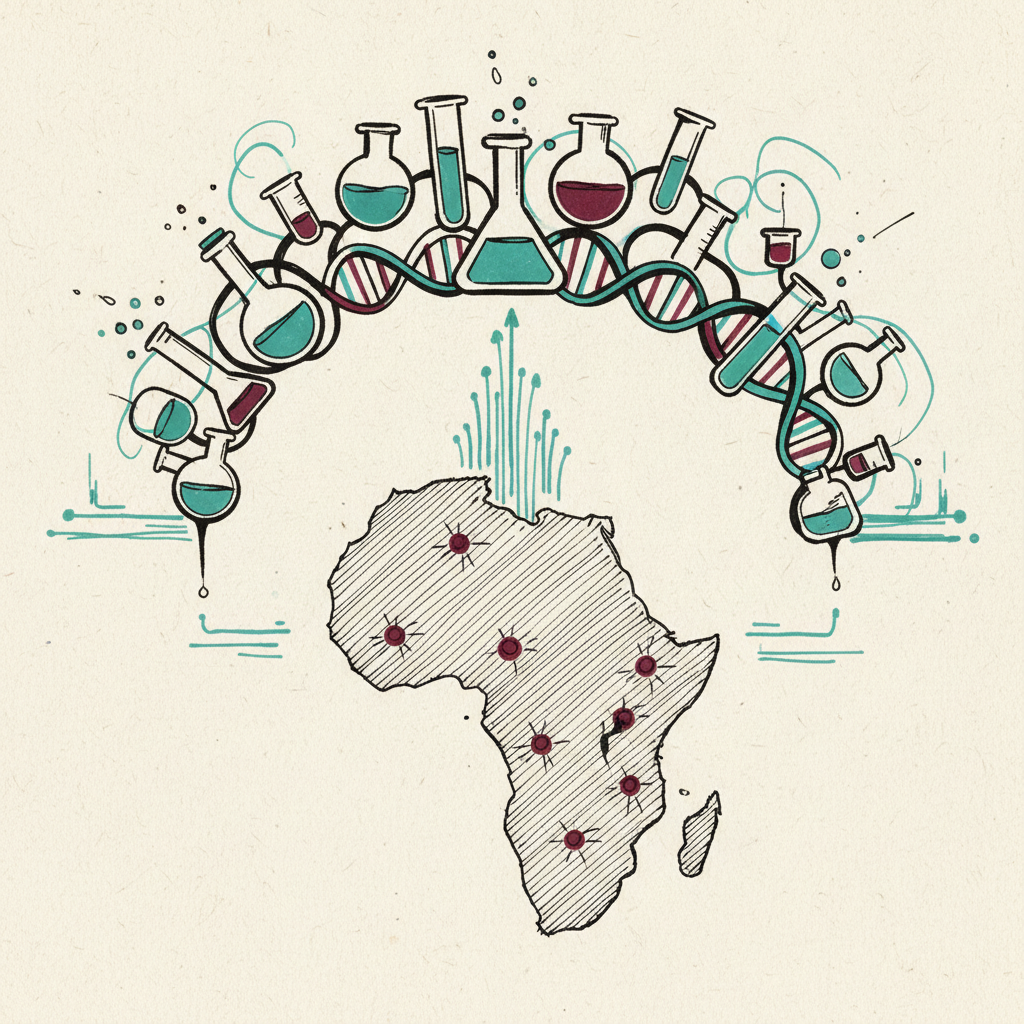
EU-Africa four-year programme to build AMR surveillance laboratory capacity across eight African states.
Last refreshed: 7 May 2026 · Appears in 1 active topic
Can ARILAC close the gap where 98.7% of African labs currently have no AMR testing capability?
Timeline for ARILAC
Mentioned in: WHO issues its first fungal blueprint
Pandemics and BiosecurityMentioned in: WHA79 adopts a 10-year AMR plan
Pandemics and BiosecurityCoordinated regional response using institutional capacity launched 6 May
Pandemics and Biosecurity: Africa CDC moved first, Kinshasa silentMentioned in: Uganda runs 2022 Sudan Ebola playbook
Pandemics and BiosecurityLaunched 6 May in Addis Ababa to build AMR diagnostic capacity across 8 African Union states
Pandemics and Biosecurity: Africa CDC and EU launch ARILAC for AMRBackground
ARILAC (Advancing Regional Integrated Laboratory Capacity for AMR Control) is a four-year public health programme launched on 6 May 2026 in Addis Ababa by Africa CDC, the African Society for Laboratory Medicine (ASLM), and the European Union through the Team Europe Initiative on Sustainable Health Security. The programme targets 8 African Union member states: Cameroon, Chad, Ethiopia, Gabon, Mozambique, Sierra Leone, Uganda, and Zimbabwe. Its objective is to build functional AMR (antimicrobial resistance) surveillance laboratory capacity on a One Health basis, integrating human and animal health diagnostics. The baseline that prompted its creation: of more than 50,000 assessed medical laboratories across 14 African countries, only 1.3% Conduct routine AMR testing, leaving roughly 261 million people without access to AMR diagnostics.
ARILAC was launched at the same Addis Ababa ceremony on 6 May 2026 as this briefing's publication date, making it one of the freshest structural investments in the continental biosecurity architecture. AMR is the slowest-moving pandemic story: resistant organisms accumulate in health systems largely invisibly until a cluster of treatment failures forces a response. The 1.3% AMR-testing rate means the continent cannot currently track resistance Emergence in real time. ARILAC's One Health framing recognises that agricultural antibiotic use in livestock is as significant a driver of resistance as human clinical use, particularly in countries where integrated lab capacity for both has never existed.
What is ARILAC and which African countries does it cover?
How bad is the AMR testing gap in Africa that ARILAC is trying to fix?
What does One Health mean in the context of AMR surveillance?
