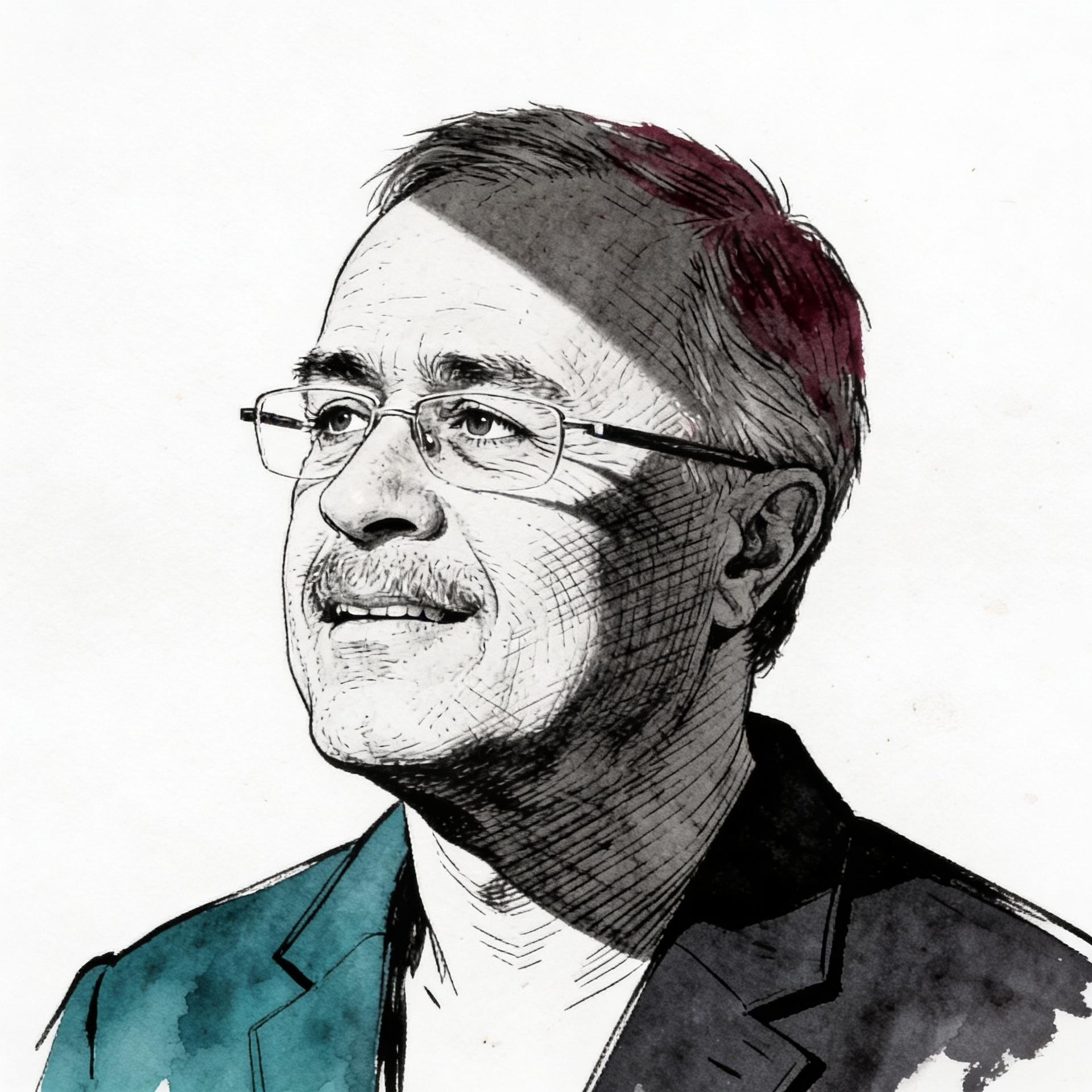
Amin Nasser
President and CEO of Saudi Aramco, the world's largest oil company.
Last refreshed: 12 May 2026 · Appears in 1 active topic
Why is the world's largest oil company warning that the crisis could stretch into 2027?
Timeline for Amin Nasser
Mentioned in: Brent breaks $110, ADNOC bypasses Hormuz
Iran Conflict 2026Brent hits $109.30 as summit dip fades
Iran Conflict 2026Warned global oil markets would not normalise until 2027 if the blockade continued past mid-June
Iran Conflict 2026: IEA: a billion barrels lost, Brent retreats 13%Warned global oil will not normalise until 2027 if Hormuz blockade extends past mid-June
Iran Conflict 2026: Brent $106 on summit Day 1; buffers near exhaustionWarned the global oil market will not normalise until 2027 if the Hormuz blockade persists past mid-June
Iran Conflict 2026: Aramco CEO: no oil normality until 2027Background
Amin Nasser is a Saudi petroleum engineer WHO has served as President and Chief Executive Officer of Saudi Aramco, the world's largest oil producer by output, since 2015. He joined Aramco in 1982 and rose through the company's upstream and technical divisions over more than three decades before assuming the top role. Under his tenure Aramco executed the world's largest initial public offering in December 2019 at a $1.7 trillion valuation, and the company maintained record production through multiple geopolitical cycles.
Nasser emerged as a key market voice during the Iran conflict supply shock of 2026. On 11 May, he stated publicly that the global oil market is losing roughly 100 million barrels of supply each week as a result of the Hormuz disruption and that prolonged disruption could push any normalisation into 2027. The warning came as Brent settled at $104.21, up 2.9% on the day, reinforcing the scale of the pricing dislocation.
Aramco's direct exposure is limited as Saudi Arabia produces outside the strait, but Nasser's public intervention carried weight precisely because Aramco's downstream planning depends on restored tanker lanes. His 2027 normalisation timeline contradicts the more optimistic short-cycle recovery assumptions priced into forward curves at the time of the statement.
Who is Amin Nasser and why is he warning about oil supply?
How much oil supply is being lost because of the Hormuz crisis?
When did Amin Nasser become CEO of Saudi Aramco?
What is Saudi Aramco's exposure to the Strait of Hormuz?

