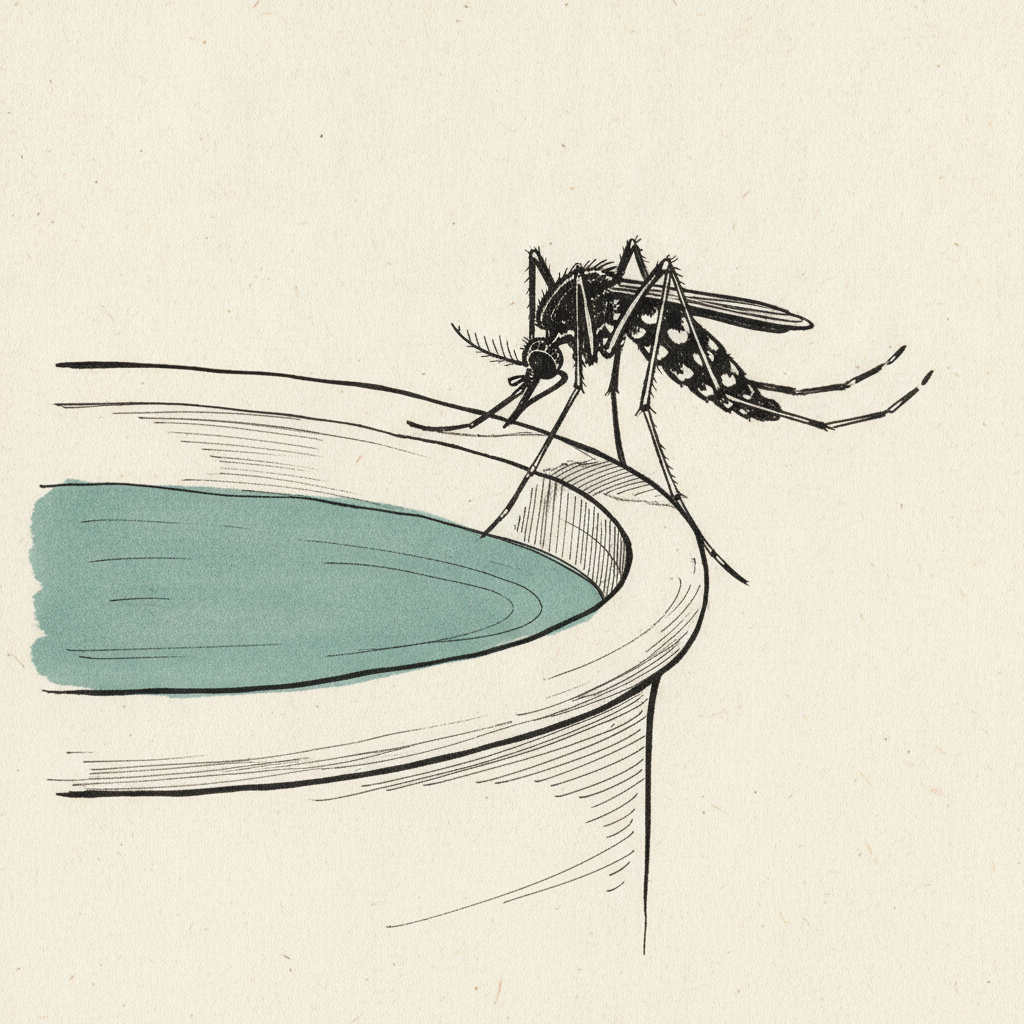
Aedes aegypti
Mosquito species that is the main carrier of Dengue, Chikungunya, Zika and Yellow fever.
A breeding colony of Aedes aegypti turned up in east London in 2026, found by the UK Health Security Agency after a tip to its Mosquito Watch scheme and reported by 30 September. Staff are treating the site with larvicide.
Last refreshed: 21 November 2026 · Appears in 1 active topic
Timeline for Aedes aegypti
Mentioned in: Ticino logs four local chikungunya cases
Pandemics and BiosecurityMentioned in: Peru records first measles death of 2026
Pandemics and BiosecurityBred in east London
Pandemics and Biosecurity: Europe's West Nile cases reach 1,765Background
Aedes aegypti is the main mosquito carrier of Dengue, Zika, Chikungunya and Yellow fever. Carl Linnaeus described the species in 1762. It lives close to people in the tropics and subtropics, bites mostly by day and lays its eggs in small pools of standing water around homes.
Containers make it hard to control. Buckets, tanks, plant pots and discarded rubbish all serve as nurseries, and its eggs survive dry spells, so emptying water once does not end an infestation. Where it is established, it drives the Dengue season: Peru's Dengue count in late September 2026 stood at double the same point of 2025.
The species spreads through travel and trade, and warmer summers widen the places it can survive. Its breeding population in east London showed in 2026 that it can reach northern Europe, where control relies on public reports and larvicide at the site.
What diseases does Aedes aegypti spread?
Where has Aedes aegypti been found in the UK?
When was Aedes aegypti found breeding in London?







Written with AI from Lowdown's published reporting. Not individually reviewed by an editor. Updated 21 November 2026. Editorial standards.