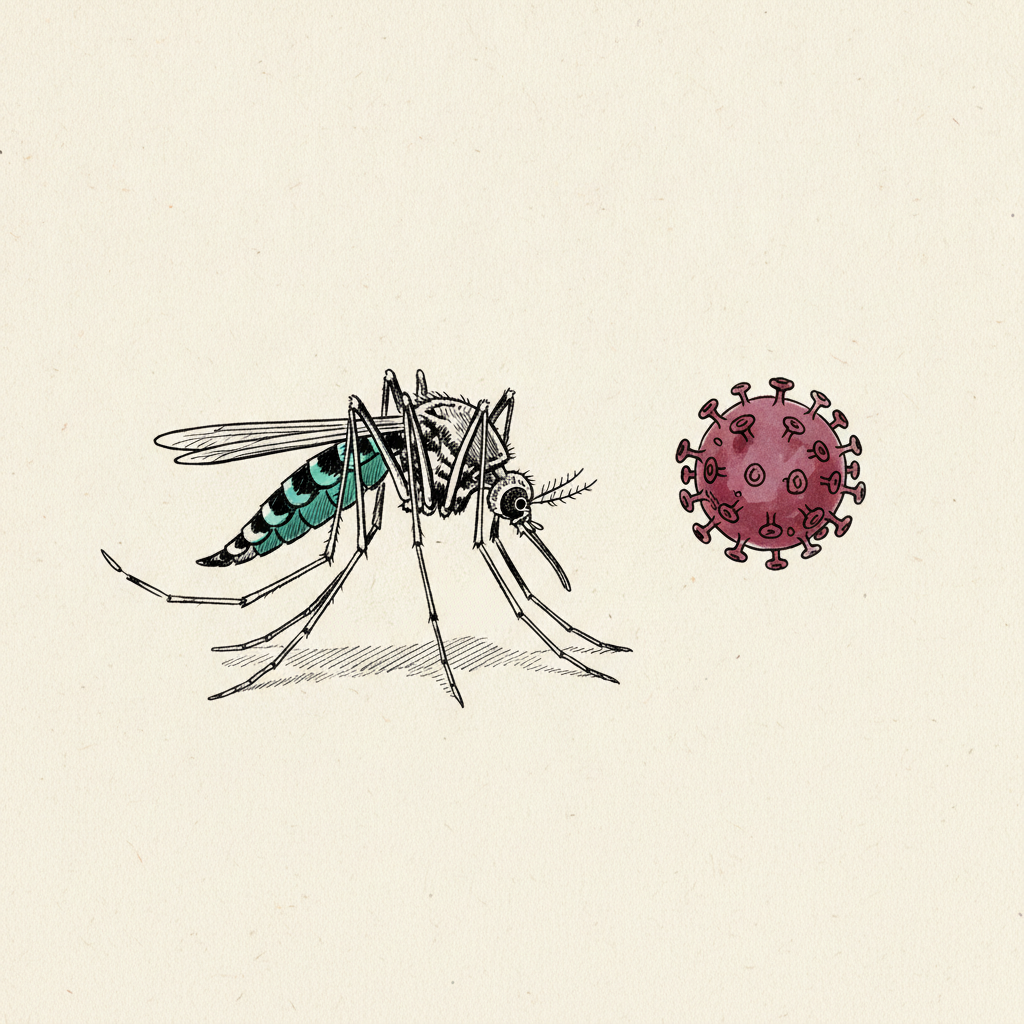
Zika
Mosquito-borne flavivirus spread by Aedes mosquitoes; infection in pregnancy can cause microcephaly.
Aedes aegypti, Zika's main carrier, turned up breeding in the UK for the first time in August 2026, at an east London site that UKHSA is treating with larvicide to wipe out the colony.
Last refreshed: 4 October 2026
Timeline for Zika
Mentioned in: Europe's West Nile cases reach 1,765
Pandemics and BiosecurityBackground
Zika is a virus carried mainly by Aedes mosquitoes, which bite mostly by day. It also passes from mother to fetus, through sex and through blood transfusion. Infection in pregnancy can cause microcephaly, an abnormally small head in the baby, and in adults it is linked to Guillain-Barré syndrome. WHO says there is no vaccine or specific treatment, and that 92 countries and territories have reported mosquito-borne Zika.
The virus was first identified in a rhesus macaque in Uganda in 1947. It drew global attention with a large epidemic in Brazil in 2015. WHO declared a Public Health Emergency of International Concern over Zika and microcephaly in February 2016 and ended it in November 2016.
In August 2026 the UK Health Security Agency found Aedes aegypti, the main carrier of Zika, Dengue, Chikungunya and yellow fever, breeding in east London, alerted by a public report to its Mosquito Watch scheme. UKHSA says the species cannot survive long-term in the typical UK climate, while ECDC says it is unclear whether it could establish there. The same season France counted 124 locally acquired cases of Chikungunya, spread by the same group of mosquitoes.