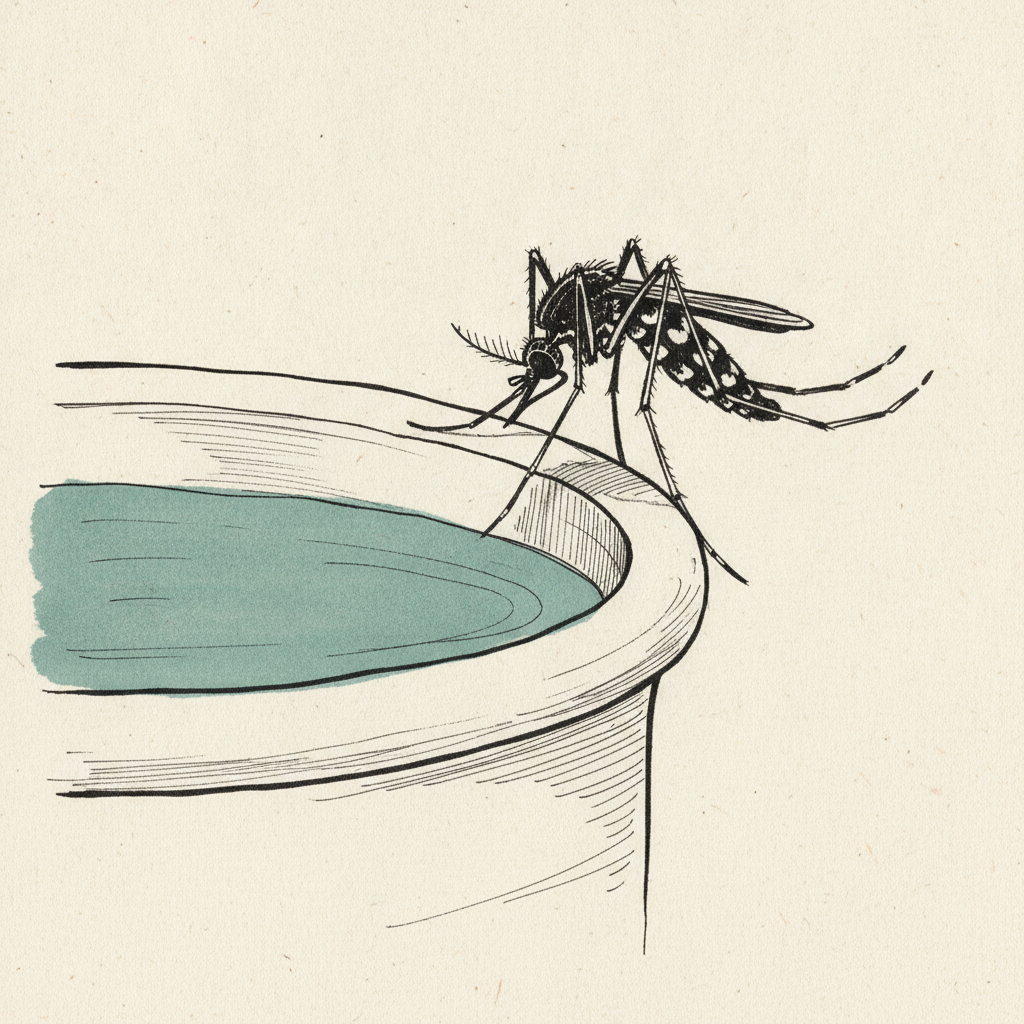
Aedes aegypti
Mosquito species that is the main carrier of Dengue, Chikungunya, Zika and yellow fever.
A breeding population of Aedes aegypti turned up in east London in August 2026; the UK Health Security Agency is treating the site with larvicide and aims to eradicate it.
Last refreshed: 4 October 2026 · Appears in 1 active topic
Timeline for Aedes aegypti
Bred in east London
Pandemics and Biosecurity: Europe's West Nile cases reach 1,765Background
Aedes aegypti now has a foothold, if a fragile one, in Britain. In August 2026 the UK Health Security Agency (UKHSA) found a breeding population in east London after a member of the public reported it through the agency's Mosquito Watch scheme. UKHSA is treating the site with larvicide, which kills larvae in standing water, and aims to wipe the colony out. ECDC says it is unclear whether the species could establish in the current UK climate.
ECDC thinks the London colony likely arrived in imported plants or commercial goods from the tropics. That is the same pathway that carried its relative, Aedes albopictus, into southern Europe.
The mosquito matters because of what it carries: it is the main vector of Dengue, Chikungunya, Zika and yellow fever. The London find came in a season when mosquito-borne infections caught inside Europe ran well above the decade's norm. By the end of September France had 124 locally acquired Chikungunya cases and Italy 59 local Dengue cases.
What diseases does Aedes aegypti spread?
Where has Aedes aegypti been found in the UK?
When was Aedes aegypti found breeding in London?




