Skip to content
You can now search across every topic, entity and event.What's new
US Midterms 2026
6JUN

Republican cash hides in liberal PACs

2 min read
12:16UTC

FEC filings revealed that three liberal-branded super PACs are covertly funded by a Republican vehicle to lift weaker Democrats in their own primaries.

PoliticsDeveloping
Key takeaway

Republican money covertly funded liberal-branded PACs to weaken Democratic primaries, but its main Texas bet still lost.

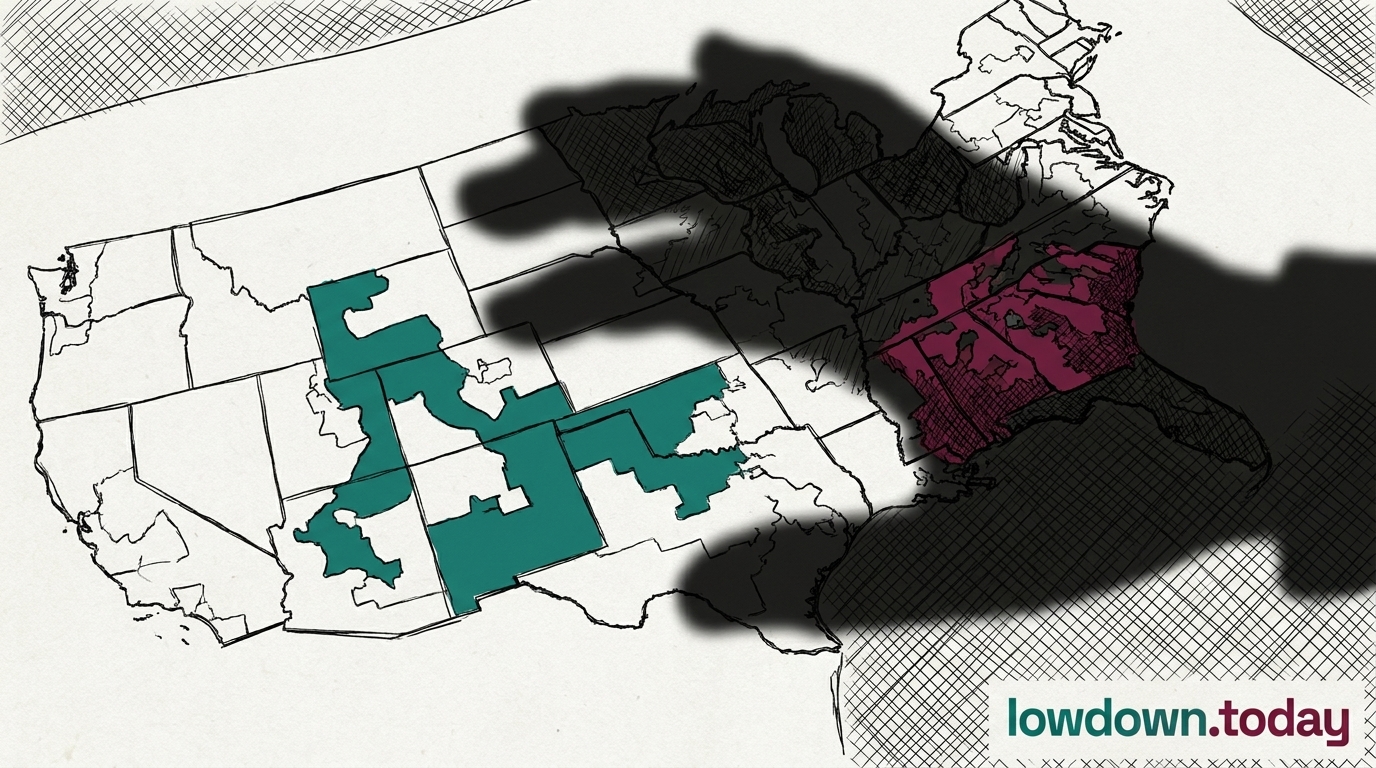
Federal Election Commission filings made public on Saturday 20 June showed that three super PACs with liberal-sounding names, Lead Left, Real Change and Blue California, are covertly funded by Conservative Americans PAC, a Republican vehicle bankrolled in turn by the American Prosperity Alliance 1. A super PAC is a political action committee that can raise and spend unlimited money but cannot legally coordinate with a candidate. The aim of the operation is to lift weaker candidates in Democratic primaries, so Republicans face softer opponents in November.

One strand had already surfaced in June, when Real Change spent $402,000 against a Democrat in Maine's second district . The new filings expose its full scale. Lead Left spent more than $750,000 boosting Maureen Galindo in the Texas 35th Democratic primary and took over $3m from Conservative Americans PAC in May alone. A spokesperson, Samantha Bullock, defended the strategy on the record, saying Republicans were 'levelling the playing field' after years of Democratic meddling 2.

The tactic failed in Texas. Galindo lost the runoff to Johnny Garcia by close to 30 points, so a seven-figure outlay bought a candidate her own party rejected 3. Bullock cast the operation as payback for past Democratic interference; the DCCC counters that Garcia's landslide proves it backfired.

Deep Analysis

In plain English

Imagine a political group with a name that sounds progressive, like Lead Left, that is actually funded by Republicans and is spending money to help the weakest possible Democratic candidate win their primary. That is what FEC filings revealed on 20 June: three PACs with liberal-sounding names are secretly bankrolled by a Republican-aligned group. The goal is to leave the eventual Republican nominee facing a weaker Democrat in November. In Texas's 35th District, one of these PACs spent more than $750,000 to help a candidate who still lost her primary runoff by close to 30 points.

Deep Analysis
Root Causes

Federal law requires a PAC to disclose its funders once it registers with the FEC, but it does not regulate what a PAC calls itself. Conservative Americans PAC exploited that gap by choosing names, Lead Left, Real Change, Blue California, designed to signal the opposite of its actual funding source, American Prosperity Alliance.

Because local reporters and primary voters rarely check FEC filings behind a PAC's name, the branding alone did most of the work. The true funding chain surfaced only when the filings themselves became public on 20 June, months after the PAC had already spent money in the affected primaries. That spending included an earlier $402,000 buy in Maine's 2nd District.

First Reported In

Update #11 · Money uncapped, ballot rules untouched

CNN· 1 Jul 2026
Read original
Causes and effects
This Event
Republican cash hides in liberal PACs
The scheme shows outside money trying to pick a party's opponents, though its Texas target lost the primary anyway.
Different Perspectives
Non-US foreign-policy commentary (Jerusalem Post)
Jerusalem Post coverage frames Graham's death chiefly as a foreign-policy loss, citing his role as the Senate's most vocal advocate for Ukraine and Russia sanctions and Israel-related security votes, distinct from Washington's floor-arithmetic framing. That reporting adds that South Carolina has not elected a Democrat to the Senate since 1998, so control of the seat itself was never genuinely contested.
Election-law and voting-rights critics
Election-law critics point to South Carolina's own arithmetic: the federal 45-day overseas-ballot deadline for the 11 August primary fell on 27 June, a fortnight before Graham died, and Section 7-11-55 contains no voter-eligibility language despite grounding the June-primary voter bar. They read both as design gaps a state can exploit through inaction, not through any single deliberate violation.
South Carolina State Election Commission
Commission director Conway Belangia declared the eligibility review "completed" on 16 July, barring anyone who voted in June's Democratic primary from the 11 August Republican primary, citing only "the requirements of South Carolina election law". The commission is standing behind that ruling and its filing-to-runoff calendar without naming the statute either rests on.
Senate Democratic opposition
Senate Democrats have not cast a floor vote against the House Budget Committee's 20-14 resolution yet, but their standing objection, that documentary-proof-of-citizenship rules burden voters who lack ready access to those documents, applies directly to the $10bn grant structure it just advanced. They are counting on the Byrd Rule to do what floor votes could not.
Senate Republican leadership
Majority Leader John Thune moved within two days of Graham's death to install Ron Johnson as Budget chair, whose office says he is "prepared to serve", though no conference vote has confirmed it. Leadership pushed the FY2027 resolution through committee 20-14 on 16 July, treating the vacancy as a gap to close, not a reason to pause the SAVE Act.
Labour-market economists
Economists note June payrolls rose just 57,000, about half the forecast 115,000, with April and May revised down further. They call it the only development this week bearing directly on how incumbents can run on the economy in November.
