Skip to content
Briefings are running a touch slower this week while we rebuild the foundations.See roadmap
US Midterms 2026
29MAY

Trump Family Ethics Clause Stalls Crypto Bill

2 min read
08:48UTC

Democratic senators inserted provisions barring government officials from profiting from cryptocurrency, targeting Trump family holdings and delaying the CLARITY Act past a May deadline that could push crypto legislation beyond the midterms.

PoliticsDeveloping
Key takeaway

Trump family crypto holdings have made the industry's own legislative target politically impossible to pass cleanly.

Democratic senators inserted ethics provisions into the CLARITY Act (Digital Asset Market Structure bill) barring government officials and their families from profiting from cryptocurrency while in office 1. The language targets Trump family crypto holdings through World Liberty Financial and associated ventures. Senate Banking Committee markup is now delayed to late April, with a May floor deadline. Missing May likely pushes crypto legislation past the midterms entirely.

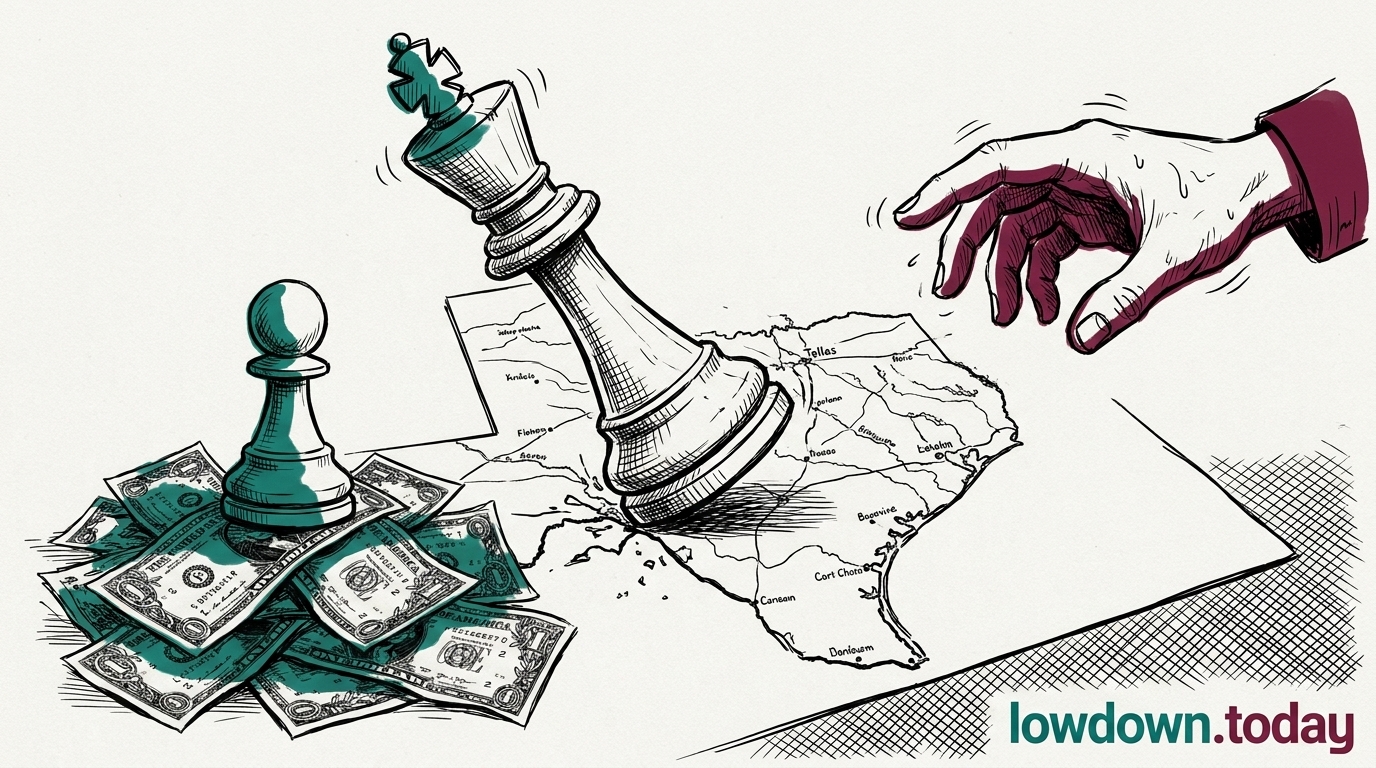
The crypto industry committed $272 million to the 2026 midterms to purchase a regulatory framework. That investment assumed alignment between industry spending and legislative outcomes. The Trump family's financial interests in the sector have introduced a conflict that the industry's money cannot resolve: the very presence of presidential crypto holdings makes the bill politically toxic for Democrats to pass without an ethics bar, and the ethics bar makes it unacceptable to The Administration.

The timing pressure is real. Ripple and Andreessen Horowitz timed their Fairshake contributions before CLARITY Act committee markups . Those contributions purchased access to a legislative calendar that is now slipping. If the bill fails to reach the floor before the midterms, the industry enters a new Congress with no guarantee that the current committee composition, which its money helped select, will be replicated.

Deep Analysis

In plain English

The CLARITY Act is the main legislation the cryptocurrency industry has spent hundreds of millions of dollars lobbying for. It would create a formal legal framework for how digital assets (Bitcoin, Ethereum, and thousands of other cryptocurrencies) are regulated in the United States. Democratic senators inserted a new requirement into the bill: government officials and their family members should not be allowed to profit from cryptocurrency while in office. This provision is aimed at the Trump family's involvement in World Liberty Financial, a crypto venture that has raised hundreds of millions of dollars partly by trading on the president's name and position. The Trump administration cannot easily accept this provision , it would require the president's family to divest their crypto holdings. But without accepting it, the bill cannot advance through the Senate Banking Committee, pushing the legislation's deadline past May and likely past the November 2026 midterm elections entirely.

What could happen next?
  • Consequence

    Missing the May Senate floor deadline likely pushes crypto legislation past the 2026 midterms, meaning the sector faces continued regulatory uncertainty through at least 2027 regardless of which party controls the House.

  • Risk

    The Fairshake PAC's $171M has now been committed to electing a Congress whose first legislative priority for the sector , the CLARITY Act , has been blocked by the administration's own family financial interests, creating a principal-agent failure between the PAC's stated mission and the conditions the administration created.

First Reported In

Update #2 · First votes exceed every forecast

Elliptic· 12 Apr 2026
Read original
Causes and effects
This Event
Trump Family Ethics Clause Stalls Crypto Bill
The CLARITY Act delay exposes a structural conflict: the crypto industry's campaign spending may have created the political conditions that prevent the legislation it was designed to purchase.
Different Perspectives
Conservative-institutionalist dissent (WSJ editorial board)
The Wall Street Journal editorial board's warning that aggressive Republican redistricting in a D+6.9 environment risks energising the opposing base beyond what drawn-in margins absorb has gained additional force after Paxton's win converted a safe Texas seat into a contested one; the board's cross-ideological caution is the dissent the Republican consensus on Callais is not publicly engaging.
V-Dem Institute and Chatham House
V-Dem's Anna Grzymala-Busse has logged the Callais-to-map-lock sequence as completing a 13-year Roberts Court rollback of the Voting Rights Act; Chatham House analysts are tracking the simultaneous Hawkes ruling and Virginia deadline lock as the point at which redistricting litigation shifted from a live 2026 variable to a post-cycle accountability mechanism with no near-term remedy.
Canadian USMCA trade watchers
Canadian trade officials monitoring the 2026 USMCA review window see the Paxton win as a complicating variable: Paxton has opposed USMCA expansion, and a Texas Senate seat shifting from Cornyn-style trade institutionalism to MAGA opposition would narrow the bipartisan Senate coalition on which Canada has historically relied for tariff schedule negotiations.
EU trade and sanctions analysts
EU Commission trade officials tracking the Ways and Means Committee composition note that a Democratic House majority after November would restore committee leverage on tariff schedules; the current D+6.9 environment is the first reading this cycle that makes a Democratic flip structurally plausible, reducing the probability of a locked Republican tariff posture through 2028.
US domestic political split
Republican strategists outside the Trump camp warn the NRSC now defends a Texas Senate candidate it publicly called 'repulsive and disgusting', stretching resources in a state budgeted as safe; Democratic strategists see the Paxton win and D+6.9 generic ballot as the first convergence of candidate-quality and environmental tailwinds in the same cycle.
Black voters in Alabama
Four congressional primaries are being voided while 2.4 million Alabamans cast ballots today, with Shomari Figures's majority-Black seat scheduled for elimination under the 11 August re-do map. Figures was elected in 2024 as only the second Black congressman from Alabama in modern history.
