Skip to content
Welcome, thoughtbot's Giant Robots listeners!Start here
US Midterms 2026
11NOV

Candidates certified on a discarded map

2 min read
18:10UTC

Missouri certified its general-election candidates on 25 August by the district numbers of a map the courts have since discarded, and no public document matches them to the boundaries that will actually be used.

PoliticsDeveloping
Key takeaway

No published document matches Missouri's certified candidates to the district numbers November will use.

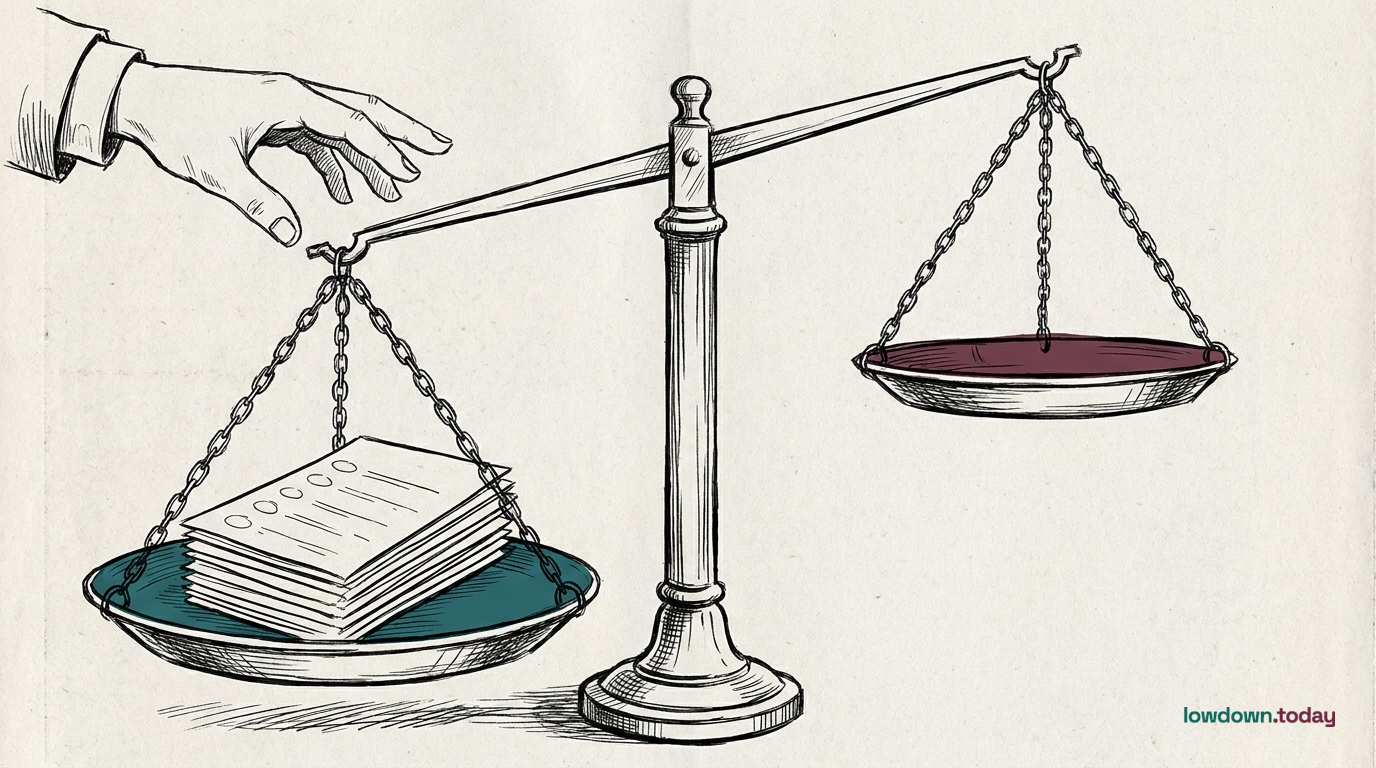
Missouri certified its general-election candidates on 25 August, listing each one by HB 1 district number⁠1. Rick Brattin appears as the Republican nominee in HB 1's District 5, alongside seven other House nominees placed on lines the courts have since set aside. Certification is the administrative act that fixes who appears on a ballot and where, and Missouri's booklet has not been reissued since the map changed underneath it.

Secretary of State Denny Hoskins's public statement of 10 September directs local election authorities to the 2022 map and says nothing about which 2022 district each certified candidate now sits in⁠2. Nothing in the public record reconciles the two sets of numbers. That is a negative finding rather than a proven absence: the office issues advisories to local authorities that are not always published, so reconciliation may already exist without being visible from outside.

North Carolina's county boards started posting completed general-election ballots on 4 September, and Missouri's own military and overseas transmission window opens this week. An error in this class does not surface as a court filing. It surfaces as a voter receiving a ballot for a district they do not live in, at which point the remedy is a reprint the calendar no longer has room for.

Deep Analysis

In plain English

Missouri's candidates were locked in on 25 August, filed and certified under the HB 1 map's district numbers. Since then, courts have gone back and forth over which map actually applies, and the map now in force is the older 2022 one, with different district lines. Nobody has publicly explained how a candidate certified under one map's numbering runs in an election governed by a different map. That gap is not proof the state has no plan, only that it has not said what the plan is.

Deep Analysis
Root Causes

Ballot administration runs on fixed statutory deadlines set months in advance: candidate filing, certification and eventually ballot printing all happen on dates that do not move for litigation still working through the courts. Missouri certified its candidates to HB 1's district numbers on 25 August, before the state Supreme Court's contempt ruling and before the federal stay, because the certification deadline could not wait for either.

That fixed calendar is what produces an unreconciled gap whenever litigation outlasts it: the candidates exist, filed and certified, attached to numbers that no longer describe the map governing their own election.

What could happen next?
  • Consequence

    Cook Political Report's ratings, unchanged since 3 September (ID:5939), still describe seats rather than the shifting district numbers, so the certification gap has not yet visibly disrupted national forecasting.

  • Risk

    If Missouri prints ballots before resolving the numbering mismatch, a county could place a candidate under a district number that does not match the map governing that seat on 3 November.

First Reported In

Update #17 · Missouri's election chief held in contempt

Missouri Secretary of State, Elections Division· 15 Sept 2026
Read original →
Causes and effects
This Event
Candidates certified on a discarded map
Ballots are printing for districts whose numbering no longer matches the map the election will be run on.
Different Perspectives
University of Florida Election Lab
The lab, run by Michael McDonald, estimates about 124.3 million ballots, a raw midterm record, and turnout of about 49.4% of eligible voters, second to 2018's 50.05%. The raw record reflects population growth more than a record rate, so the late count is working through a near-2018 electorate.
Thune's critics on the right, including Senator Ron Johnson
Ron Johnson backed the failed 31-15 motion to delay Thune's re-election, after activists such as Mike Cernovich blamed the leader for the defeat. Their complaint is that Republicans could have passed the SAVE Act; in January it meets a Democratic Senate instead.
Senator John Thune
Senator John Thune
Thune was re-elected Senate Republican leader by acclamation on 10 November after a motion to delay failed 31-15. He kept the filibuster that stopped the SAVE Act, the choice his critics on the right blame for the defeat.
House Republicans under Jim Jordan
House Republicans elected Jordan minority leader by 106 votes to 73 over Steve Scalise on 10 November, after Speaker Mike Johnson declined to run. They replaced the leadership that lost the majority, while Senate Republicans kept theirs.
Donald Trump
Donald Trump
Trump asked on Truth Social on 9 November whether anybody believed the election "was honest" and blamed the machines, having told The New York Times on polling night he would accept the results. No Republican campaign had sued over a 2026 result by 10 November, so the claim has no case behind it.
Judge David O. Carter
Carter closed the Justice Department's suit over about 20,000 California mail ballots on 10 November after the department withdrew it, writing that the suit "attempted to disrupt an ongoing election". The closure leaves the department with no court order touching a 2026 California ballot.

Written with AI from Lowdown's published reporting. Not individually reviewed by an editor. Editorial standards.
